
Indonesia Kicks Off Road to GFSR 2026, Strengthening Resilient Economy Through Disaster Innovation
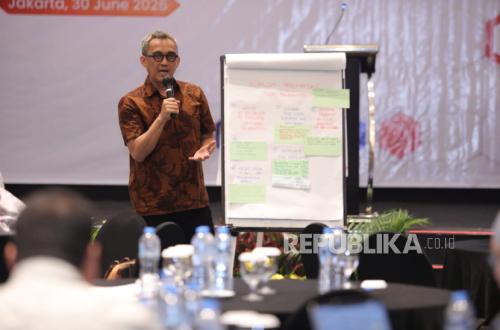
Indonesia has commenced the Road to The 3rd Global Forum for Sustainable Resilience (GFSR) 2026 series as an effort to strengthen national economic resilience through enhanced governance of climate change, disaster risk reduction, and sustainable development. The government considers the alignment of these three global agendas crucial for maintaining the investment climate, strengthening national competitiveness, and driving more robust economic growth.
Looking towards 2030, the greatest challenge is no longer drafting new commitments, but ensuring the integrated implementation of various global agreements, such as the Paris Agreement, the Sendai Framework for Disaster Risk Reduction, and the Sustainable Development Goals (SDGs).
The Road to GFSR 2026 series commenced with a National Seminar entitled ‘Towards Sustainable Resilience’, organised by the National Disaster Management Agency (BNPB) together with the SIAP SIAGA Programme (Australia-Indonesia Partnership for Disaster Risk Management) on 30 June 2026 in Jakarta. The seminar served as an initial forum to gather strategic recommendations to be discussed at The 3rd GFSR 2026 on 9-10 September.
Carrying the theme ‘Integrate the Architecture: Unifying Governance for Resilience’, the seminar brought together government representatives, international organisations, academics, the private sector, development partners, and civil society to align policies on climate change, disaster risk reduction, and sustainable development.
Participants included representatives from the Department of Foreign Affairs and Trade (DFAT) at the Australian Embassy in Jakarta, the Ministry of Finance, the Ministry of Environment, the Ministry of Home Affairs, the SIAP SIAGA Programme, and BNPB.
Senior Programme Manager at DFAT, Australian Embassy Jakarta, Riri Silalahi, stated that global challenges require closer collaboration so that various international commitments can be translated into integrated and impactful actions. ‘We believe that current global challenges cannot be resolved through approaches that remain fragmented. A collaborative space is needed that can bring together various interests, strengthen synergy between agendas, and ensure that international commitments can be realised,’ said Riri.
Through this approach, GFSR 2026 is positioned not merely as an international forum, but as a collaborative platform to strengthen the alignment of the three global agendas towards the post-2030 period. Unlike other international forums that discuss climate change, disaster risk reduction, or development separately, The 3rd GFSR 2026 is designed to integrate the implementation of the Paris Agreement, the Sendai Framework for Disaster Risk Reduction, and the SDGs in aspects ranging from planning and financing to execution.
Team Leader of SIAP SIAGA Palladium, Lucy Dickinson, said aligning these various agendas is important so that policies can generate greater economic and social impact. ‘Global commitments will only have meaning if they can be translated into interconnected actions. When the international community, businesses, academics, and civil society work in the same direction, the opportunity to produce real change becomes greater,’ she said.
According to the organisers, policy alignment cannot be resolved through a two-day forum alone. Therefore, the Road to GFSR 2026 is structured as a series of policy dialogues that gather best practices, experiences, and cross-sector recommendations before the main forum takes place.