
Indonesia Just Beginning to Tap into Rare Earth Treasures, While Neighbours Already Operate Factories
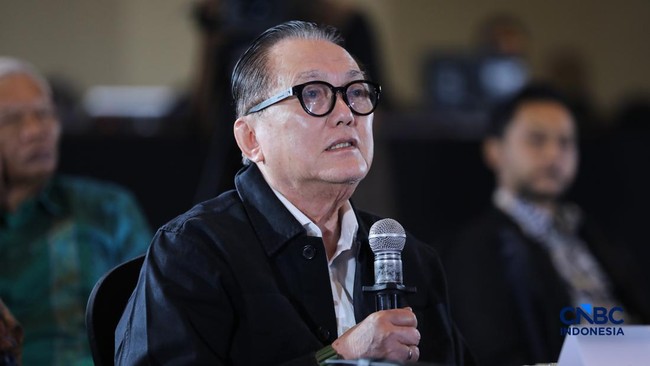
The Indonesian Mining Institute (IMI) has highlighted Indonesia’s lag in the downstream processing of Rare Earth Elements (REE) compared to neighbouring countries and other global players. Despite possessing abundant reserves, Indonesia is currently still in the early exploration stages and does not yet possess processing facilities for these critical minerals on an economic scale.
Chairman of the IMI, Irwasting Arif, explained that the development of the REE industry in the country still faces obstacles regarding the mastery of processing technology. He noted that several countries, including Malaysia, India, and China, are far more advanced, operating integrated refineries that serve as the backbone of the global supply chain.
“When we talk about Rare Earth Elements in Indonesia, we actually have no experience yet. We are still in the early stages,” he stated during a webinar hosted by the Mineral Industry Agency (BIM) regarding the prospects and future of Indonesia’s rare earth metals.
Irwandy explained that several countries in the regional area already possess REE processing industries that serve as technological benchmarks. For example, the Australian company Lynas Rare Earths (formerly Lynas Corporation) has long operated a refinery facility in Pahang, Malaysia, to process lanthanide concentrate from the Mount Weld mine in Australia.
“Lynas Corporation from Australia, which has a factory in Malaysia, is one of the ventures that was previously attempted through cooperation with PT Timah, but it was unsuccessful. We can see this facility is located in Pahang, Malaysia,” he explained.
In addition to Malaysia, India has established its own independent processing industry through Indian Rare Earths, which processes monazite using caustic cracking technology. Globally, absolute dominance is still held by China, which controls approximately 91% of the global refining and separation processes for rare earth metals.
“Between 68% to 70% of the world’s rare earth mining production comes from China. More precisely, over 91% of the global refining and separation processes are controlled by them. The Middle East has oil, but China has rare earth elements,” he noted.
According to his records, PT Timah Tbk has actually attempted to initiate cooperation with at least six international companies from the UK, Malaysia, and Canada since 2018. However, various explorations have yet to result in a final agreement to build monazite processing facilities to obtain rare earth elements, uranium, and thorium.
“I am recounting the initial cooperation efforts made by PT Timah with various global companies to process monazite to obtain rare earth elements, uranium, and thorium; there were about six, if I am not mistaken, but no agreement has been reached until now,” said Irwandy.
Currently, Indonesia’s primary challenge is overcoming the lack of domestic processing and refining facilities so that the economic value of these minerals can be maximised. The government has established the Mineral Industry Agency (BIM) and PT Perminas as strategic steps to accelerate research and the mastery of national REE processing technology.
“The economic value of these minerals cannot yet be maximised because we do not have adequate downstreaming technology. This is the main challenge. However, alongside the main challenge, there is a strategic opportunity: the mastery of REE processing technology, the research for which is being conducted by BIM under a mandate from the President,” he concluded.