
Indonesia Is on Alert — What About Our Finances?
We are too confident that the disasters we often witness will never befall us. We read, feel concerned, perhaps share the news on social media, then return to our routines as usual. Yet in recent days, Indonesia has once again been reminded that circumstances can change far more quickly than we imagine.
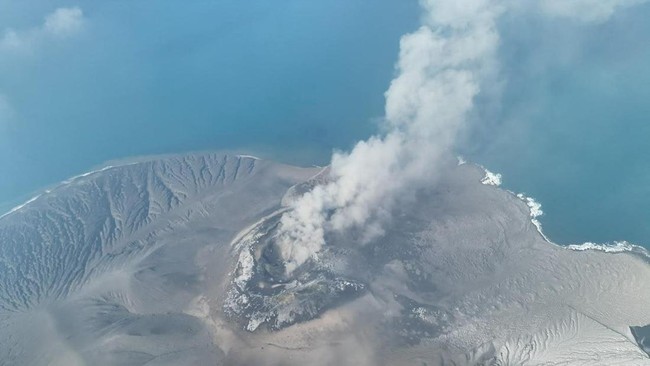
Mount Anak Krakatau has erupted again. Volcanic ash spread to several areas of Jakarta and West Java, also disrupting flight activity. On Monday (7/9/2026), eight airports were reported still closed due to the volcanic ash, and around 170,000 passengers were affected by flight cancellations.
At the same time, several regions of Indonesia still face the risk of forest and land fires as well as drought caused by the dry season. BNPB records that fires and drought remain the dominant disaster events in early September.
All of this seems to remind us of one thing we often forget: risks do not always come one at a time, and almost never arrive at a time of our choosing.
We may not live near Mount Anak Krakatau. We may not be in an area affected by forest fires. But the impact of a disaster can travel far beyond the point where it occurs. Flights are disrupted, economic activity stalls, schooling patterns change, the distribution of goods is affected, and family expenses can suddenly rise.
Then there are risks far closer to us: illness, accidents, job loss, a business that suddenly goes quiet, a broken-down vehicle, a house in need of repair, or a family member who suddenly requires a large sum of money.
The question is therefore not only, “Is our home safe?” or “Are we healthy?” There is another question that often only arises when it is already too late: if I cannot work tomorrow, can my family still live as usual? That question sounds simple, but the answer can be a mirror of a family’s financial health.
We are in fact very accustomed to preparing for our health. We try to eat nutritious food, sleep enough, exercise, have health check-ups, and avoid habits that increase the risk of illness. We do not wait to fall ill before starting to look after our bodies.
But in financial matters, we often behave differently. We only think about an emergency fund after losing a job. We only seek protection when we fall ill. We only calculate instalments when our income falls.
We only realise the importance of cash when we need a large amount of money in a short time. It is as though we assume life will always run as it did the previous month. Yet life never gives us a calendar telling us when an emergency will arrive.
That is why an emergency fund should not be something built after the situation becomes an emergency. It must be built precisely when circumstances are still good, when income is still coming in, when the body is still healthy, when the business is still running, and when we still have choices. For in truth, an emergency fund is not merely a sum of money sitting in an account. An emergency fund is the ability to buy time when life suddenly does not go to plan.
When someone loses their job, an emergency fund gives them time to look for the next job without having to make any decision in a panic. When a family member falls ill, an emergency fund gives room to make decisions without immediately going into debt.
When a disaster strikes and economic activity is disrupted, an emergency fund helps the family continue to meet its basic needs. What we are storing is not merely money. We are storing room to breathe.
BNPB itself includes cash as one of the key components of the Disaster Preparedness Bag, alongside important documents, food and water, medicines, communication devices, lighting, masks, and other basic needs. The message is simple, but often escapes us: when an emergency comes, preparedness requires not only goods, but also liquidity.
And interestingly, the idea of preparing oneself before hard times is not something new in Islam. The story of the Prophet Yusuf (peace be upon him) offers a lesson highly relevant to how we manage our finances today.
When interpreting the King of Egypt’s dream, the Prophet Yusuf explained that seven years of plenty would come, followed by seven years of hardship. But what is remarkable is not only his ability to read what would happen. More important is what was done before those hard times arrived.
During the years of plenty, the harvest was managed and stored well so it could be used when the lean years came. There is a profound economic message there: when life is comfortable, do not spend everything we have only on today. A portion must be set aside for the day when circumstances are no longer as comfortable as they are now. This is one of the lessons we can draw from QS Yusuf verses 47–48.
Translated into family life today, the “years of plenty” can mean when income is still stable, work is still secure, the body is still healthy, and the business is still running. Meanwhile, the “lean years” need not take the form of a great crisis like that of the Prophet Yusuf’s time. It can arrive as job loss, illness, disaster, falling revenue, rising expenses, or family needs that we never planned for.
Therefore, preparing an emergency fund does not mean we are pessimistic about the future. Quite the opposite: we are showing gratitude for the comfortable times Allah has granted us today. But there is one thing that must also be understood: an emergency fund is not the answer to every financial risk a family faces.
Having an emergency fund is certainly important, but it does not mean all of a family’s financial risks are resolved. Serious illness, loss of income, accidents, or the death of a breadwinner can require far greater sums. That is why an emergency fund should be the first layer of protection, not the only one.
So how should an emergency fund be managed?
First, set the amount based on expenditure, not income. Calculate the essential needs that genuinely must be paid each month, including food, housing, electricity, education, transport, obligatory instalments, and other important needs. After that, set a target.
For those who are single, a few months’ worth of expenditure may be enough as a start. For families with children or with only one source of income, the emergency fund will naturally need to be larger.
Second, separate the emergency fund from the everyday account. Money mixed in with a spending balance is more easily used for things that are not actually emergencies. This fund should be placed in instruments that are relatively safe and easily liquidated. Do not chase returns that are too high at the expense of access when the money is truly needed.
Third, define clearly when the fund may be used. Holidays, a new phone, buying discounted goods, or consumer desires are not emergencies. This fund is used when there is an urgent need that cannot be postponed — for example, job loss, uncovered healthcare costs, repairs to a vital home or vehicle, or other conditions that prevent the family from meeting its basic needs.
Fourth, refill it after use. An emergency fund is not a target achieved once and finished. If part of it has been used, the next priority is to restore it to a safe level. That way, the family does not face the next emergency in an even more fragile financial position.
And most importantly, do not wait until you have a lot of money to begin. An emergency fund can be built little by little. Set aside a fixed amount each time you receive income and treat it as an obligation, not as money saved only if there is a surplus.
In the end, a family’s financial health is not only about how much wealth has been accumulated, but also about how strongly the family can hold on when things do not go to plan. From a sharia perspective, safeguarding wealth and protecting the family is part of a trust. We are not asked to know when calamity will come, but we are taught to make an effort before hard times arrive.
The story of the Prophet Yusuf teaches a simple principle: when times of plenty come, prepare for times of hardship. Today, perhaps your income is still flowing. Your body is still healthy. Your business is still turning. Your home is still safe. Precisely because of that, this is the best time to prepare.
For when the emergency has already arrived, we no longer have much room to choose. We do not know when the storm will come. But we can choose not to face it empty-handed.