
Indonesia Is Heading Towards an Ageing Society, with State Budget Burden Set to Rise
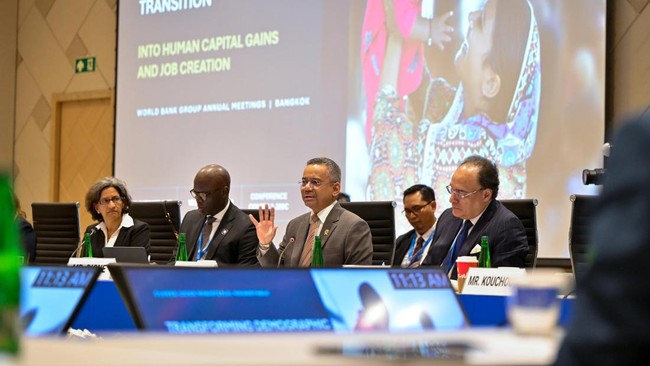
Jakarta, CNBC Indonesia — Finance Minister Suahasil Nazara has highlighted Indonesia’s need to make substantial investments in human capital to address the risks posed by an ageing population, which could increase the burden on the state budget (APBN).
According to Suahasil, Indonesia’s demographic challenge is not simply a matter of population growth. The country must improve the quality and productivity of its people so they can continue to support economic growth as the age structure of the population changes.
He made the remarks at the World Bank Group Closed-Door Ministerial Roundtable, titled “Transforming Demographic Transition into Human Capital Gains and Job Creation”, in Bangkok, Thailand, according to a statement cited on Wednesday (14 October 2026).
Suahasil said Indonesia’s population currently stands at about 284 million and is projected to rise to 325 million over the next 20 years. At the same time, the country is beginning to experience an ageing trend.
About 12% of Indonesia’s population is currently aged 60 or over, while nearly 8% is aged 65 or over.
“The issue is not the size of the population, but its quality. We cannot simply expect that quality to improve on its own. We must invest to improve it,” Suahasil said in an official statement.
The government needs to anticipate demographic change early. If the population’s age profile rises without corresponding improvements in human capital and productivity, public spending needs could increase while government revenue comes under pressure.
This makes investment in human capital important not only for promoting economic growth, but also for maintaining long-term fiscal sustainability.
Suahasil stressed that investment in people’s capabilities must be sustained throughout life, from before birth and childhood through education and entry into the workforce.
He said this is necessary to ensure Indonesia does not merely benefit from its current demographic dividend, but can also gain from a second demographic dividend, or “silver dividend”, as the proportion of older people grows.
“To benefit from the second demographic dividend (the silver dividend), we must invest in human capital long before people reach old age — from before birth and through childhood, education and entry into the workforce,” he said.
Suahasil acknowledged that the benefits of human-capital investment generally take time to materialise. Meanwhile, the government must meet current development and public-service needs with a limited budget.
He said the government therefore needs to set spending priorities carefully, balancing short-term needs against investment that will shape the quality and productivity of the future workforce.
Source: jawawa.id (https://jawawa.id/newsitem/indonesia-is-heading-towards-an-ageing-society-with-state-budget-burden-set-to-rise-1791946239)
Originally published by CNBC Indonesia (https://www.cnbcindonesia.com/news/20261014075633-4-775921/ri-menuju-negara-tua-awas-beban-apbn-menggunung), translated from Indonesian