
Indonesia Is Experiencing a Purchasing-Power “Hallucination”, Economist Reveals the Facts
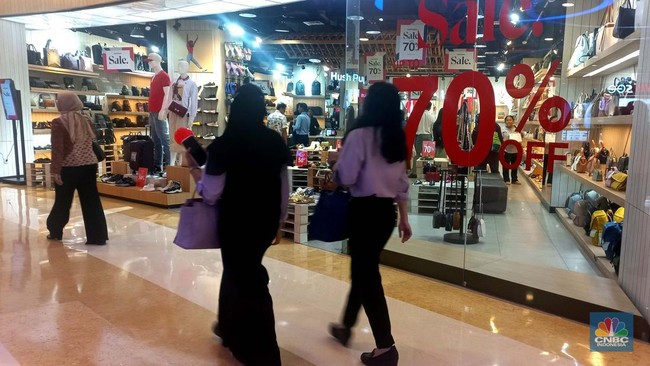
Jakarta, CNBC Indonesia — PT Bank Central Asia Tbk chief economist David E. Sumual said Indonesian consumption is currently experiencing the lipstick effect.
The lipstick effect is a psychological and economic phenomenon in which consumers continue to buy luxury goods, but opt for smaller sizes at relatively affordable prices.
As a result, industry subsectors such as beauty and personal care remain promising in Indonesia, even as purchasing power shows negative signs.
“Indeed, the lipstick effect occurs when the economy is declining,” David said at the Business Outlook 2027 event, which was broadcast online and reported on Tuesday (20 October 2026).
Other subsectors that remain promising as a result of the lipstick effect, David said, include technology; creative industries and digital media; and non-essential consumer goods such as furniture and home décor.
He also cited growth in skills development and non-formal education; fitness, mental health and wellbeing services; the pet industry; architecture, interior design and renovation; private tourism and recreation; and specialised non-food logistics.
“These are sectors outside the major sectors that, based on the big data we are seeing, are performing quite well,” he said.
David also outlined several spending indicators showing negative signals in the third quarter of 2026, drawing on data from 34 million bank customers.
Household spending grew by only 1.4% year on year in September 2026, he said, slowing from 1.8% in August.
“Since the third quarter began, the trend has been towards a slowdown. In September, growth was just 1.4%,” he said.
Income trends also appeared to be weakening, according to the BCA Income Index. “The trend does appear to be declining,” David said.
Previously, Coordinating Deputy for Economic Affairs Dradjad Wibowo denied that Indonesian purchasing power was weakening.
He made the statement after meeting Statistics Indonesia (BPS) head Amalia Adhininggar Widyasanti at the agency’s headquarters in Jakarta on Monday (12 October 2026).
“I can say that it is not true that purchasing power in Indonesia is weakening. That is wrong,” Dradjad said after the meeting.
Dradjad said he reached that conclusion after receiving a number of data points from BPS, but did not specify the figures behind each set of data.
“Purchasing power is not weakening; there is plenty of evidence. I saw the data earlier. Not all of it can be made public, but I saw the evidence,” he said.
He said the absence of signs of weakening purchasing power could be seen in data on activity in sectors including transport and tourism.
“Why? Because it seems people here now enjoy going out and travelling. Spending on trips is very high, as is spending at restaurants and hotels. Tourism is also increasing significantly,” he said.
Dradjad added that strong purchasing power was also reflected in QRIS transactions, which continue to grow by more than 100%, as more transactions move to digital channels.
“If QRIS transactions rise sharply, that means there are more transactions and more consumption. So what is happening is not that purchasing power is weakening. No, that is completely untrue,” Dradjad said.
Source: jawawa.id (https://jawawa.id/newsitem/indonesia-is-experiencing-a-purchasing-power-hallucination-economist-reveals-the-facts-1792457437)
Originally published by CNBC Indonesia (https://www.cnbcindonesia.com/market/20261019213554-17-777666/ri-alami-halusinasi-daya-beli-ekonom-ungkap-faktanya), translated from Indonesian