
Indonesia in a State of Emergency Over Nickel Export Governance, Industry Already Bleeding
Jakarta, CNBC Indonesia — Indonesia’s mineral export governance has once again come under the spotlight. This follows reports that a number of nickel, tin, bauxite and other mining exports have been held up due to additional inspections relating to Rare Earth Element (REE) content.
The situation has prompted concern among business players, who are urging the government to swiftly provide regulatory certainty so that export activities are not continually disrupted.
Chairman of the Indonesian Nickel Industry Forum (FINI), Arif Perdanakusumah, said the REE issue is currently a major concern for businesses because of the regulatory vacuum governing its limits and management.
According to him, the REE-related policy has already disrupted export activities. Based on the latest data, at least 120 surveyor reports have yet to be issued due to REE content inspections.
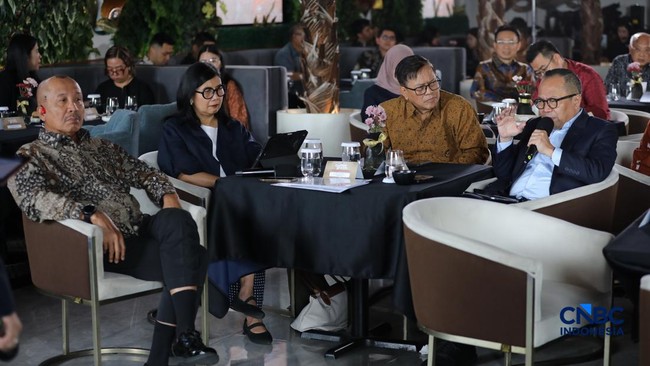
“There are 120 surveys that haven’t been released. And there’s a friend from IWIP whose ship has been held up this week. We agree this is an emergency situation. We ask for help from Commission XII so that this situation can be understood,” said Arif at the CNBC Indonesia Coffee Morning event on Thursday (30/7/2026).
Arif also detailed that the nickel industry is currently facing multiple layers of pressure, from the impact of Middle East geopolitics driving up energy and logistics costs, to domestic issues such as increased royalty tariffs, limited ore supply due to RKAB (mining work plans and budgets), and the REE-related policy.
He said around 80% of Indonesia’s sulphur needs in 2025 came from the Middle East. When sulphur prices surged from around US$220 per tonne to US$1,200 per tonne, the nickel industry’s production costs rose sharply.
“In 2025, roughly 6 million tonnes of sulphur were imported, with the majority needed by the nickel industry. So besides scarcity, the price has risen extraordinarily. In 2025 sulphur was US$220 per tonne, recently it reached US$1,200 per tonne and has already eaten up 50%,” he said.
Businesses bleeding
Meanwhile, Chairman General of the Indonesian Bauxite Association (ABI), Ronald Sulistyanto, said the issue of REE presence has actually been known for a long time. However, to this day there is no clear governance framework for handling the element.
“This is actually a problem we’ve known about for quite some time — that REEs exist. But how to translate the existence of REEs into something concrete, that’s what needs rules, and actually many have already drafted them. Let’s go back to the rulebook. Mining falls under the Ministry of Energy and Mineral Resources (ESDM). Let’s not go elsewhere first,” said Ronald.
He stressed that for commodities such as bauxite, REEs are generally accompanying minerals, not the main product. Therefore, their regulation should be differentiated from the main commodity, which already has its own provisions.
Ronald went on to explain that REE content in processed bauxite products is very small, as they have gone through washing, grading, sizing and refining into alumina.
It is just that Indonesia itself does not yet have sufficiently advanced technology to deeply ascertain the content of these REEs.
“Suddenly it’s being stopped now. Have some pity — these entrepreneurs are already bleeding. They have carried out downstream processing, and we have translated downstream processing into added value. It’s done; surely it should be allowed to be sold. In my view, this is naive. This mess stems from the egocentrism of each ministry. In my opinion, just hand it over to ESDM. ESDM already has the rules to govern it. If there is content, it’s 0.06 to 0.08 ppm. It’s tiny,” he asserted.
Source: jawawa.id (https://jawawa.id/newsitem/indonesia-in-a-state-of-emergency-over-nickel-export-governance-industry-already-bleeding-1785397944)
Originally published by CNBC Indonesia (https://www.cnbcindonesia.com/news/20260730142157-4-755100/ri-darurat-tata-kelola-ekspor-nikel-cs-industri-sudah-berdarah-darah), translated from Indonesian