
Indonesia Imports 91% of These Goods; Trade Minister Budi Gives Businesses a Firm Warning
Jakarta, CNBC Indonesia — Trade Minister Budi Santoso said Indonesia’s imports remain dominated by raw and intermediate materials and capital goods. Statistics Indonesia (BPS) data show that these two categories account for about 91% of the country’s total imports.
Consumer goods, meanwhile, make up just 8.7% of imports. This indicates that domestic industrial activity still relies on supplies of raw materials and capital goods from abroad.
Budi said the high proportion of imports consisting of raw materials and capital goods should be a concern for the government. Dependence on a small number of countries or suppliers could weaken Indonesia’s position in trade.
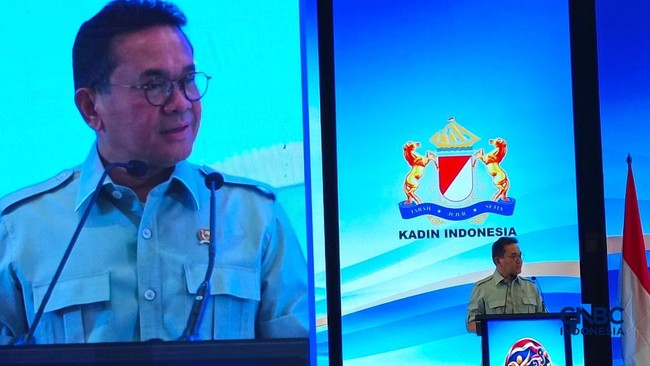
“What we need to consider is that, if 91% of our imports of capital goods and raw materials are imported, we have to think about our suppliers. We must not become dependent on one or two suppliers, because that would strengthen their bargaining power. That is certainly dangerous for us,” Budi said at the 2026 Kadin National Leadership Meeting in Jakarta on Friday (30 October 2026).
Indonesia needs to broaden its trade relationships with various countries, including through trade agreements, he said. Such steps are important to facilitate trade flows and ensure supplies remain available to national industries.
Budi stressed that trade agreements are not solely intended to secure a trade surplus. Rather, he said, such co-operation should support industrial development and increase Indonesia’s exports to partner countries.
“Trade agreements, as far as we are concerned, are not just about talking about a surplus or deficit. They are about how we move forward, develop our industries and increase our exports to each country with which we have an agreement,” he said.
Budi also said that processed manufactured goods dominate Indonesia’s exports. According to BPS data, around 82% of exports come from manufacturing, with the remainder from mining, oil and gas, and agriculture.
The manufacturing sector recorded growth of 7.87%. Budi said this showed that domestic industry continued to develop.
The government wants the domestic market to provide room for local industries to grow, while the global market is used to expand production capacity and boost exports.
“We want the domestic market to be a space for domestic industry to grow, while the global market helps increase our industrial capacity for exports,” he said.
To support this, the Ministry of Trade is pursuing three main programmes: protecting the domestic market, expanding export markets, and taking local products global.
To protect the domestic market, the government uses trade remedies, including anti-dumping duties and safeguard duties.
Budi also said recent regulations allow the government to impose countervailing duties.
These measures are intended to protect domestic industry from harmful trade practices and ensure local products have room in the domestic market.
Source: jawawa.id (https://jawawa.id/newsitem/indonesia-imports-91-of-these-goods-trade-minister-budi-gives-businesses-a-firm-warning-1793353871)
Originally published by CNBC Indonesia (https://www.cnbcindonesia.com/news/20261030150439-4-780961/ri-impor-91-barang-ini-mendag-budi-kasih-wejangan-tegas-ke-pengusaha), translated from Indonesian