
Indonesia Imports 8 Million Tonnes of LPG, Bahlil Says Foreign Exchange Outflow Is Substantial
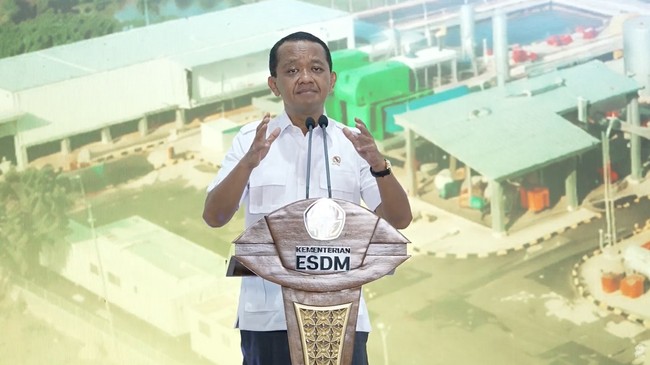
Karawang, CNBC Indonesia — Coordinating Minister for Downstreaming and Energy Transition and Energy and Mineral Resources Minister Bahlil Lahadalia said Indonesia is estimated to import 7–8 million tonnes of liquefied petroleum gas (LPG) a year.
The high import volume is because domestic refineries produce no more than 1.8 million tonnes of LPG annually, while national demand reaches 11–12 million tonnes a year. This includes 8.5 million tonnes for households, using 3kg, 5.5kg and 12kg cylinders, as well as consumption by large industries such as Lotte Chemical and Chandra Asri in Cilegon, Banten.
“Total subsidies for LPG used by the public, when the Indonesian Crude Price (ICP) was still US$70 a barrel, reached Rp87 trillion. But now that the average ICP is around US$90–100 a barrel, our subsidies are close to Rp100 trillion. A great deal of our foreign exchange is flowing out, and we are then providing very substantial subsidies to the public,” Bahlil said at the inauguration of an LPG refinery in Cilamaya, Karawang, West Java, on Thursday (15 October 2026).
“There is no other way, ladies and gentlemen: we have to optimise all the potential available in our country,” he said.
He said 30% of gas produced domestically is exported, although Indonesia does not yet import natural gas.
Why, then, does Indonesia still import LPG? Bahlil explained that the type of gas needed to produce LPG differs from natural gas, including the substantial volumes of liquefied natural gas (LNG) available in Indonesia.
“LNG feedstock consists of C1–C2, which is not suitable for LPG. For that reason, I commend the co-operation between Pertamina and PT Energi Nusantara Perkasa, which can make its best contribution to the country by meeting domestic needs,” Bahlil said at the inauguration of the LPG refinery operated by PT Energi Nusantara Perkasa.
He said residents of Jakarta and West Java require 1,000–1,500 tonnes of LPG a day. With the Cilamaya LPG refinery producing 160 tonnes daily, it can supply 10–12% of the region’s LPG needs.
“This is a major contribution. We start with small things to achieve something big. It is fine to start small, but if several sites like this are brought together, their combined output will also be significant, because our feedstock is not evenly distributed. This is what we will continue to promote,” he said.
To reduce LPG imports, the government is also encouraging the development of compressed natural gas (CNG).
“I have asked Lemigas and the Directorate General of Oil and Gas to develop an alternative energy source to LPG, namely CNG,” he said.
“CNG is already in use, and is in some ways similar to piped gas. Some restaurants and hotels use it, and it is 30–40% cheaper. It uses C1–C2 gas, which is abundant in our country. This is a strategy for creating an import substitute,” he explained.
He said his team is also testing CNG in 3kg cylinders.
“The 3kg cylinder is still being tested, but 12kg cylinders are already in use. If we can make this available, we can address our annual imports of 8 million tonnes with domestic supply,” he concluded.