
Indonesia Holds 84% of ASEAN Geothermal Potential
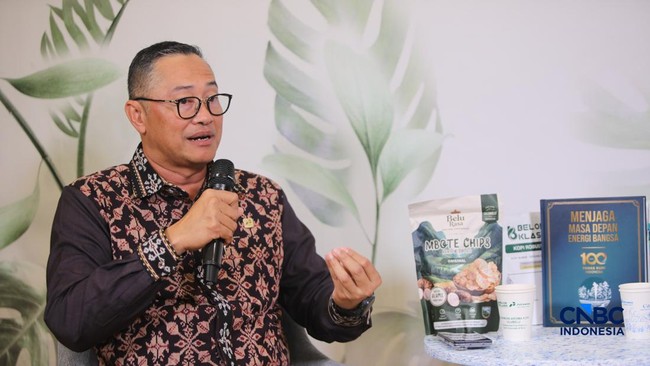
Jakarta - Pertamina Geothermal Energy Tbk (PGEO) President Director Ahmad Yani said Indonesia possesses a vast geothermal ‘treasure’ that could provide added value for energy security. He said 40% of the world’s geothermal potential is in Indonesia, and regionally, 84% of ASEAN’s geothermal potential is also in the country.
“Indonesia is striving to develop the energy it has domestically. In this case, Indonesia is rich in geothermal energy. Moreover, the potential we have is very large, up to 24 GW,” Ahmad Yani told CNBC Indonesia on Thursday (20/8/2026).
According to him, this amount is substantial and can be developed to support the government in terms of energy transition and energy independence, in line with the Astacita vision.
“Of the 24 gigawatts available, only 11% is currently being utilised. This is our collective homework, and at this IIGCE meeting we are also discussing with investors, stakeholders, IPPs, and the government to find a way forward together. How can this large energy source grow and develop in Indonesia,” Ahmad Yani stressed.
The government itself is targeting geothermal capacity of 5.2 gigawatts in the 2025-2034 RUPTL. Ahmad Yani considers this target very realistic and also a primary target for PGE.
“We have very clear pipelines related to achieving targets, support, and the Green RUPTL is one form of government support for geothermal to grow and develop well. At PGE we already have a clear target regarding this opportunity,” he said.
According to him, PGE will reach 1 gigawatt by 2028 and become the number one geothermal company in the country. One of the efforts that can be made is to create a business climate where geothermal can become feasible and bankable.
“Then by 2034, to become number one in the world with a capacity of 1.8 gigawatts. We already have a clear pipeline, so there is no issue regarding resources,” Ahmad Yani stressed.
Minister of Energy and Mineral Resources (ESDM) Bahlil Lahadalia said this is being done as part of the strategy for national energy sovereignty and security. However, Bahlil admitted that licensing is one of the factors hampering the development of New and Renewable Energy (EBT), which has been widely complained about by business players.
“One of the problems is the speed of regulation, permits and all sorts of things,” Bahlil said after attending The 12th Indonesia International Geothermal Convention & Exhibition (IIGCE) at JCC Senayan.
According to him, Indonesia has considerable potential for geothermal energy. However, only around 10-13% of these clean energy reserves have been utilised.
Bahlil stressed that Indonesia is the country with the largest geothermal resources in the world. However, in terms of implementation, Indonesia’s position is below the United States. He revealed that the lack of energy implementation by business players is related to convoluted permitting.
“Since I was inaugurated as Minister of Energy and Mineral Resources, I checked what makes it slow, because I used to be a business player too. Before entering government, I was a business player. And after entering government, I became Minister of Investment. Business players want things to move quickly, but if the rules are convoluted and slow, what can you do?” he said.
Therefore, Bahlil has cut regulatory stages that hinder business players. Nevertheless, these efforts are considered insufficient.
“And now it turns out after I evaluated, there are still many obstacles in these regulations,” he added.
Bahlil further said that in addition to improving regulations, he is also collaborating with other ministries regarding incentives, particularly taxation. This is because business players and regulators cannot operate independently.