
Indonesia Hit with 10% Additional US Tariff, Government Prepares Strategic Response
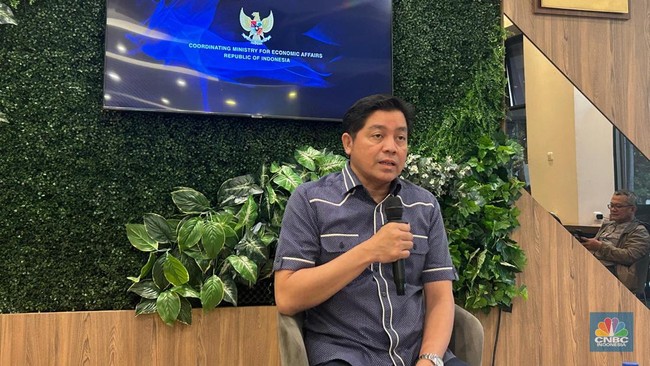
Jakarta, CNBC Indonesia – The Coordinating Ministry for Economic Affairs has responded to the latest policy from the United States Trade Representative (USTR) regarding new reciprocal tariffs, under which Indonesia has been hit with an additional 10% tariff from the United States.
First, the Indonesian Government is taking note of the USTR’s acknowledgement that Indonesia is one of the countries actively committed to, and equipped with a regulatory framework to prevent and eradicate forced labour practices in global supply chains.
The Indonesian Government also communicates regularly with the US Government regarding the Section 301 investigation process.
Indonesia has participated actively in the investigation, which covers two issues: excess capacity in the manufacturing sector and the ban on imports of goods produced through forced labour. This participation includes submitting written submissions, attending public hearings, and holding inter-governmental consultations.
The USTR set the tariffs based on the findings of a Section 301 investigation under the Trade Act of 1974 covering 60 countries/economies.
Indonesia is among the countries subject to an additional 10% tariff under Section 301, together with 16 other countries/territories, including Malaysia, India, Mexico, Canada and the United Kingdom.
“We are also monitoring the USTR’s determination that several Indonesian products have been included in the tariff exemption list (product exemptions),” the Coordinating Ministry for Economic Affairs wrote in a press release on Friday (24/7/2026).
According to information from the US side, the findings of the investigation into the excess capacity issue will be published shortly. Indonesia is still awaiting the results and the official announcement, and hopes that the tariffs applied will be favourable to Indonesia, and that products already exempted under the previously signed ART agreement can be accommodated.
“The Government continues to actively consult with the USTR to secure the best and most competitive tariff terms.”
Furthermore, to safeguard export competitiveness, the Government is focusing on two main measures. First, on the domestic front, simplifying import regulations for raw materials in order to reduce production costs and make Indonesian export products more competitive.
Second, on the market front, optimising existing trade agreements (IA-CEPA, IK-CEPA, RCEP, and others) and aggressively opening new markets (through the I-EAEU FTA, IEU-CEPA and ICA-CEPA) as alternatives to the US market.