
Indonesia highlights emerging threats to water resilience
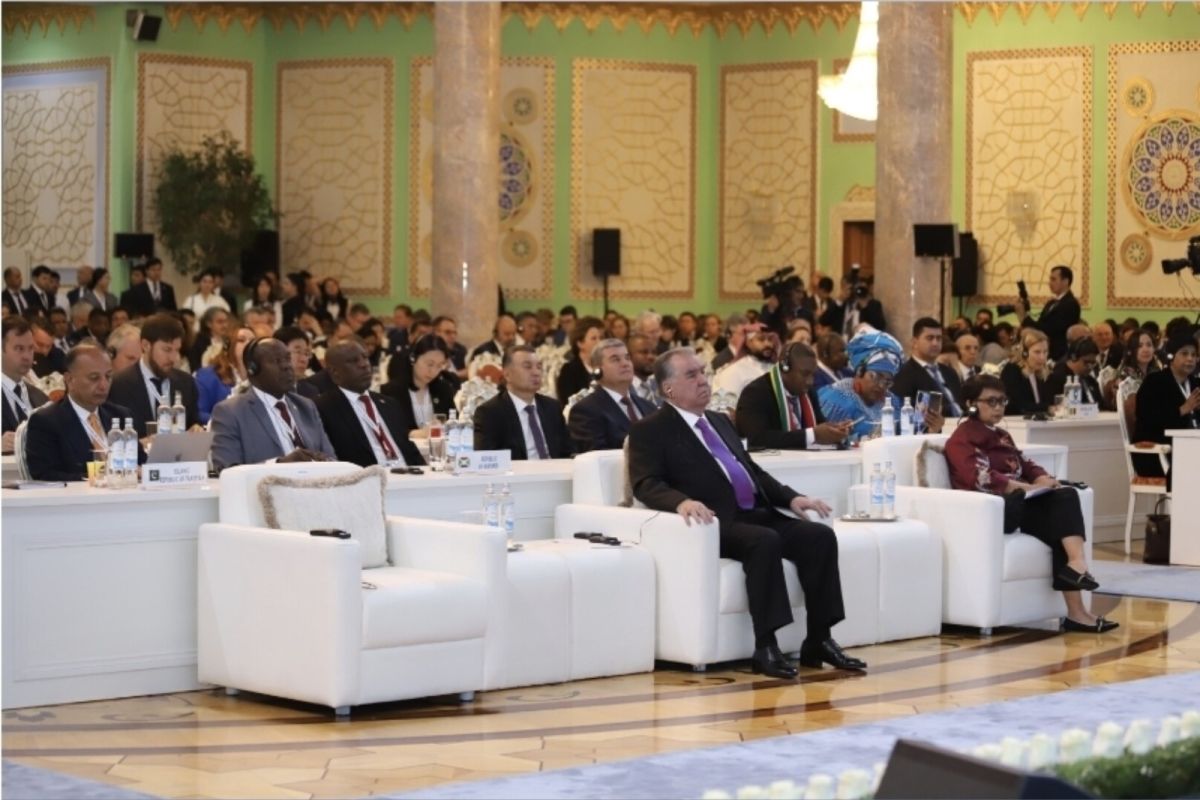
Deputy Foreign Minister Arrmanatha Nasir highlighted emerging new threats in efforts to enhance water resilience for sustainable development.
“A new underappreciated threat is emerging,” Nasir said during the fourth High-Level International Conference on the International Decade for Action ‘Water for Sustainable Development’ held in Dushanbe, Tajikistan, from 25-28 May.
He stated the new threats include significant mineral mining, AI infrastructure, data centres, and digital industries consuming billions of litres of water daily, with demand for these sectors doubling every few years.
He said water is an invisible resource driving the digital economy, and if not handled strategically, it could become a major global crisis. The multilateral systems relied upon by the international community to address this crisis are themselves in crisis, he added.
Therefore, he believes current UN reform should focus on tackling water crisis threats.
Nasir stressed Indonesia fully recognises the gravity of challenges shared with the international community and will continue to lead action by example, both regionally and globally.
Since the 10th World Water Forum in Bali in 2024, Indonesia has established a Water and Climate Excellence Centre. Over the past two years, it has provided capacity-building training on water and climate resilience to over 2,000 individuals from more than 40 Asia-Pacific nations.
Indonesia also pioneered the UN General Assembly resolution on World Lake Day, advocating for global lake ecosystem protection.
Furthermore, Indonesia has positioned water infrastructure as a strategic national financing centre, including through the state wealth fund Danantara, to generate multiplier effects across various sectors.
During the conference, Nasir put forward four calls to advance Indonesia’s water commitments: first, strengthening regional water cooperation; second, increasing strategic water investment as a development foundation; third, preparing water governance for the AI and digital economy era; and fourth, actively pushing for UN reform to grant it authority, resources, and equality to effectively address water issues.
“The world has knowledge, capital, and technology. What is lacking is collective political will and a multilateral system bold enough to accelerate action on water issues,” he said.