
Indonesia Has World's Second-Largest Geothermal Treasure, But Only 12% Is Utilised
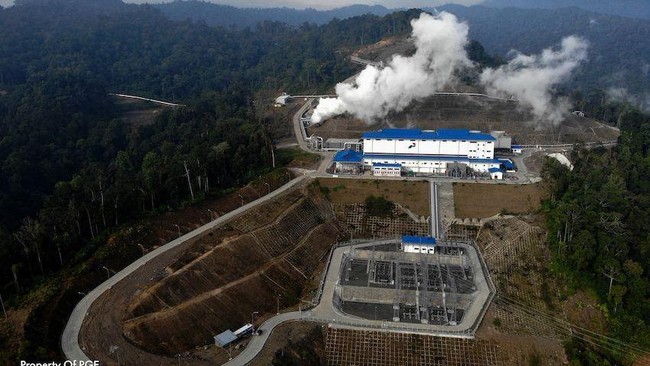
PT Pertamina Geothermal Energy Tbk (PGE) has noted that Indonesia’s current installed geothermal capacity only represents around 11-12% of its total potential. This is despite the country holding the world’s second-largest geothermal reserves, which could serve as a mainstay for national clean energy.
Edwil Suzandi, PGE’s Director of Exploration and Development, highlighted the gap between the available resources and their current utilisation, calling it a major commitment for the company to address. “The potential might be among the largest in the world, but if we look at the installed capacity, it is not even 20%, only around 11 or 12%,” he stated in CNBC Indonesia’s Energy Corner programme.
PGE currently has an installed capacity of 727 Mega Watts (MW) and is targeting growth to 1.8 Giga Watts (GW) by 2033. In the long term, the company aims for an installed capacity of 3 GW, with the ambition of becoming the world’s largest geothermal company.
To achieve these targets, the company is accelerating several projects, including the groundbreaking of the Lumut Balai Unit 3 Geothermal Power Plant in Muara Enim, South Sumatra. Exploration is also underway in the Gunung 3 area of Lampung, alongside preparations for drilling in Kotamobagu, North Sulawesi.
Edwil assessed that geothermal energy has a key advantage as a very stable baseload power source, as its production is unaffected by weather conditions or time of day. However, he acknowledged the industry still faces high-risk challenges and requires significant investment costs, necessitating cooperation with the government regarding regulation and ecosystem support.
“We realise that geothermal energy is similar to fossil energy in that it can support baseload. It is not affected by heat or rain, day or night, so it will consistently produce electricity in any situation,” he emphasised.
Under the 2025-2034 Electricity Supply Business Plan (RUPTL), the government is targeting an additional 69.5 GW of new power generation capacity. Of this, 42.6 GW will come from new and renewable energy (EBT) sources, 10.3 GW from energy storage systems, and 16.6 GW from fossil fuel-based plants. The renewable energy target includes 5.2 GW of new geothermal power capacity.