
Indonesia Has Icomex, These Are the 11 Largest Metal Mineral and Commodity Exchanges in the World
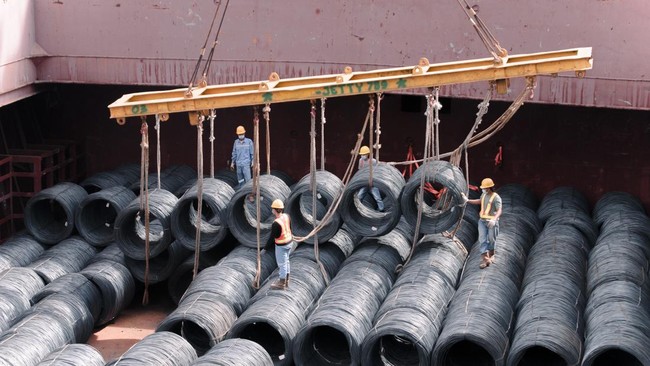
Jakarta, CNBC Indonesia - The government’s plan to establish the Strategic Mineral and Commodity Exchange, or Indonesia Commodity Exchange (Icomex), has brought global metal and mineral exchanges back into focus. Icomex is targeted to begin operations on 1 January 2027. The government hopes the exchange can serve as a trading venue for strategic commodities while also producing the Indonesia Reference Price as a national price benchmark. Before Indonesia planned Icomex, a number of global commodity exchanges had already become trading hubs for base metals, precious metals, iron ore, ferroalloys, and minerals for batteries and new energy. However, not all exchanges and contracts have the same level of liquidity. Some exchanges serve as global benchmarks, some are strong in regional markets, while others dominate specialised commodities.
- London Metal Exchange
The London Metal Exchange, or LME, is one of the most influential exchanges in global base metal price formation. The UK-based exchange trades aluminium, copper, nickel, tin, zinc, and lead through futures contracts, options, and physical delivery. In 2025, an average of more than 170,000 copper lots were traded daily. LME prices are still used by Indonesia as one of the references in determining the Nickel Mineral Reference Price.
- Commodity Exchange
Commodity Exchange, or COMEX, is part of CME Group in the United States. The exchange is known as one of the world’s largest trading centres for gold, silver, and copper futures and options contracts. Its contracts are used by mining companies, banks, investors, and industrial users for trading and hedging. In June 2026, COMEX Gold volume reached approximately 3.30 million contracts. Meanwhile, COMEX Copper recorded 1.85 million contracts and COMEX Silver around 1.57 million contracts.
- Shanghai Futures Exchange
The Shanghai Futures Exchange, or SHFE, is one of the largest metal exchanges in Asia. Available products include copper, aluminium, zinc, lead, nickel, tin, alumina, gold, silver, and various steel products. SHFE’s position is important because China is one of the world’s largest producers, processors, and consumers of metals. SHFE price movements are often used to read industrial demand conditions and the physical metal market in China.
- Dalian Commodity Exchange
The Dalian Commodity Exchange, or DCE, holds an important position in iron ore trading. Besides iron ore, the exchange trades coke and coking coal, which are important materials in the steelmaking industry. DCE prices are closely watched by mining companies, commodity traders, and steel producers. This is inseparable from China’s position as the world’s largest consumer and importer of iron ore.
- Singapore Exchange
The Singapore Exchange, or SGX, is one of the centres for iron ore derivatives trading accessible to international market participants. SGX offers iron ore futures, swaps, and options contracts. These products are widely used by mining companies, steel producers, commodity traders, and financial institutions. In March 2026, SGX iron ore futures and options contract volume reached 7.15 million contracts. The exchange demonstrates that non-producing countries can also become centres of commodity price formation.
- Multi Commodity Exchange of India
The Multi Commodity Exchange of India, or MCX, is one of India’s main commodity exchanges. Its metal products include gold, silver, copper, aluminium, zinc, lead, and nickel. MCX also provides several contract sizes to meet the needs of companies as well as participants with smaller transactions. Gold and silver are the most prominent metal products. MCX has significant influence in India, but its base metal prices have not yet become as strong a global benchmark as the LME.
- Shanghai Gold Exchange
The Shanghai Gold Exchange, or SGE, is the centre for physical and financial precious metal products in China. SGE trades gold, silver, and platinum through spot transactions, forwards, swaps, margin products, and physical delivery. The exchange also has an International Board accessible to foreign institutions. In June 2026, SGE gold trading volume reached approximately 1.24 million kilograms, while silver trading reached 8.43 million kilograms. However, platinum activity remains much smaller.
- Guangzhou Futures Exchange
The Guangzhou Futures Exchange, or GFEX, focuses on minerals related to electric vehicles, new energy, and the green transition. Traded products include lithium carbonate, industrial silicon, polysilicon, platinum, and palladium. Lithium carbonate is the main material for electric vehicle batteries. Meanwhile, industrial silicon and polysilicon are needed in the solar panel industry. Lithium and silicon contracts have been active, while platinum and palladium trading is still in the development stage.
- Zhengzhou Commodity Exchange
The Zhengzhou Commodity Exchange, or ZCE, trades ferrosilicon and manganese silicon needed by the steel industry. Ferrosilicon is used as an alloying and deoxidation material, while manganese silicon helps improve the strength and durability of steel. In March 2026, ferrosilicon trading reached approximately 7.8 million contracts. Manganese silicon recorded around 12.66 million contracts. Although active, the prices of both products remain more influential in the Chinese market.
- Osaka Exchange-JPX
The Osaka Exchange, part of the Japan Exchange Group, trades precious metal products such as gold, silver, platinum, and palladium. Some of these commodity contracts were previously on the Tokyo Commodity Exchange before being transferred to the Osaka Exchange. Gold and platinum have relatively more active markets. Meanwhile, silver and palladium transactions tend to be thinner, and palladium contracts do not always record transactions every day.
- Dubai Gold & Commodities Exchange
The Dubai Gold & Commodities Exchange, or DGCX, began operating
Source: jawawa.id (https://jawawa.id/newsitem/indonesia-has-icomex-these-are-the-11-largest-metal-mineral-and-commodity-exchanges-in-the-world-1787136829)
Originally published by CNBC Indonesia (https://www.cnbcindonesia.com/research/20260819114902-128-760575/ri-punya-icomex-ini-11-bursa-mineral-logam-komoditas-terbesar-dunia), translated from Indonesian