
Indonesia Has Alternative Energy Sources to Replace Fuel and LPG, Here Are the Sources
The government is continuously preparing various options to replace the roles of Petroleum Fuel (BBM) and Liquefied Petroleum Gas (LPG), which still rely on imports to this day.
Preparing alternative energy sources is a directive from President Prabowo Subianto, as an effort to achieve energy independence.
“This is the follow-up to the directive from Mr President during our meeting last week, before he departed for Japan and South Korea,” said Minister of Agriculture Amran Sulaiman, during a press conference at his office in Jakarta, quoted on Monday (6/4/2026).
So, what are the options to replace BBM-LPG?
Bioethanol
From the Ministry of Agriculture’s domain, Indonesia is focusing on utilising plants (biofuel) as a mixture for BBM. Bioethanol, for example, is currently the government’s main focus in developing a 20% bioethanol blend (E20) into petrol-type BBM.
The bioethanol to be blended comes from various plants such as corn, sugarcane, and cassava. “20% ethanol blend into petrol. From where? Corn, cassava, and sugarcane. All can grow in Indonesia,” he explained.
According to him, blending bioethanol into petrol can reduce consumption of fossil-based BBM. Considering that Indonesia currently still imports up to 50% of fossil-based BBM.
He also assured that raw material availability is sufficient, including from sugarcane molasses that has been exported so far.
“Our raw material that we export. There is 1 million tonnes. That’s molasses or sugarcane drippings. This can be made into and can produce 300,000 tonnes of ethanol,” he said.
Biodiesel
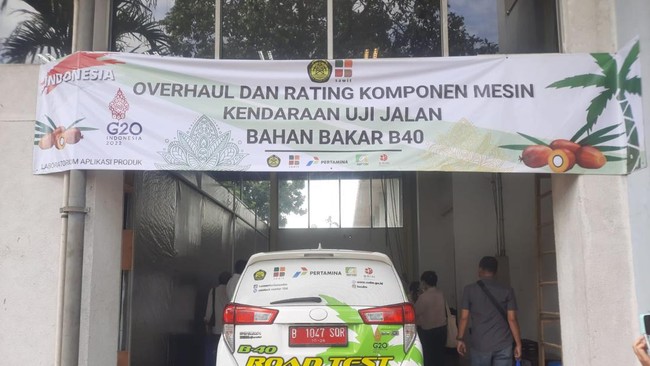
The government is also continuing the palm biodiesel programme, including the B50 target to stop diesel imports.
“Mr President’s promise that we stop diesel imports replaced by palm biofuel B50. That’s 5.3 million tonnes. This year we don’t import. And that’s done,” said Amran on the same occasion.
According to him, the geopolitical situation actually becomes a momentum to strengthen national energy and food independence.
In line with that, Minister of Energy and Mineral Resources (ESDM) Bahlil Lahadalia has emphasised that diesel-type BBM is no longer dependent on imports, so domestic supply is sufficiently secure even amid energy supply disruptions in various countries.
Even though several countries in Asia have announced energy crisis conditions, according to him, Indonesia’s energy situation is still considered safe.
“Even if other countries, neighbouring countries in part, some countries in Asia have started entering a state not desired by almost all countries in this case emergency, we must assure the Indonesian people that our diesel, God willing, we no longer import, so clear,” he said during a press conference after inspecting BBM supply at the Bolon petrol station, Colomadu Subdistrict, Karanganyar Regency, Central Java, on Thursday (26/3/2026).
Electrification
Executive Director of the Center Of Economic and Law Studies (CELIOS) Bhima Yudhistira once suggested that the Indonesian government accelerate the vehicle electrification programme in parallel.
“Sweden becomes a country immune to oil shocks because 61% share of EV (electric vehicles) from all new cars,” said Bhima to CNBC Indonesia some time ago.
In agreement, Chief Executive Officer (CEO) of the Institute for Essential Services Reform (IESR) Fabby Tumiwa stated that transitioning to electric vehicles and electric stoves could be a strategic step to reduce consumption of import-based energy, both BBM and LPG.
“For example, in the transportation sector, transitioning one million fossil fuel vehicles to electric vehicles is estimated to significantly reduce crude oil needs. Replacing one million electric vehicles can reduce crude oil needs by up to 13.2 million barrels per year,” said Fabby some time ago.
As for the household sector, he continued, the use of electric stoves is also considered effective in reducing LPG consumption. For capable households, electric stoves are even more economical than non-subsidised LPG, while reducing dependence on energy imports.
“If households start using induction stoves, LPG savings could reach more than 130 tonnes per year,” he added.
PLTD to PLTS
The Ministry of Energy and Mineral Resources (ESDM) will replace electricity sources from Diesel Power Plants (PLTD) with Solar Power Plants (PLTS) in Underdeveloped, Outermost, Frontier (3T) areas.
Deputy Minister of ESDM Yuliot Tanjung said that those areas still use PLTD as an electricity source. In addition, 3T areas are also not yet connected to other electricity infrastructure.
“That’s mostly still using diesel, right. That’s in 3T areas that are not yet connected to the grid, they still use diesel. So this is the dedieselisation programme,” said Yuliot at the Ministry of ESDM office, Jakarta, on Friday (13/3/2026).
Several locations mentioned such as Simeulue, Nias, Mentawai, to Enggano, will be prioritised for their PLTD to be replaced with renewable energy plants. Certainly, the Ministry of ESDM has studied areas in Eastern Indonesia for the execution of the programme plan.
“There are several locations that have been certified in the Directorate General of Electricity and also in the Directorate General of New Renewable Energy and Energy Conservation. Which hopefully we prioritise in the Eastern Indonesia region,” he added.
Jargas
Director General of Oil and Gas (Dirjen Migas) of the Ministry of ESDM, Laode Sulaeman, emphasised that the household gas network (jargas) programme will be further strengthened. Especially to reduce subsidy figures for imported energy LPG.
“So energy subsidies like I explained earlier, we can lower if the consumption figure can we cut (reduce) one of which related to subsidised consumption for example 3 kg LPG. That’s why in 2025 and continued in 2026 we have the gas network (jargas) programme,” he revealed when attending Energy Outlook 2026 in Jakarta, on Thursday (05/02).
Based on data from the Ministry of ESDM, jargas construction is being carried out