
Indonesia Has 7,000 Slum Areas, AHY: Alhamdulillah, Decreasing But Marginally
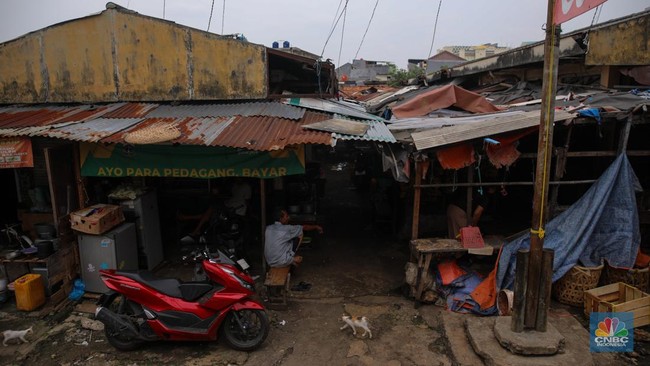
The Coordinating Minister for Infrastructure and Regional Development, Agus Harimurti Yudhoyono (AHY), has revealed that Indonesia still faces serious issues regarding slum settlements. Currently, there are approximately 7,000 slum areas in Indonesia, varying in levels of severity.
AHY stated that of these thousands of areas, 5,620 fall into the light slum category, 1,666 are categorised as medium, while around 100 are classified as severe slums.
“Alhamdulillah, there has been a decrease, but it is very marginal from 2025 to 2026,” said AHY during the Integrated Slum Settlement Handling Coordination Forum at the BRIN Auditorium, Jakarta, on Monday (14/9/2026).
He noted that addressing slum areas is not just about housing conditions, but also the living environment. This includes supporting facilities such as drinking water, sanitation, drainage, and waste management.
“Slum areas certainly relate to building conditions, specifically uninhabitable houses. However, it is not just that. Remember, without supporting facilities, such as the environment, people’s homes also become disordered. Everyone finds their own way to move around the area, which ultimately leads to chaos,” he said.
According to AHY, access to clean water is also a crucial factor in determining the quality of life in residential settlements.
“If drinking water is not guaranteed in terms of quality and sustainability, it will diminish the quality of life for the community,” he explained.
Regarding the management of slum settlements, AHY explained that the central government handles areas larger than 15 hectares, while provincial governments manage areas between 10 and 15 hectares. Meanwhile, regency/city governments are responsible for handling slum areas smaller than 10 hectares.
Of the total areas, the largest portion of management lies with regency/city governments at 66%. The central government holds a 21% share, while provincial governments account for 13%.
AHY emphasised that slum management must also consider disaster risks, highlighting that many settlements are still located in disaster-prone areas.
“There are areas on riverbanks. I have previously mentioned our river issues; there are disaster-prone areas. Do not build in disaster-prone locations. If a disaster occurs and we rebuild in the same location,” said AHY.
He added that rebuilding disaster-affected areas should not merely restore the previous condition. The government needs to build more resilient areas.
“We must not only rebuild, but rebuild better, with high-quality resilience,” he said.
AHY noted that the previous government had addressed slum areas through various instruments, including the Self-Help Housing Stimulant Assistance (BSPS), Uninhabitable Houses (RTLH) programme, the development of infrastructure, facilities, and utilities (PSU), integrated housing programmes, and housing finance through the FLPP.
In 2025, the central government addressed 10 slum areas across nine provinces, covering a total of 262.19 hectares to improve settlement quality. Meanwhile, in 2026, the government targets the management of 16 priority areas across 16 provinces, covering a total area of 436.32 hectares.
AHY emphasised that the management of slum areas must be carried out in a gradual and measurable manner.
“So, there are actually quite many instruments and approaches we can implement. In 2026, management will be carried out in 16 areas covering 436 hectares across 16 provinces,” he concluded.
Source: jawawa.id (https://jawawa.id/newsitem/indonesia-has-7-000-slum-areas-ahy-alhamdulillah-decreasing-but-marginally-1789369239)
Originally published by CNBC Indonesia (https://www.cnbcindonesia.com/news/20260914115518-4-767665/ri-punya-7000-kawasan-kumuh-ahy-alhamdulillah-turun-tapi-tipis), translated from Indonesian