
Indonesia Has 31,000 Plant Species, So Why Does It Still Import Pharmaceutical Raw Materials?
Surabaya, CNBC Indonesia — Indonesia is known as one of the world’s most biodiverse countries. However, its abundant natural wealth has not yet been fully harnessed to meet domestic demand for pharmaceutical raw materials.
Food and Drug Monitoring Agency (BPOM) chief Taruna Ikrar said Indonesia has more than 31,000 plant species that could serve as a source for developing pharmaceutical products. At the same time, more than 90% of the country’s pharmaceutical raw materials are still imported.
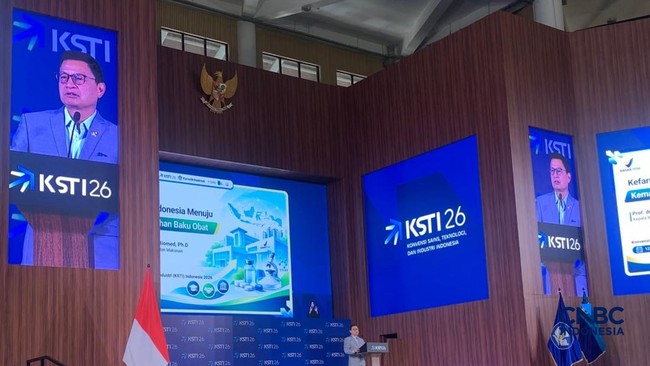
Taruna made the remarks in a presentation entitled “Indonesian Pharmaceuticals Towards Self-Sufficiency in Drug Raw Materials” at the 2026 Indonesian Science, Technology and Industry Convention (KSTI) at Sepuluh Nopember Institute of Technology (ITS) in Surabaya on Thursday (12 November 2026).
“We have a problem in Indonesia because of the challenges I mentioned. Our natural resources are extraordinary,” Taruna said.
He said Indonesia’s natural wealth was a major asset for developing the national pharmaceutical industry. However, turning the potential of plants into pharmaceutical raw materials that can be produced at scale is not easy.
Development requires research, technological expertise, proof of safety and efficacy, and compliance with regulatory requirements. One challenge is the capacity to process natural materials into active ingredients that can be used in pharmaceutical products.
Taruna said the process requires adequate technology to ensure research findings can be developed into products that meet industry standards. He also highlighted the challenge of commercialising research — turning laboratory innovations into marketable products.
He described a gap between academic research and commercial production, commonly known as the “valley of death”. Challenges include aligning research findings with industry needs, technological readiness, evidence and financing, as well as regulatory compliance.
BPOM is therefore encouraging stronger collaboration between universities, businesses and the government to accelerate the development of domestic pharmaceutical products.
“We call this the Academia, Business and Government (ABG) approach,” he said.
Taruna said he hoped Indonesia would not merely become a place where medicines are manufactured, but would also develop its own pharmaceutical innovations.
“From ‘Made in Indonesia’ to ‘Innovate in Indonesia’,” he said.
In his view, strengthening domestic research and the pharmaceutical industry is essential to ensuring that Indonesia’s natural wealth delivers greater benefits to the public.
Source: jawawa.id (https://jawawa.id/newsitem/indonesia-has-31-000-plant-species-so-why-does-it-still-import-pharmaceutical-raw-materials-1794487833)
Originally published by CNBC Indonesia (https://www.cnbcindonesia.com/lifestyle/20261112170313-33-784741/ri-punya-31-ribu-jenis-tanaman-kenapa-bahan-baku-obat-masih-impor), translated from Indonesian