
Indonesia Halts Nickel Ore Exports Starting Today - Jawa Pos
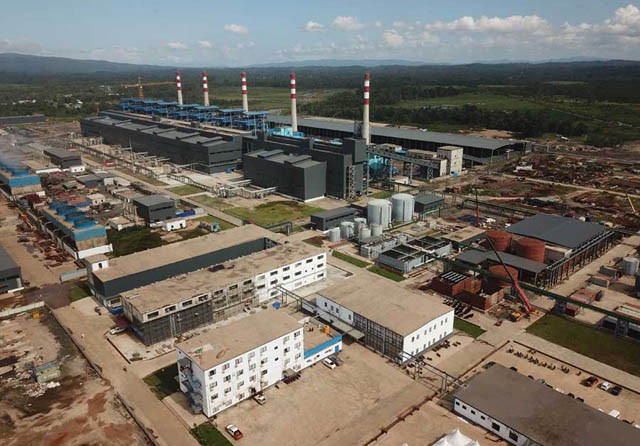
Starting today, Tuesday (29 October), the Investment Coordinating Board (BKPM), representing the government, has banned the export of nickel ore. This policy takes effect more than two months earlier than the initial policy from the Ministry of Energy and Mineral Resources (ESDM), which prohibited nickel mining companies from exporting their production starting 1 January 2020.
The decision resulted from a meeting between BKPM Head Bahlil Lahadalia and several business associations on Monday (28 October). Bahlil explained that the decision does not change the rules effective from 1 January next year. “We are only accelerating the process,” Bahlil said at the BKPM office in Jakarta yesterday.
He revealed that nickel ore exports have actually harmed Indonesia because they provide no added value domestically. The former general chairman of the Indonesian Young Entrepreneurs Association (Hipmi) assessed that the policy is taken to create downstream processing for nickel ore commodities. The downstream processing created is expected to generate significant added value from processing nickel-based products.
Nickel ore stocks available until December will be purchased by entrepreneurs who already have smelters. The price will be adjusted to the prevailing price in China, minus taxes and shipping costs. “Surveying will be conducted by two parties to ensure no deceit between us and no complaints,” he said.
Based on data from the Ministry of ESDM, the total volume of proven nickel reserves in Indonesia reaches 689.89 million tonnes. With this condition, the supply for domestic refining facilities can only be guaranteed for about seven to eight years.
General Chairman of the Indonesian Processing and Refining Industry Association (AP3I) Prihadi Santoso stated that there are currently around 14 operating smelters. According to him, in planning, there are about 27 smelters still under construction, entering the completion stage. The association will also carry out a supervisory function to nickel business actors.
“If there are still entrepreneurs who dare to export, we will take action by expelling the individual from the association,” he emphasised.
General Chairman of Hipmi Mardani H. Maming affirmed that no one is disadvantaged by the acceleration of stopping nickel ore exports. “We agree not to export as long as the nickel ore is bought by smelters in Indonesia. Because we are given a middle path, smelters must buy at the international China price. Why would we send it to China if it’s the same,” he said.
Meanwhile, PT Phapros Tbk (PEHA) has conducted its maiden export to Peru. This subsidiary of PT Kimia Farma Tbk exported TB drugs to meet the needs of that country.
Phapros President Director Barokah Sri Utami revealed that export and import negotiations with Peru have been ongoing since late 2018. “As a BUMN subsidiary, we learned of the great need for TB drugs in Peru, including efforts to reduce the prevalence of cases of the disease there,” she explained yesterday.
Emmy—as Sri Utami is known—stated that Peru has many local pharmaceutical companies. However, none can yet produce TB drugs. According to the World Health Organization (WHO), the prevalence of TB cases in Peru is the highest on the American continent. The success rate of treatment is slow (only around 1.5 percent per year) and needs to be increased to 4-5 percent to end the TB epidemic and other infectious diseases by 2030.
“The total export value to Peru is still below Rp 5 billion. However, we are optimistic that the value can be larger with government tender projects in that country,” she said.
Phapros is targeting a 5 percent contribution from exports to total sales. Previously, in 2014, Phapros also conducted its maiden export to Cambodia by sending 11 types of products.
Nickel Production Realisation 2019
January: 145.35 thousand tonnes
February: 146.55 thousand tonnes
March: 144.64 thousand tonnes
April: 133.50 thousand tonnes
May: 160.48 thousand tonnes
June: 151.48 thousand tonnes
July: 174.021 thousand tonnes
August: 160.563 thousand tonnes
September: 94.983 thousand tonnes
Source: Ministry of ESDM