
Indonesia Hajj Incorporated: Orchestrating Resources Across the Hajj and Umrah Ecosystem
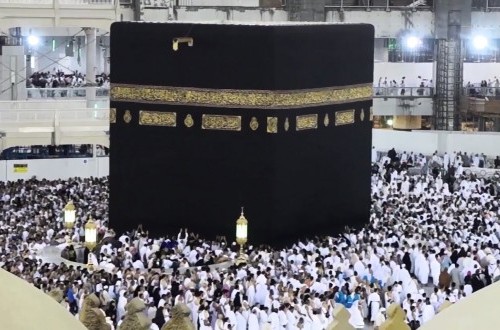
The Hajj journey begins long before an aeroplane takes off. For prospective pilgrims, the intention to worship is accompanied by financial preparation, a waiting period, guidance, health checks and various travel requirements. Behind every departure is the lengthy work of many institutions, which is not always visible to pilgrims.
For pilgrims, who carries out all this work may not be their main concern. Their expectations are simple: to depart in peace, worship in comfort, return safely and pay a reasonable cost. Yet meeting those expectations requires the state to manage a complex ecosystem that extends across national borders.
Indonesia is now at an important moment in the history of Hajj management. The establishment of the Ministry of Hajj and Umrah, the presence of the Hajj Financial Management Agency (BPKH), and Danantara’s initiative to develop the Indonesian Hajj Village in Saudi Arabia are institutional assets to be welcomed. The state has brought public services, financial management and investment into the same ecosystem.
Alongside these three are various coordinating ministries, presidential advisers, agencies, companies and service partners with complementary capabilities. This is an extraordinary step forward after nearly 80 years of providing Hajj services in Indonesia.
But will a more complete institutional landscape automatically lead to better Hajj services? Not necessarily. Each institution’s strengths must be translated into collective strength.
To understand the challenge, Hajj must be considered across three interconnected domains: finance, operations and religious guidance. They do not operate independently. Decisions in one domain often determine the success of the other two.
The financial domain stretches from the moment prospective pilgrims pay their Hajj costs to the management of those funds and the financing of services. It involves affordability, returns, liquidity, solvency, investment risk and safeguarding the funds of people still waiting to depart—that is, sustainability. Its time horizon extends far beyond a single Hajj season.
The operational domain brings together a range of services, from travel administration, healthcare and flights to accommodation, meals and transport in Saudi Arabia. Here, the capabilities of government, businesses and service partners meet in work that demands precision and must be repeated year after year.
Meanwhile, religious guidance does not end with pre-departure training. Pilgrims need support to understand and carry out the rites in accordance with religious guidance, including when they face physical limitations or changing conditions on the ground. These three domains explain why Hajj services require institutions with different areas of expertise. That diversity is not a weakness to be eliminated.
What needs to improve is how those capabilities are connected so that the pilgrim’s experience remains coherent. Why is synergy alone not enough? Imagine an orchestra with excellent musicians and fine instruments. Beautiful music does not come about solely because each player is talented.
It emerges when they understand their roles, play their parts at the right moment and move in the same direction. Hajj services face a similar challenge. Managers of Islamic financial institutions and banks, airlines, immigration services, Hajj hostel operators, accommodation providers, catering companies, health workers and religious guides may each perform well by their own measures, whether in public or private institutions.
But even when their work is repeated in every cycle, their individual success will not necessarily provide pilgrims with a good journey if their efforts are not connected. Consider a change to a flight schedule. This is not solely the airline’s concern. A pilgrim’s stay at a Hajj hostel may need to be extended.
The associated costs, onward transport, room readiness in Saudi Arabia, meal schedules and pilgrim support may all need to be adjusted. Contractual payment obligations may also be affected. If information stops with a single institution, a minor issue can spread into a much wider service disruption.
Pilgrims ultimately bear the consequences of misalignment they did not cause. Synergy is certainly necessary, but it must go beyond an agreement to co-operate. It must mean aligned decisions, ready resources, timely information-sharing and the ability to respond collectively to change. This is what we mean by orchestrating the ecosystem.
In strategy studies, two ways of viewing an ecosystem can be distinguished: “ecosystem-as-affiliation” and “ecosystem-as-structure”. The first focuses on who is connected within an ecosystem.
The second starts from the activities that must complement one another to deliver value. For Indonesia’s Hajj services, the second perspective is the more relevant starting point. The key questions are not which organisation each participant should belong to, but which activities need to be connected, who can carry them out, and how those relationships should be managed in pilgrims’ interests. This distinction matters to policymakers.
Strengthening an ecosystem does not mean enlarging a single organisation. Nor will bringing entities together administratively necessarily resolve coordination problems between interdependent activities. Uniting strengths, not institutions: “Indonesia Hajj Incorporated” (IHI) is proposed as both a way of thinking and a working architecture for mobilising the institutional resources the state has put in place.
The idea does not propose creating a new agency, nor establishing a holding company to oversee all Hajj institutions. Here, “incorporated” means strategic unity amid institutional diversity. What should be brought together is the direction and strength of the work, not the legal entities or the powers of each institution.
Under the IHI framework, the Ministry of Hajj and Umrah would lead the ecosystem strategically, aligning the direction of Hajj services, service standards and religious guidance.
BPKH would manage Hajj finances, connecting the funding needs of the services with investment discipline, liquidity and protection of pilgrims’ funds. Danantara, as Indonesia’s sovereign wealth fund, could contribute through asset development and the mobilisation of corporate capabilities.
Its presence should not be seen as a replacement for existing institutions. Rather, its capabilities should form part of collective work across the Hajj and Umrah ecosystem. The same applies to other ministries and agencies, local governments, banks and service providers. Each has a distinct area in which it can contribute.
They do not all need to sit within one organisation to work towards the same goal. We call this approach “distributed orchestration domains”. The Ministry of Hajj and Umrah would lead strategic direction and service orchestration. BPKH would orchestrate financial capabilities within its mandate. Danantara would orchestrate strategic asset and corporate capabilities, while other institutions would mobilise their respective sectoral expertise—all in a distinctly Indonesian context.
These orchestration domains do not create a new division of legal powers. They are a way of organising contributions according to existing mandates and capabilities. The Ministry of Hajj and Umrah’s leadership does not require every entity to sit within its organisational structure.
Leading an ecosystem is different from owning or controlling all its members. As strategic leader, the ministry can encourage agreement on service objectives, information-sharing and the resolution of cross-institutional obstacles—what is sometimes called “boundary spanning”. Decisions that fall within each institution’s authority would still be made through the applicable procedures.
Source: jawawa.id (https://jawawa.id/newsitem/indonesia-hajj-incorporated-orchestrating-resources-across-the-hajj-and-umrah-ecosystem-1795701068)
Originally published by Republika (https://opini.republika.co.id/berita/tp40x4430/indonesia-hajj-incorporated-orkestrasi-sumber-daya-ekosistem-haji-dan-umrah), translated from Indonesian