
Indonesia Guarantees Indigenous Peoples' Veto Rights in Biodiversity Credit Scheme
Amid London Climate Action Week, the Ministry of Environment announced details of a national biodiversity credit market blueprint that places indigenous peoples and on-site ecosystem rescue as the main beneficiaries. Indonesia has affirmed this scheme will not operate in a capitalistic manner that solely benefits large corporations.
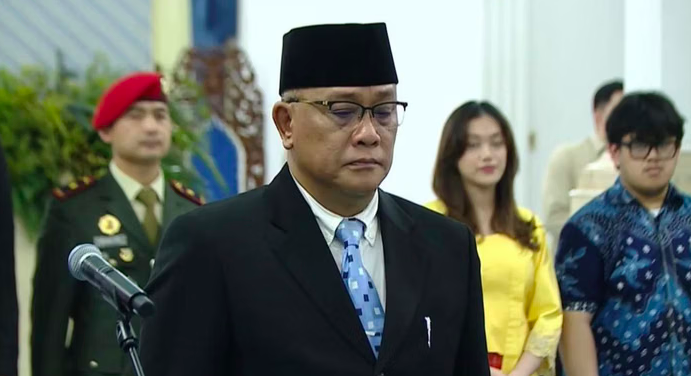
Environment Minister Moh Jumhur Hidayat reminded that global nature market designs often forget those who actually guard the forests on the ground. “Allow me to emphasise that the primary foundation of a successful biodiversity credit is the fair and equitable provision of benefits for local communities and indigenous peoples who carry out the real hard work of conservation in the field,” Jumhur said in an official statement on Wednesday (24/6).
Indonesia is strengthening two main legal shields to protect local communities from the risk of exploitation. First, the guarantee of indigenous peoples’ absolute right to give or withhold consent without coercion over any project in their customary territories. Second, the finalisation of a Government Regulation ensuring that every utilisation of genetic resources and traditional knowledge yields tangible benefits for local communities, rather than flowing to multinational corporations.
The multi-credit scheme designed by the Ministry of Environment also transforms the conventional conservation paradigm. Assessment no longer merely counts the extent of tree cover, but assigns economic value to the existence of endemic flora and fauna. Success in maintaining the habitat of rare wildlife such as tigers and orangutans will have its own value, so that every life within the ecosystem receives properly funded protection.
To prevent false environmental claims, Indonesia is implementing four strategic pillars. First, alignment of the Indonesian Biodiversity Strategy and Action Plan 2025-2045 so that biodiversity credit policy is consistent with the national strategy for the next two decades. Second, standardisation of monitoring, reporting, and verification systems to prevent double counting. Third, finalisation of regulations on access and benefit-sharing for the management of national genetic wealth. Fourth, accelerated cross-agency synchronisation starting this year.
The Ministry of Environment is leading a cross-sector coalition involving the Ministry of Forestry, the Ministry of Marine Affairs and Fisheries, the Ministry of Agriculture, BRIN, Bappenas, the private sector, civil society activists, and representatives of indigenous peoples in building this scheme inclusively.