
Indonesia-Germany Diplomatic Relations Drive Concrete Economic Cooperation
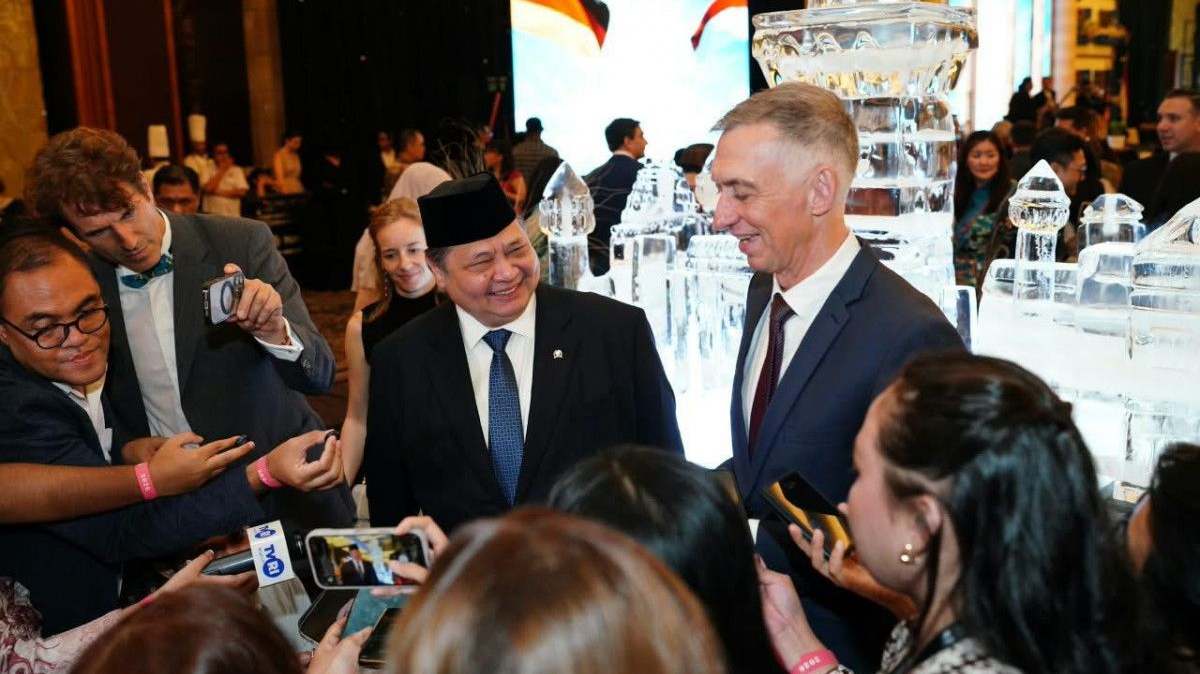
Jakarta: Diplomatic relations between Indonesia and Germany are increasingly driving cooperation that could have a direct impact on trade, investment, energy, education, and employment opportunities. The diplomatic ties between the two nations have now spanned 74 years.
According to an official statement from the Coordinating Ministry for Economic Affairs of the Republic of Indonesia released on Saturday, 3 October 202<0xA0>6, Coordinating Minister for Economic Affairs Airlangga Hartarto stated that the relationship between the two countries continues to evolve and will enter its 75th year next year. He noted that this momentum needs to be translated into more concrete economic collaboration.
“For Indonesia, this moment serves as a meaningful reminder of our long-standing and continuously developing partnership,” Airlangga said during his Congratulatory Remarks at German Unity Day 2026 on Friday, 2 October 2026, in Jakarta.
In the energy and technology sectors, significant opportunities for cooperation are open through potential collaboration in renewable energy development, electrical infrastructure, electric vehicles and batteries, semiconductors, digital infrastructure, and sustainable finance.
Germany, alongside Japan, also serves as a co-lead of the International Partners Group within the Just Energy Transition Partnership (JETP) scheme, which supports the acceleration of investment and financing for Indonesia’s clean energy transition.
This economic relationship already possesses a substantial foundation. Indonesia-Germany trade value reached approximately USD 6.11 billion in 2025, while more than 250 German multinational companies are currently operating in Indonesia.
Beyond capital, Indonesian labour could also find opportunities. Indonesia-Germany cooperation also touches upon sectors closely related to labour needs, namely vocational education and skills development. Collaboration in these fields is expected to enhance the quality of Indonesian human resources while opening opportunities for skilled Indonesian workers to work in Germany.
Moving forward, cooperation is also being directed towards various sectors such as industry and infrastructure, trade and investment, energy and digital transformation, health, life sciences, and human resource development.
One instrument expected to strengthen this relationship is the Indonesia–European Union Comprehensive Economic Partnership Agreement (IEU-CEPA). This agreement is targeted to provide wider market access, increase trade, and strengthen the engagement of Indonesian businesses with the European Union market, including Germany.
Airlangga expressed hope that the signing of the IEU-CEPA could take place this year and that the ratification process proceeds so that implementation can begin early next year.
“CEPA creates market access, as well as stronger trade and business engagement between Indonesia and the European Union. We certainly hope this can also be utilised by German businesses and German investment,” Airlangga explained.