
Indonesia Faces Three Deficits: Morality, Intellectuality, and Spirituality
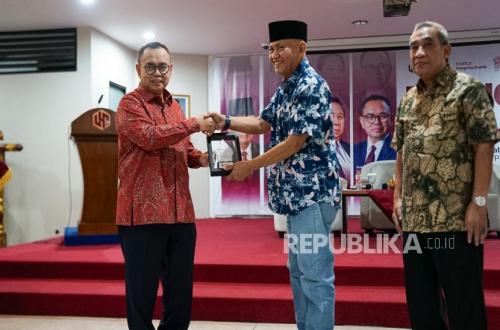
Two figures who a decade ago confronted Setya Novanto, the e-KTP corruption defendant once considered untouchable by law, reunited at Universitas Harkat Negeri. Agus Rahardjo, KPK Chairman from 2015 to 2019, and Sudirman Said, Minister of Energy and Mineral Resources from 2014 to 2016, reached the same conclusion: the achievements of the 1998 reform movement are experiencing a serious regression. Sudirman Said stated that Indonesia is currently in a dark age in terms of governance, describing the administration of President Joko Widodo as the worst period. “The structure is damaged, the people are damaged, and the culture is damaged,” he said on Wednesday (25/6/2026), depicting state institutions he claims were left in a fragile state. According to Sudirman, the nation is currently experiencing three simultaneous deficits: a deficit of morality and state ethics, an intellectual deficit, and a spiritual deficit. He argued that the root of the problem lies in a national leadership that fails to recognise its role as a role model and does not shoulder the responsibility for the continuity of the state. He referred to Marcus Mietzner’s book, Ruling Indonesia, which identifies leadership as the source of governance damage. Because the leaders caused the damage, Sudirman said, the repair must also begin with the leadership aspect. He proposed three models needed by Indonesia: institutional leadership, collective leadership, and intrinsic leadership. Agus Rahardjo opened the discussion by questioning why the results of the 1998 Reform movement have regressed, despite that period producing a series of governance improvements. He cited the establishment of the KPK, PPATK, the Deposit Insurance Corporation, the Judicial Commission, and the Constitutional Court as achievements that should have become a foundation. He warned that the destruction of governance began with leadership that ignored integrity. Today, he said, it seems no one pays attention to the MPR Decree on a Clean State Administration Free from Corruption, Collusion, and Nepotism. “Nepotism is happening everywhere, corruption at all levels and sectors. There must be a movement to restore the results of the reform, and civil society and the academic world must act,” Agus said. Agus also highlighted the decline in Indonesia’s position on the Corruption Perception Index, which has stagnated at 34 for years, far behind Singapore (84), Brunei (around 65), and Malaysia (51), and has even been surpassed by Timor Leste.