
Indonesia Faces 18% as Trump’s New Tariffs Target 14 Economies
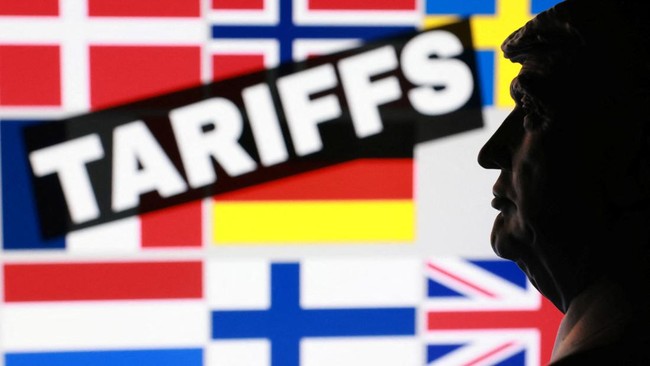
Jakarta, CNBC Indonesia — The Office of the United States Trade Representative (USTR), led by Jamieson Greer, has formally determined that manufacturing policies and practices in 14 trading partners, including Indonesia, are unreasonable and burden US commerce. The determination under Section 301 of the Trade Act of 1974 opens the way for Washington to impose additional tariff penalties.
In its latest release on Thursday (26 November 2026), the USTR listed the 14 economies as China, the European Union, Singapore, Switzerland, Indonesia, Malaysia, Cambodia, Thailand, South Korea, Vietnam, Taiwan, Bangladesh, Japan and India. The USTR has not yet made a determination on Mexico or Norway.
USTR chief Jamieson Greer said market-distorting industrial practices over several decades had eroded the US manufacturing base. President Donald Trump has therefore proposed concrete action, as statements made at global forums have not led to change.
Most common concerns
In its statement, Greer highlighted patterns in trading partners’ industrial policies that the USTR considers detrimental to American workers and businesses.
“For decades, many of our trading partners have adopted industrial strategies built on targeting manufacturing, suppressing wages and labour, financial and other support, inputs from non-market economies, and other market-distorting practices that tilt trade balances in their favour while eroding America’s manufacturing base,” Greer said.
“Recognising this, since 2016, leaders ranging from Donald Trump and Joe Biden to Xi Jinping and Emmanuel Macron have acknowledged the threat that structural overcapacity and overproduction pose to the global economy. But when successive statements at the G7, G20, WTO and other forums failed to produce change, President Trump proposed taking action to eliminate these unfair measures, policies and practices. This will allow us to level the playing field for American workers and chart a new, more sustainable course for the world economy.”
According to the USTR’s findings, the following similar practices were identified most frequently across the 14 economies:
Industrial plans and aggressive subsidies: Almost all the economies investigated — including China, the EU, Japan, South Korea, Taiwan and India, as well as Southeast Asian countries such as Indonesia, Vietnam, Thailand, Malaysia, Cambodia and Bangladesh — use industrial master plans, non-market export targets, export credits or preferential financing to boost manufacturing capacity.
Reliance on investment and non-market economy inputs: The USTR said all 14 economies had failed to address global overcapacity by allowing foreign direct investment and cheap raw-material imports from non-market economies, particularly China, to be used in manufacturing export products.
Weak labour protections and wage suppression: Most of the economies under investigation, including China, India, Indonesia, Vietnam, Thailand, Malaysia, Cambodia, Bangladesh, Japan, Singapore and Taiwan, were criticised over inadequate workers’ rights protections and wage suppression. The USTR also cited forced labour in China.
Financial repression and barriers to market access: China, India, Indonesia, Japan, Singapore, Taiwan, Vietnam and Bangladesh were accused of using financial repression to direct capital towards priority sectors. Switzerland was criticised for holding down the value of its currency and subsidising electricity costs for steel producers, while the EU, India and Thailand were said to maintain barriers to market access.
Sector-specific policies: The USTR also highlighted policies such as Indonesia’s mineral downstreaming, intellectual property theft and forced technology transfer in China, and the transshipment of goods through Vietnam.
Overall, the USTR concluded that these practices burden US commerce in three main ways: by reducing commercial opportunities for US producers and exporters; harming the US economy through lost production, exports, jobs and manufacturing investment; and increasing US economic security risks by creating dependence on inputs from non-market economies.
Potential tariff rates for the 14 economies
As a follow-up, the USTR has proposed additional tariffs on the 14 economies, on top of existing Section 301 tariffs and with certain products exempted:
Vietnam: Tariffs of up to 35% on all goods are proposed, with the option of reducing the rate to 20% if Vietnam reaches a responsive Agreement on Reciprocal Trade with the US.
India: Tariffs of up to 25% on all goods are proposed, with the option of reducing the rate to 17% if a responsive Agreement on Reciprocal Trade is reached with the US.
China: Tariffs of up to 20% are proposed on goods outside the annexes, in addition to Section 301 duties relating to forced labour; tariffs of up to 10% would apply to products in Annex A, while products in Annex B (30-For-30) would be exempt. The proposal takes into account the agreement reached by President Trump and President Xi in Kuala Lumpur on 30 October 2025.
Singapore: Tariffs of up to 20% on all goods are proposed, with a possible reduction to 10% if a reciprocal trade agreement or responsive negotiations with the US are achieved.
Indonesia, Malaysia, Thailand, Cambodia and Bangladesh: Tariffs of up to 18% on all goods are proposed for each country. The USTR said it would take into account existing Section 301 and Section 232 duties, ongoing consultations, and commitments under each country’s reciprocal trade agreement or framework with the US.
The EU, Japan, South Korea, Switzerland and Taiwan: Tariffs of up to 15% on all goods are proposed for each economy, in addition to most-favoured-nation (MFN) and existing Section 301 tariffs. The USTR said it would consider existing Section 301 and Section 232 duties, ongoing consultations, and bilateral trade-framework agreements or strategic investment agreements with the US.
Next steps
Before making a final decision, the USTR has opened a consultation period and invited public submissions on all the proposed retaliatory tariffs.
Interested parties have until 5 January 2027 to request to appear at a hearing and submit a summary of their testimony. This is also the deadline for written comments. The USTR will then hold public hearings on the proposed measures on 25 January 2027, with further hearings to follow as needed.
Source: jawawa.id (https://jawawa.id/newsitem/indonesia-faces-18-as-trumps-new-tariffs-target-14-economies-1795661446)
Originally published by CNBC Indonesia (https://www.cnbcindonesia.com/news/20261126084114-4-788579/ri-kena-18-daftar-lengkap-negara-yang-bakal-dihukum-tarif-baru-trump), translated from Indonesian