
Indonesia Eyes Belarusian Tractor Technology for Agricultural Modernisation
To support this goal, the modernisation of agriculture and the availability of efficient heavy equipment are crucial factors.
Jakarta (ANTARA) - Coordinating Minister for Economic Affairs Airlangga Hartarto visited several strategic Belarusian industries in the heavy equipment, commercial vehicle, and modern agricultural mechanisation sectors.
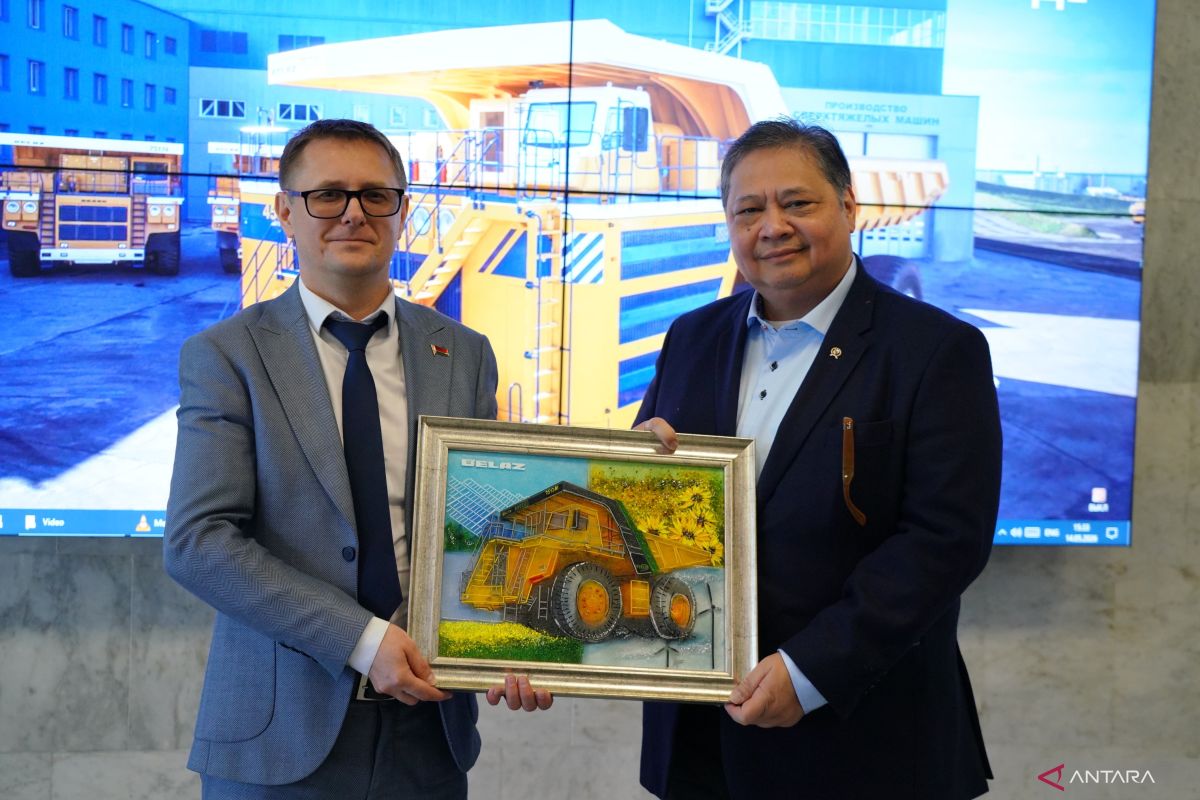
The visit included Minsk Tractor Works (MTZ), MAZ (Minsk Automobile Plant), and BelAZ Holding Management Company.
These three companies are an important part of Belarus’s industrial manufacturing base, known for its expertise in the production of heavy equipment, commercial vehicles, and modern agricultural technology and mechanisation.
“Exploring cooperation with these companies is in line with one of President Joko Widodo’s priorities, namely realising national food security. To support this goal, the modernisation of agriculture and the availability of efficient heavy equipment are crucial factors,” said Airlangga in a statement in Jakarta, Friday.
During the visit to MTZ (Minsk Tractor Works), Airlangga reviewed the development of tractor technology and agricultural machinery that could support Indonesia’s food security agenda and agricultural modernisation, including the development of food estates and increased national agricultural productivity.
MTZ assured that all heavy equipment and machinery can be adapted to the needs of customers. The company also offered training and technology transfer to support this cooperation.
In addition, MTZ has met with the Indonesian Chamber of Commerce and Industry (Kadin) and held initial discussions regarding cooperation in the heavy equipment industry.
Meanwhile, the visit to MAZ (Minsk Automobile Plant) focused on the potential for cooperation in the development of commercial vehicles, buses, and special industrial vehicles, including opportunities for local assembly, technology transfer, and the development of low-emission vehicles.
During the visit to BelAZ Holding Company, both parties discussed the potential for strengthening cooperation in the mining equipment sector, including the development of a maintenance ecosystem, local assembly, and opportunities for cooperation in the supply chain for heavy vehicle tires based on Indonesian natural rubber.
“We see that Belarusian companies have experience in producing various types of heavy equipment products, especially those that can strengthen industrialisation, modern agricultural mechanisation, and the development of the heavy equipment industry in Indonesia,” said Airlangga.
In further discussions, both parties also discussed the development of cassava into ethanol and a study on the use of nickel batteries to support agricultural modernisation.
In the mining sector, the use of nickel batteries in trucks has been applied to improve the efficiency, sustainability, and performance of heavy vehicles in the industrial and mining sectors.
Indonesia exports approximately 800 million tons of coal each year, so the need for efficient and sustainable mining dump trucks is a key priority.
The Belarusian government has been continuously studying the various heavy equipment needs in Indonesia. However, information on specific needs from Indonesia is still relatively difficult to obtain.
To address this, a joint needs assessment, regular consultation forums, and improved communication between industry players and the governments of both countries are needed. These steps are considered to help ensure that the products and solutions offered meet the needs on the ground.
Airlangga said that the visit to the three major Belarusian industries is expected to strengthen the follow-up to the 8th RI-Belarus Joint Commission Meeting (JCM), as well as being an important step in preparing for the planned visit of the Belarusian President to Indonesia in the future.
The visit was carried out as part of a series of meetings for the 8th RI-Belarus Joint Commission Meeting (JCM) on Trade, Economic and Technical Cooperation. The visit was also carried out with the Deputy Minister of Industry of the Republic of Belarus, Leonid Ryzkovsky.