
Indonesia Explores Cooperation Ranging from Food Security to AI with the US
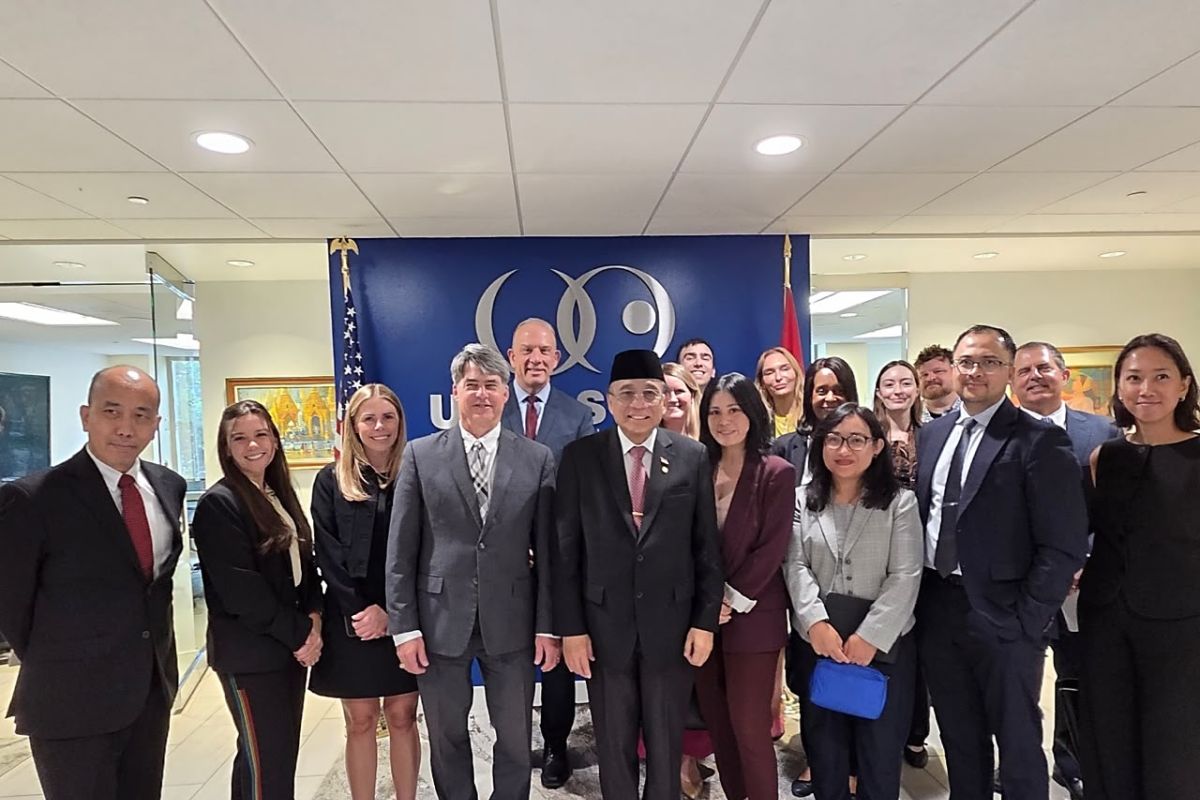
Indonesia is exploring opportunities for cooperation in the food, aviation, mining, defence, technology, and artificial intelligence (AI) sectors to enhance its economic relationship with the United States. These discussions emerged during a meeting between the Indonesian Ambassador to the US, Indroyono Soesilo, and a group of American companies in Washington on Tuesday, 28 July, initiated by the US-ASEAN Business Council.
“The economic relationship between Indonesia and the United States should not stop at trade figures,” stated Ambassador Indroyono in a written statement from the Indonesian Embassy in Washington DC. “What is far more important is how trade and investment can create added value, strengthen national industries, create jobs, improve the quality of human resources, and bring new technologies to Indonesia.”
The meeting highlighted the broad spectrum of US business interests in Indonesia. In the aviation sector, Boeing maintains a long-term relationship through the use of commercial aircraft by national carriers, while also presenting opportunities to strengthen domestic supply chains and aircraft component industries. In the defence and aerospace sector, Lockheed Martin is looking at opportunities for cooperation in modernising main weapon systems and strengthening national industrial capacity.
In the mining sector, Freeport-McMoRan, through PT Freeport Indonesia, remains a vital part of mineral resource management, including investments in mining infrastructure and mineral processing and refining facilities. The food sector also serves as a fundamental pillar of the economic relationship; Cargill plays a role in the trade of commodities such as maize, soybeans, and wheat, while Caterpillar has been supplying heavy equipment for the mining and construction sectors in Indonesia since 1971. In the consumption and sustainability sector, PepsiCo is implementing various environmental initiatives, including packaging management and tree planting.
Furthermore, the Ambassador noted that technological advancements are introducing a new dimension to the Indonesia-US economic relationship. For instance, NVIDIA is involved in AI talent development alongside the Indonesian Ministry of Higher Education, Science, and Technology. The Walmart Foundation is also working to strengthen sustainable supply chains and farmer welfare, while Chubb contributes to the development of financial literacy and risk management.
The Director of the Indonesia Investment Promotion Centre (IIPC) in New York, Tessal Maharizky Febrian, reported that US investment in Indonesia reached approximately $1.7 billion in the first half of 2026. In 2025, Indonesia’s exports to the US reached approximately $31 billion, accounting for about 11 per cent of Indonesia’s total global exports. Bilateral trade between the two nations was recorded at approximately $43.8 billion.
Key Indonesian exports to the US include electronics ($6 billion), textiles ($4.9 billion), footwear ($2.8 billion), palm oil ($2.1 billion), furniture ($1.4 billion), and fishery products ($1.2 billion). Conversely, Indonesia imports various products from the US, including soybeans, cotton, wheat, aircraft and aerospace products/satellites, machinery, medical products, chemicals, and information and telecommunications technology.
Ambassador Indroyono stated that while these figures show a strong foundation, there is significant room for growth. Given Indonesia’s large domestic market, strategic natural resources, and important geographical position, there are opportunities to expand partnerships with US companies. However, he highlighted areas that require strengthening, such as the protection of copyright and intellectual property rights, regulatory consistency between central and regional governments, logistics efficiency, and the improvement of human resource quality.
US business players also provided feedback regarding the investment climate in Indonesia. The reform of licensing through Government Regulation (PP) Number 28 of 2025 regarding Risk-Based Licensing was viewed as a positive step toward creating certainty and ease of doing business. The Ambassador emphasised that Indonesia is not only competing for capital but must also position itself as a place where technology, talent, industry, and global supply chains can grow together.