
Indonesia Experiments with Soy-Free Tempeh, Yields Unexpected Results
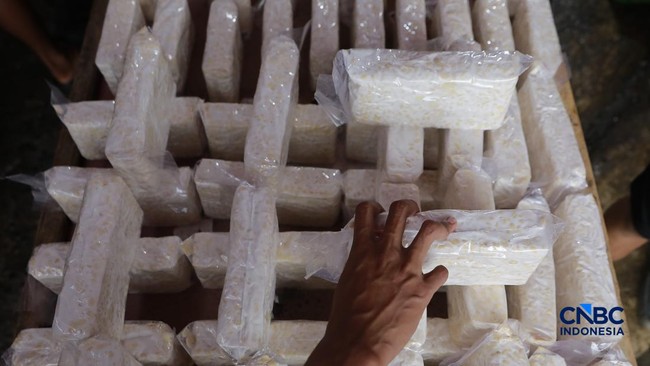
Jakarta, CNBC Indonesia - Indonesia possesses a variety of local legumes that have the potential to be developed as raw materials for non-soy tempeh. Besides serving as an alternative protein source, these fermented products also have the potential to become functional foods that support public health while strengthening national food security.
Postdoctoral researcher at the National Research and Innovation Agency’s (BRIN) Centre for Food Technology and Process Research, Ririn Krisnawati, explained that tempeh is a fermented product made using Rhizopus spp. mould. The practice of making tempeh from ingredients other than soybeans has long been known and is part of the local wisdom in various regions of Indonesia.
“Non-soy tempeh is part of the local wisdom that has developed in various regions. Communities have long utilised local food resources through fermentation technology,” Ririn stated in a written release on Saturday (27/6/2026).
According to her, soybeans remain the primary raw material for the national tempeh industry. However, Indonesia’s soybean requirement, which reaches approximately 2.8 million tonnes per year, cannot yet be met by domestic production, resulting in a high dependency on imports.
“This condition makes the supply and price of raw materials vulnerable to global market fluctuations,” she explained.
Ririn mentioned several local legumes with the potential to be used as tempeh raw materials, including tolo beans, velvet beans, jack beans, winged beans, and mung beans. Utilising these commodities is considered a food diversification strategy that can also increase the economic value of regional agricultural products.
She further explained that the tempeh fermentation process, involving Rhizopus oligosporus or Rhizopus microsporus mould, is capable of transforming the chemical components of the raw materials into compounds that are more easily digested by the body. During fermentation, complex proteins are broken down into simpler peptides and amino acids, making them easier to absorb. Fermentation also reduces the content of antinutritional compounds such as phytates and trypsin inhibitors, which can hinder nutrient absorption.
“Fermentation not only improves protein digestibility but also produces various bioactive compounds that potentially offer health benefits,” Ririn said.
Various studies have shown that non-soy tempeh exhibits increased antioxidant activity after the fermentation process. A higher content of phenolic compounds plays a role in counteracting free radicals and protecting cells from oxidative stress. Furthermore, some types of non-soy tempeh are also known to have antibacterial activity and the potential to help control blood sugar levels by inhibiting the enzymes α-glucosidase and α-amylase, which are involved in carbohydrate digestion.
Ririn added that tempeh made from velvet beans and kratok beans also shows antihypertensive potential. Peptides formed during fermentation can inhibit the activity of the Angiotensin Converting Enzyme (ACE), thereby potentially helping to maintain normal blood pressure. Various bioactive metabolites such as daidzein, kaempferol, p-coumaric acid, and other phenolic compounds are also associated with anticancer potential and other health benefits.
Current research on non-soy tempeh is no longer limited to nutritional content analysis. Researchers are now utilising metabolomic, metagenomic, and volatilomic approaches to gain a deeper understanding of the fermentation process and the formation of bioactive compounds. These approaches enable the identification of thousands of metabolites formed during fermentation, the microorganisms that play a role in determining tempeh quality, and the volatile compounds that influence the product’s aroma and taste.
“Modern research opens up opportunities to develop non-soy tempeh as evidence-based, high-value functional food,” Ririn stated.
She affirmed that non-soy tempeh has significant prospects for supporting a sustainable food system, provided it is produced hygienically and through a proper fermentation process. “Utilising local legumes can reduce dependency on soybean imports, strengthen national food security, and simultaneously encourage innovation in healthy fermented food products,” Ririn concluded.