
Indonesia Expands Global Economic Engagement
Indonesia Expands Global Economic Engagement
28 Mei 2026 19:32 WIB
Voice of Indonesia
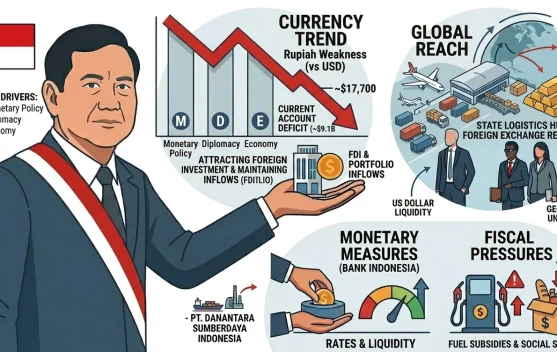
RRI.CO.ID, Jakarta - Indonesia’s President has accelerated overseas visits as downward pressure on the Rupiah continues to grow. One key objective is attracting foreign investment and sustaining foreign currency inflows.
The Rupiah recently weakened to around 17,700 against the US Dollar. This has increased concern across financial markets and raised pressure on policymakers.
The government is seeking both foreign direct investment and portfolio inflows through financial markets. These capital inflows are crucial for stabilizing the domestic currency in the short term.
Bank Indonesia reported a current account deficit of around $9.1 billion in the first quarter of 2026. The deficit highlights ongoing pressure on Indonesia’s external balance.
At the same time, the government established PT Danantara Sumberdaya Indonesia as a state-owned export company. The initiative is expected to strengthen export earnings and increase foreign exchange reserves.
Authorities are also trying to sustaining US Dollar liquidity in the domestic financial system. However, tighter liquidity conditions have contributed to cautious sentiment in the market toward the Rupiah.
Bank Indonesia may continue relying on higher interest rates and other monetary measures to support the currency. While necessary for stability, these policies could also increase economic costs for businesses and consumers.
The President’s diplomatic efforts appear closely linked to maintaining major domestic programs. These include fuel subsidies, social spending, and other redistributive economic policies.
Some analysts believe fuel subsidies could become an increasing fiscal burden during high global oil prices. Rising energy costs may also add pressure on the Rupiah.
The government’s diplomatic engagements suggest increasing urgency in securing investor confidence and foreign capital. Officials appear aware that external factors alone are no longer driving the Rupiah’s weakness.
Global geopolitical tensions continue adding uncertainty to financial markets. Emerging economies such as Indonesia remain vulnerable to sudden shifts in global capital flows.
Financial markets, especially the bond market, will likely become an important indicator of whether these diplomatic efforts successfully attract investment. Investor response may also shape future economic policy decisions.
Indonesia ultimately needs stronger US Dollar reserves inside its financial system to stabilize the Rupiah. One major strategy is to encourage global investors to invest more capital in the country.
Writer: Gunawan Benjamin (Economist, Islamic University of North Sumatra)
News Recomendation
Loading latest news…..