
Indonesia Expands Chinese Investment into the Renewable Energy Sector
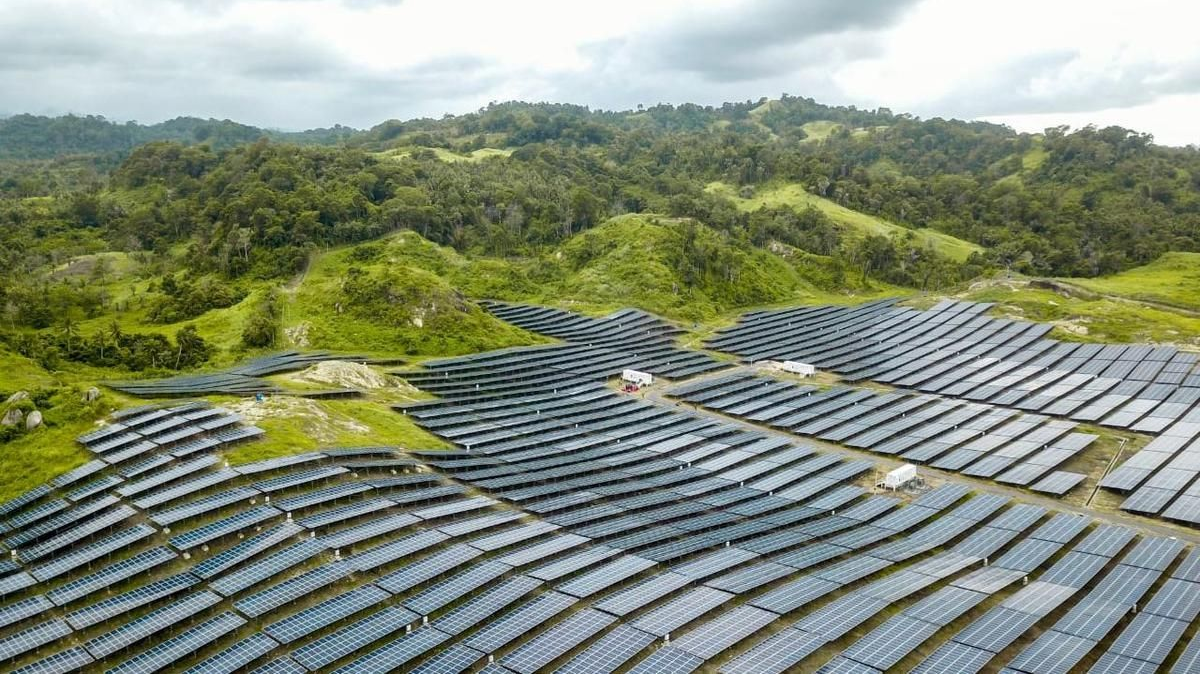
The Indonesian Government is expanding investment cooperation with China to accelerate renewable energy development and support its target of reaching net zero emissions by 2060 or earlier. The initiative was discussed at an Indonesia-China business forum in Beijing on Monday (2 November 2026), attended by around 150 businesspeople, investors and government representatives from both countries.
According to Investor Daily, the cooperation is intended to broaden Chinese investment in clean energy, while encouraging technology transfer and building the capacity of the local workforce. The government believes China’s strengths in green technology can help meet Indonesia’s financing needs and support the development of its energy infrastructure.
Deputy Minister of Creative Economy and Deputy Head of the Creative Economy Agency Irene Umar said collaboration on clean energy had significance beyond commercial returns.
“When we talk about renewable and sustainable energy, the issue is not simply the quality of the transactions we undertake, but also how we shape the future of humanity,” Irene said at the forum.
Irene also highlighted the opportunity to strengthen strategic ties between the two countries through cross-sector collaboration. She referred to China’s creative industries, including gaming and short-form dramas, which contribute to its economy.
China’s strengths in clean energy development are reflected in several national achievements. Data presented at the forum showed that China’s carbon dioxide emissions per unit of gross domestic product (GDP) fell by 17.7% in 2025 compared with 2020.
Over the same period, non-fossil energy accounted for 21.7% of China’s total national energy consumption. Installed wind and solar power capacity reached 1.84 billion kilowatts.
By the first half of 2026, China’s installed renewable energy capacity had reached 2.46 billion kilowatts, or 60.7% of the country’s total power generation capacity. At the end of July 2026, it surpassed coal-fired power capacity for the first time.
Rizaldi Indra Janu, director of the Indonesia Investment Promotion Center (IIPC) in Beijing, said Chinese investment had helped build basic industries and create jobs in Indonesia. The government now wants to expand investment into sectors with higher added value.
“Automotive and household goods still offer ample scope for expansion into renewable energy, agriculture, the digital economy, healthcare and data centres,” Rizaldi said.
Rizaldi also identified several promising locations for investors. West Java, particularly Cikarang and Jababeka, has automotive, electronics, industrial and logistics ecosystems. Batam offers opportunities in exports, manufacturing, textiles and mineral components.
Surabaya and Bali, meanwhile, are seen as having potential for medical equipment and food-processing industries. To support investment, the government is offering regulatory certainty and various fiscal facilities.
The incentives include full or partial corporate income tax relief through tax holidays lasting five to 20 years, a net income deduction of up to 30% through tax allowances, and super tax deductions of 200%–300%. The government is also simplifying licensing through the Online Single Submission Risk-Based Approach (OSS RBA) system.
Investment Ministry/BKPM data presented at the forum showed that cumulative investment from mainland China in Indonesia from 2021 to the first half of 2026 totalled US$38.34 billion. Investment grew by an average of 37% a year and supported 553,492 local jobs.
Investment stood at US$3.2 billion in 2021, rising to US$8.2 billion in 2022. It reached US$7.4 billion in 2023, US$8.1 billion in 2024 and US$7.5 billion in 2025.
Chinese investment reached US$3.8 billion in the second quarter of 2026. The basic metals industry was the largest recipient, attracting US$17.2 billion, or 45% of the total.
Transport, warehousing and telecommunications attracted US$5 billion, or 13%. The chemical and pharmaceutical industries received US$3.9 billion, or 10%; housing and industrial estates received US$2.6 billion, or 7%; and electricity, gas and water received US$1.6 billion, or 4%.
By region, Sulawesi received the largest share of investment, at US$15.47 billion, or 40.4%. Java followed with US$11.92 billion, or 31.1%, while Maluku and Papua recorded US$7.52 billion, or 19.6%.
Central Sulawesi was the largest provincial recipient, with US$14.16 billion, followed by North Maluku with US$7.09 billion and West Java with US$5.39 billion.
Strengthening investment in renewable energy is one of the government’s efforts to address financing and technology needs in the national energy transition. China has a large global supply chain for solar panels, wind turbines and electric vehicle batteries.
Through partnerships with state-owned enterprises and domestic private companies, the Indonesian Government is also seeking technology transfer and stronger local human-resource capabilities in the development of clean energy industries.
Source: jawawa.id (https://jawawa.id/newsitem/indonesia-expands-chinese-investment-into-the-renewable-energy-sector-1793667050)
Originally published by koridor.co.id (https://koridor.co.id/indonesia-investasi-china-energi-terbarukan), translated from Indonesian