
Indonesia-EU CEPA on Track, but Exporters Face Challenges
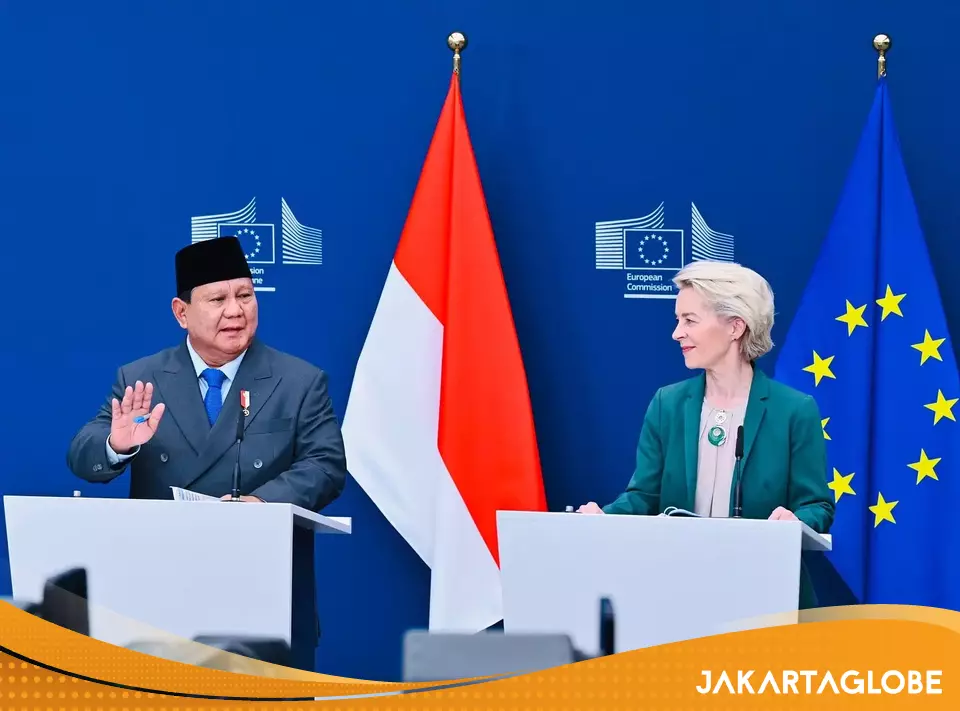
Indonesia-EU CEPA on Track, but Exporters Face Challenges
Jakarta. Indonesia and the European Union (EU) say their trade pact is on track for a 2027 launch, but Jakarta’s businesses are keeping an eye out for stringent standards.
The “legal scrubbing” — a process that ensures the text of the Comprehensive Economic Partnership Agreement (CEPA) is legally sound — is now underway, senior minister Airlangga Hartarto said. EU ambassador Denis Chaibi said the deal, which took almost a decade to negotiate, “shows that only when Europe looks beyond Brussels and when Indonesia looks beyond the irritants that we together can deliver the promises of our potential.” Bilateral trade, which hit $30.4 billion in 2024, is estimated to more than double with the CEPA. Legal scrubbing is set for completion this month before its ratification in the second half.
While the agreement promises zero tariffs on nearly all goods, Indonesian exporters will still face strict environmental compliance requirements, according to Indonesian Employers Association (Apindo) chair Shinta Kamdani.
The EU Deforestation Regulation (EUDR) requires palm oil and other commodities entering the European market to prove they are not linked to deforested land. At the same time, the bloc’s Carbon Border Adjustment Mechanism (CBAM) will impose levies on carbon-intensive imports.
“So tariff cuts don’t mean that all Indonesian goods can enter without adhering to their standards. Certain sectors might be more ready than others to comply,” Shinta said.
It can be costly for producers of iron and steel, a key Indonesian export to the EU, to switch to low-carbon production.
“Without investment incentives, it will be hard to keep up current steel exports, let alone boost them, despite the CEPA. Incentives have to be tailor-made for each sector, depending on what they need,” Shinta said.
Indonesia’s palm oil association Gapki welcomed CEPA’s duty-free quota, adding that exports to the EU hit 3.2 million tons in 2025.
“But we need to see if the EU demands the removal of the export duty and levy on palm oil shipments. If so, this will impact our state revenue,” its chair Eddy Martono said.
Major palm oil firms are ready to comply with the EUDR, but not the smallholders.
CSIS Executive Director Yose Rizal Damuri said that the CEPA would make “a replacement” to the EU’s tariff cuts under the Generalized Scheme of Preferences (GSP), which would end in 2027. Half of Indonesia’s EU-bound exports had enjoyed the GSP. Jakarta is graduating out of the GSP as it has reached upper-middle-income status.
“CEPA never forces Indonesia to make changes, but it pushes us to make improvements. Without reforms, we will fall further behind Thailand and Malaysia,” Yose concluded.
Tags: Keywords: