
Indonesia Enters the World’s Top Seven Economies: What Does It Mean?
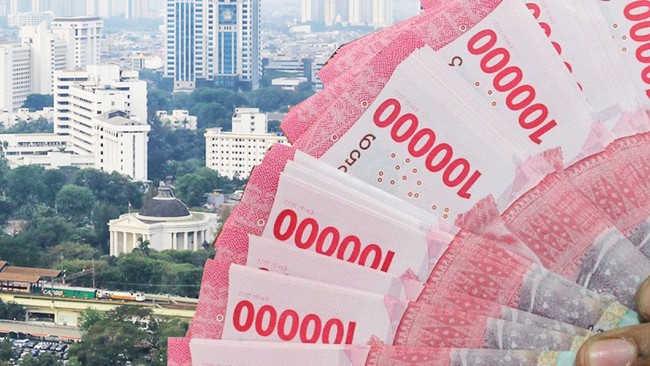
Jakarta, CNBC Indonesia — Indonesia has secured a place among the world’s 10 largest economies.
The ranking is based on purchasing power parity (PPP), and puts Indonesia ahead of several developed countries, including the United Kingdom and France.
According to the International Monetary Fund’s (IMF) latest report, the October 2026 edition of the World Economic Outlook (WEO), Indonesia is projected to rank seventh globally, with gross domestic product (GDP) at PPP estimated at 5.48 trillion international dollars in 2026.
The IMF’s October 2026 WEO projections show China retaining first place as the world’s largest economy by PPP.
China’s GDP at PPP is projected to reach 44.55 trillion international dollars in 2026, far ahead of the United States, which ranks second at 32.64 trillion international dollars.
India follows in third place, with an economy worth 19.19 trillion international dollars.
Indonesia ranks seventh, with GDP at PPP of 5.48 trillion international dollars, just behind Germany and ahead of Brazil.
Indonesia is the only South-east Asian country to make the world’s top 10 economies by PPP.
However, it is important to note that this ranking is based on GDP at PPP, not nominal GDP.
PPP is a method used to compare the size of economies by accounting for differences in the prices of goods and services.
It allows economic activity in different countries to be compared in terms of local price levels and purchasing power.
What does Indonesia becoming the world’s seventh-largest economy mean?
Indonesia’s entry into the seven largest economies by PPP is an achievement highlighted by President Prabowo Subianto.
But what does this ranking actually mean for Indonesia, particularly for people who continue to face a range of economic challenges?
Prabowo said Indonesia’s place on the list of the world’s largest economies shows that the country has considerable economic strength.
He said the achievement should give Indonesians greater confidence in the national economy, even as the country remains alert to various challenges.
“As leaders, we must remain vigilant, but what I want to stress is that we must now have confidence that we are a rich and great nation. The IMF has just released its ranking of the world’s largest economies by PPP,” Prabowo said at the 2026 National Coordination Meeting of the Regional Financial Access Acceleration Teams (TPAKD) at the JIEXPO Convention Centre on Thursday (22 October 2026).
Prabowo explained that PPP measures the real purchasing power of different economies. On this measure, Indonesia ranks seventh in the world.
“That means the real purchasing power of many countries’ economies. Indonesia is now ranked seventh in the world. Seventh — we are the seventh-biggest economy in the world, we are strong,” he continued.
Nevertheless, the size of Indonesia’s economy does not automatically mean that all Indonesians have benefited from the country’s wealth.
Prabowo said the government’s biggest challenge is to manage that economic strength so its benefits reach the people, especially those most in need.
“We are strong and we are rich, but the question now is how we manage that so it can be felt by the people who need it most. That is our challenge,” he stressed.
Prabowo said Indonesia’s position among the world’s largest economies should therefore be more than a source of pride: it must be accompanied by the management of national wealth in a way that allows its benefits to be shared more widely.
Source: jawawa.id (https://jawawa.id/newsitem/indonesia-enters-the-worlds-top-seven-economies-what-does-it-mean-1792756236)
Originally published by CNBC Indonesia (https://www.cnbcindonesia.com/research/20261023141256-128-778935/indonesia-masuk-7-besar-ekonomi-dunia-apa-artinya), translated from Indonesian