
Indonesia Enters Ageing Population Era
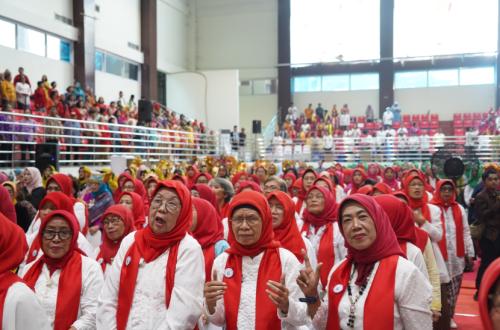
Indonesia has officially entered an era of an ageing population. This demographic shift is expected to increase the phenomenon of the ‘sandwich generation’, a group of productive-age individuals who must bear the needs of their children as well as their elderly parents. Data from the 2025 Intercensal Population Survey (SUPAS) shows the proportion of elderly residents in Indonesia has reached 11.97 percent of the total population. At the same time, the population growth rate has slowed to 1.08 percent per year, while the Total Fertility Rate (TFR) has fallen to 2.13 children per woman, approaching the replacement level. The dependency ratio has also increased to 45.05.
The Secretary of the Ministry of Population and Family Development/National Population and Family Planning Board (BKKBN), Budi Setiyono, stated that this change marks a shift in Indonesia’s population age structure. On one hand, this condition reflects the success of development, as people live longer, health quality improves, and mortality rates decline. On the other hand, the government warns of new challenges, including increased needs for social protection for the elderly and a growing burden on productive-age families.
These findings are reinforced by the results of the 2025 Family Data Update conducted by the ministry. A total of 25.17 million families, or approximately 33.98 percent of all recorded families, have at least one elderly family member. This means nearly one in three families in Indonesia currently lives with an elderly person. The condition shows that the population ageing process is no longer just a long-term projection but has become a daily reality faced by Indonesian families. More and more families now have to meet the needs of two generations simultaneously, raising dependent children while caring for ageing parents.
In demographic studies, the rise of the sandwich generation is a consequence of the demographic transition, namely changes in population structure due to declining birth rates and increasing life expectancy. This phenomenon also has economic implications. The Life Cycle Hypothesis theory developed by Nobel laureate Franco Modigliani explains that a person should ideally finance their old age through savings and assets accumulated during their productive years. However, in Indonesia, the majority of workers are still in the informal sector and lack adequate pension protection, so living needs in old age still largely depend on family support. Furthermore, the Intergenerational Transfer Theory explains that the family is the primary institution for intergenerational resource transfer. In Indonesian culture, children have a responsibility to help their parents in old age. As the number of elderly increases while the cost of raising children also grows, the economic pressure on the productive age group is expected to become heavier.
The ministry warns that Indonesia needs to anticipate the risk of ‘growing old before growing rich’, a condition where a country enters an ageing society before having a strong level of welfare and social protection system. If this trend is not anticipated, more productive-age families will have to allocate their income to meet the needs of both children and parents. In the long term, this condition has the potential to suppress household savings capacity, reduce family investment, increase psychological pressure, and affect workforce productivity.
To anticipate this, the ministry is developing the Family Data system as an early warning system for the potential increase in the sandwich generation. By combining data on the presence of elderly members, dependent children, and productive-age family heads, the government hopes to map areas requiring earlier intervention. In addition to strengthening the old-age security system, the government also considers the expansion of long-term health and care services for the elderly, improved financial literacy, family-friendly employment policies, and strengthened family development as necessary strategic agendas to be accelerated. The government is also promoting the concept of active ageing so that the elderly remain healthy, independent, productive, and able to contribute to social and economic life. Through this approach, the increase in the elderly population is not only seen as a growing dependency burden but also as an opportunity for the development of the silver economy.