
Indonesia emphasises need for fundamental fairness in digital economy
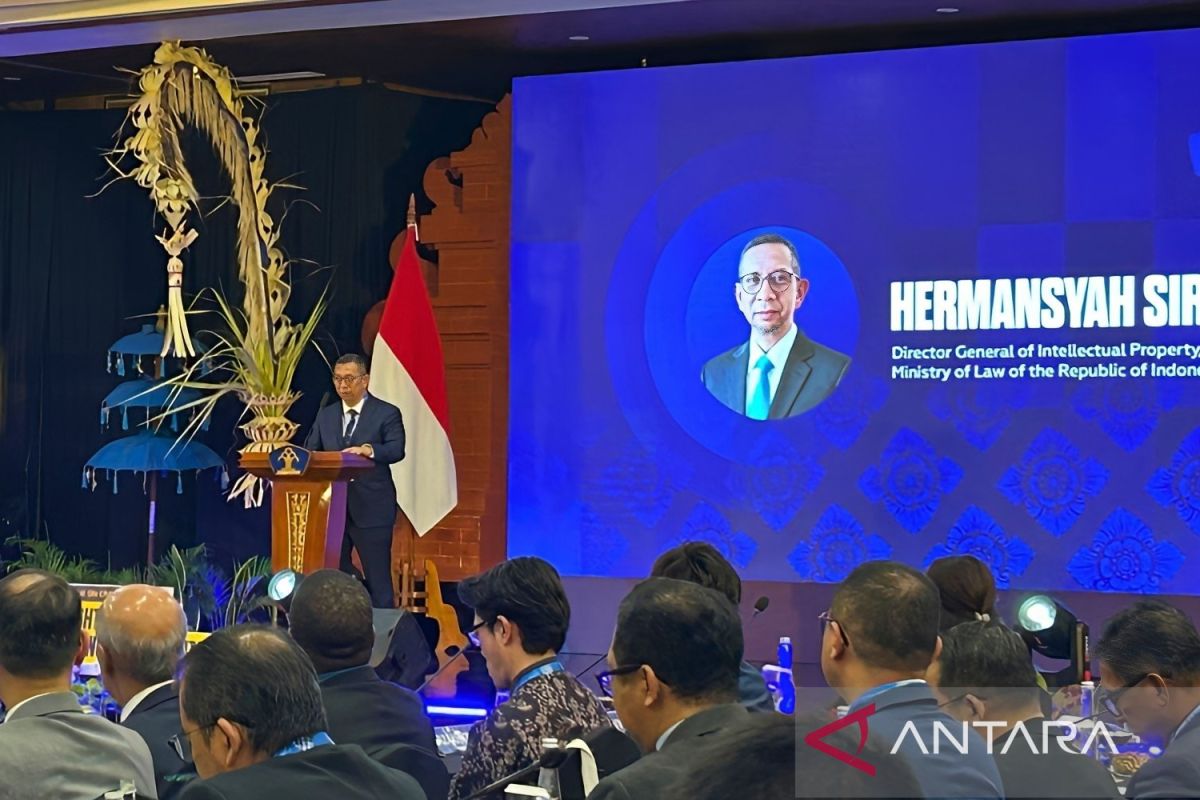
Badung, Bali — During the Global Dialogue on Cross-Border Copyright Royalty Governance in the Digital Era held in Badung, Bali, on Wednesday, the Indonesian government emphasised that the digital economy must be fundamentally fair and not merely innovative.
The Director General of Intellectual Property at the Indonesian Ministry of Law, Hermanselyah Siregar, stated that the world is currently facing a dynamic where digital music consumption essentially knows no borders, yet remuneration systems remain uneven.
“Europe and North America control almost 80 per cent of global royalties. Meanwhile, the Asia-Pacific region contributes 14 per cent, Latin America 6 per cent, and Africa less than 1 per cent,” Hermansyah revealed during the event.
He noted that in 2024, total global royalties reached nearly 14 billion euros. Within this ecosystem, music serves as the primary driver, contributing 90 per cent of all royalties, totalling 12.59 billion euros.
Hermansyah explained that digital royalties have increased sevenfold since 2015, surpassing 5 billion euros, making it the primary ‘engine’ of remuneration for creators worldwide.
As nations attempt to understand this inequality, he noted that barriers to cross-border royalties are rarely caused by copyright legal disputes. Instead, the challenge lies in the exchange of information throughout the various stages of the value chain.
Regarding works used internationally, Hermansyah stated that the process begins with documentation, where incomplete ownership data is frequently encountered. The next stage involves licensing across fragmented global repertoires, followed by the massive volume of usage reporting.
He added that a crucial stage is matching, which connects usage reports with copyright holders. “If identifiers are missing, the chain will be broken,” he said.
Ultimately, the process continues through calculation, distribution, and reconciliation, stages that are often subject to administrative fee deductions and limited visibility for overseas copyright holders.
Therefore, he stated that these complexities define the three main pillars to be discussed in the Global Dialogue: transparency, accountability, and interoperability.
Running until Friday (9/10), the forum involves member states of the World Intellectual Property Organization (WIPO), including groups from Latin America and the Caribbean, ASEAN, Central Asia, the Caucasus, Eastern Europe, Asia-Pacific, and the African Union.
Also participating are intergovernmental organisations, such as Collective Management Organisations (CMOs) from Singapore, Japan, and China; accredited stakeholders in the Standing Committee on Copyright and Related Rights (SCCR); as well as creators, practitioners, academics, and technical experts.
Participants will exchange experiences and views through thematic discussions. The forum is not designed as a negotiation platform to produce binding international legal rules or commitments. Instead, the dialogue will produce the ‘Bali Chairs Summary’, which summarises discussions, points of convergence, and issues requiring further study, alongside ‘Possible Pathways for Future Cooperation’, covering voluntary cooperation such as information exchange, capacity building, technical assistance, research, and system interoperability.
Source: jawawa.id (https://jawawa.id/newsitem/indonesia-emphasises-need-for-fundamental-fairness-in-digital-economy-1791349155)
Originally published by Antara (Indonesian) (https://www.antaranews.com/berita/5774736/ri-tegaskan-ekonomi-digital-harus-adil-secara-fundamental), translated from Indonesian