
Indonesia emphasises international cooperation in transport development
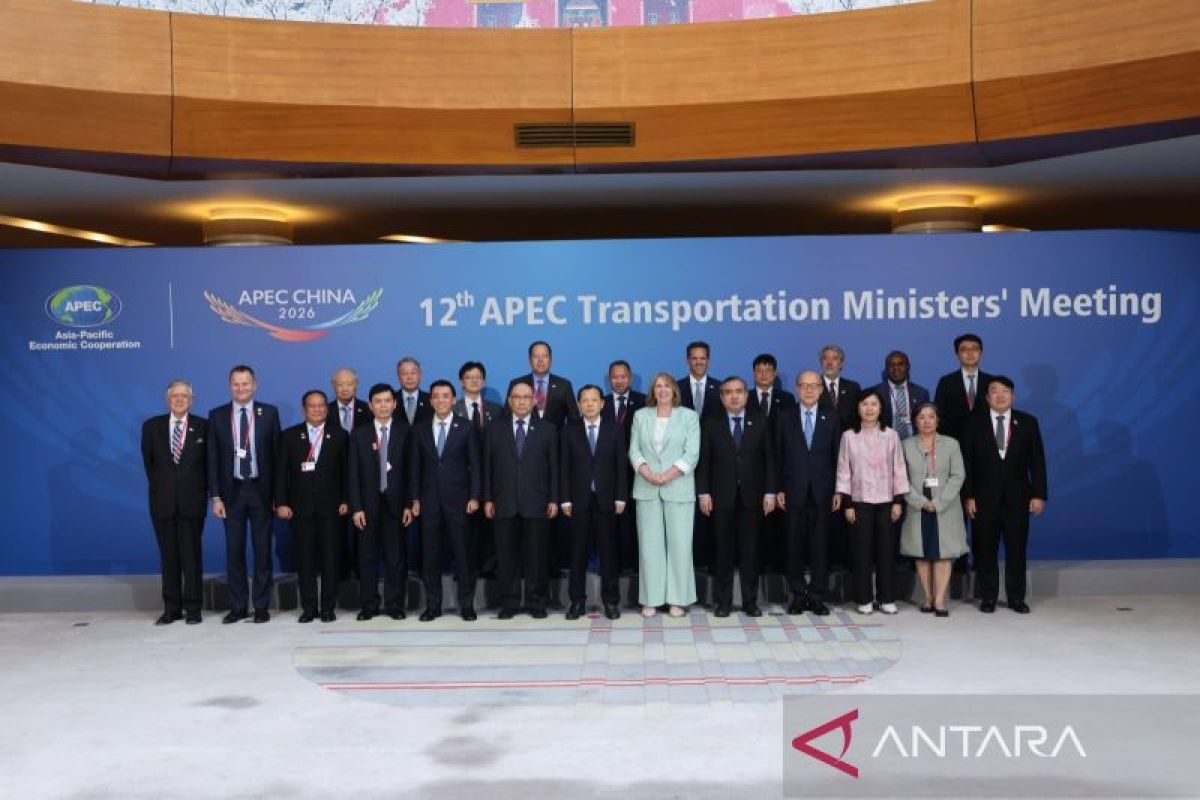
Beijing (ANTARA) - Deputy Minister of Transportation Suntana stated that Indonesia emphasises the importance of cooperation with other nations to build effective, safe, and digitised transport systems.
“One of the most important aspects of building the best and most connected transport is international cooperation. Exchanging information and experiences is why we are here—to share knowledge and innovation, and to learn from the achievements of other countries that could potentially be implemented in Indonesia,” he told ANTకి in Beijing on Tuesday (22/9).
Suntana made these remarks on the sidelines of the ‘Global Sustainable Transport Forum’ (GSTF) 2026, held on 22-23 September 2026 in Beijing. The forum serves as a global cooperation initiative to address key challenges in sustainable transport and advance the United Nations Sustainable Development Goals (SDGs).
“We have learned a great deal from the presentations of various countries. We observed the implementation of digitalisation and AI, which are essential for building more effective, safer, more synergistic, and more accurate transport systems, including here in China,” he said.
At the GSTF 2026, which was also attended by transport ministers from Albania, Angola, Cambodia, Kenya, Kuwait, Laos, Malaysia, Myanmar, Seychelles, Singapore, Tanzania, Belarus, Kyrgyzstan, Mongolia, and Uzbekistan, the ‘Framework on Global Sustainable Transportation Development and Cooperation Initiative’ was adopted. Cooperation within the GSTF framework is open, inclusive, voluntary, and non-binding.
“We learn from the issues faced in other regions and evaluate our own national transport challenges. These will then be elaborated into innovative steps supported by AI and digitalisation, ensuring that transport connecting people and goods can be improved,” added Suntana.
Although no bilateral Memorandums of Understanding (MoU) were signed between Indonesia and other nations during this meeting, Suntana stated that Indonesia supports the formation of the global cooperation platform initiated by China through GSTF 2026.
“There is a joint statement from the transport ministries of participating nations, which will serve as a guideline for follow-up cooperation, both bilaterally and multilaterally, such as within APEC, allowing us to learn from the transport advancements of other nations,” explained Suntana.
In addition to attending GSTF 2026, Suntana led the Indonesian delegation to the 12th APEC Transportation Ministerial Meeting. He presented Indonesia’s efforts and achievements in implementing new technologies to realise digital transformation within the transport sector.
During the meeting, Suntana also requested support from APEC members for Indonesia’s candidacy for the International Civil Aviation Organization (ICAO) Council Part III during the 43rd ICAO (Extraordinary) Assembly to be held in November 2026. ICAO is the international civil aviation organisation and a specialised agency of the UN.
The meeting of APEC transport ministers also ratified a ‘Joint Ministerial Statement’ specifically strengthening the commitment of APEC members to support digital technology advancements in the transport sector to build resilient, inclusive, and sustainable transport systems and connectivity in the Asia-Pacific region.
According to a written statement from the Ministry of Transportation regarding the event, Indonesia has taken significant steps to promote transport decarbonisation and urban mobility, such as vehicle electrification and the development of MRT, LRT, BRT, and integrated transport in the Greater Jakarta (Jabodetabek) area.
These policies aim to encourage multimodal transport and reduce private vehicle usage to alleviate traffic congestion. Indonesia is also utilising low-carbon fuels for shipping and solar power systems for port infrastructure to further support decarbonisation efforts in the maritime sector.
In the aviation sector, Indonesia continues to promote the use of Sustainable Aviation Fuels (SAF) as an alternative energy source and implements energy-efficient technologies at airports, while actively participating in the Carbon Offsetting and Reduction Scheme for International Aviation.
As an APEC member, Indonesia has played an active role in supporting transport cooperation within the APEC transport ministers’ framework, striving to support the application of digital technology in the transport sector to process traffic data in real-time, improve traffic management, and enhance transport integration and multimodality.
In the maritime sector, Indonesia is applying AI to predict demand, optimise routes, improve navigation, and manage ships, cargo, and port operations to build resilient and efficient supply chains. In the aviation sector, Indonesia is also exploring the use of AI for real-time aircraft emission monitoring, airport slot management, and airport capacity optimisation.