
Indonesia Embraces the Future of Cyber Democracy
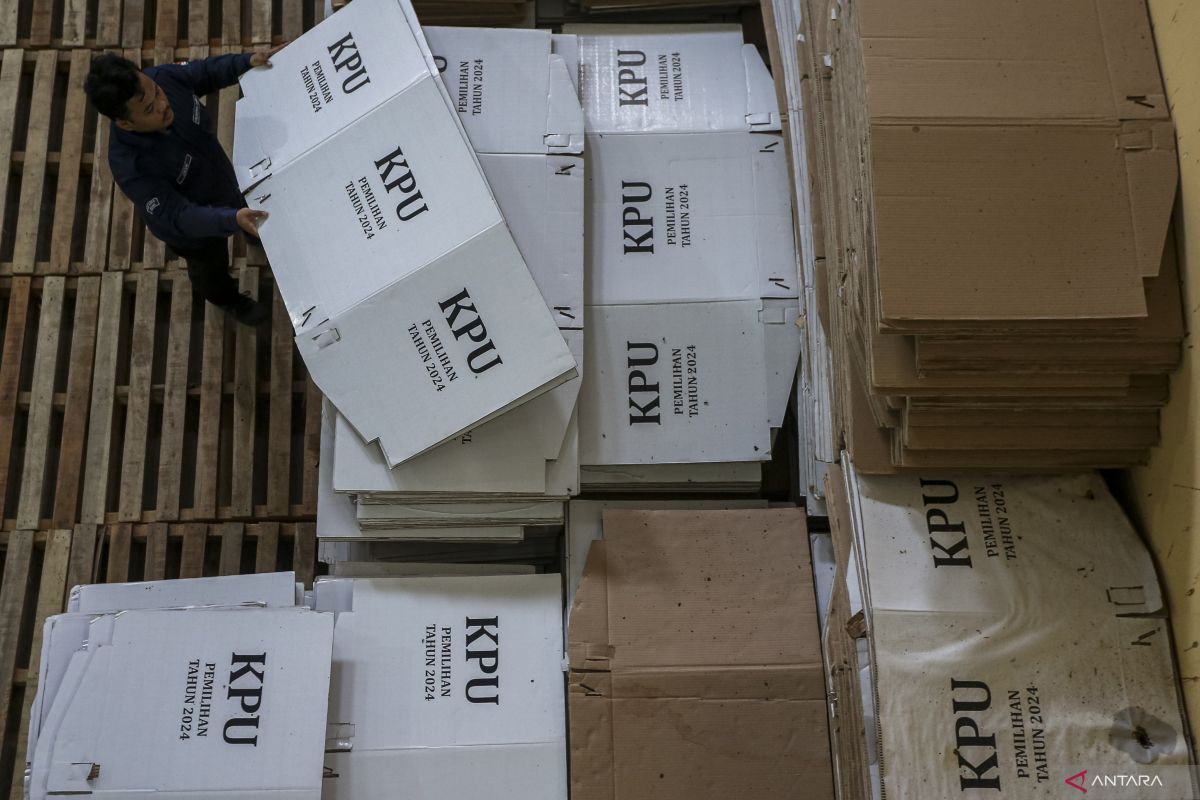
Jakarta (ANTARA) - Amid the acceleration of the country’s digital transformation, Indonesia’s democracy is entering a new phase that is far more complex than a decade ago. If in the reform era the main issues of elections revolved around logistics, physical conflicts, and the consolidation of democratic institutions, today’s challenges have shifted to more abstract realms: data, algorithms, artificial intelligence, and digital information manipulation.
The inauguration of the Digital Election Simulation Lab (DESLab) by the Ministry of Home Affairs on Thursday (7/5) marks an important signal: the state is beginning to seriously prepare for the possibility of digitalising elections in the future. Discussions on e-voting, digital-based voter data integration, and the use of artificial intelligence technology in election governance are slowly no longer seen as futuristic concepts, but rather as policy directions that may be pursued ahead of the 2029 elections and beyond.
However, behind the optimism of digitalisation lies a fundamental question: is Indonesia’s democracy ready to enter the era of cyber democracy?
This question is important because the digitalisation of elections is not merely a matter of replacing paper ballots with electronic screens. It touches on the most sensitive dimensions of modern democracy: political legitimacy, citizens’ data sovereignty, national cyber security, and the power relations between the state, technology, and society.
In this context, the discourse on election digitalisation must be read not merely as administrative innovation, but as a transformation of the structure of democracy itself.
Democracy in the Algorithm Era
Digital technology developments have changed the way politics operates. Campaigns no longer fully rely on public rallies or roadside billboards. Today, public political preferences are shaped through social media, algorithm recommendation engines, data-based personalised advertisements, and systematic buzzer operations.
In many global cases, technology has even become the main instrument of political contestation. The Cambridge Analytica scandal in the 2016 US elections showed how the personal data of millions of social media users could be used for aggressive political micro-targeting. Algorithms were used to read voter psychology, map social fears, and then send highly personalised propaganda to specific groups.
This phenomenon shows that digital democracy is not always synonymous with healthier democracy. Technology can instead give birth to new forms of manipulation that are more subtle, systematic, and difficult to detect.
Indonesia itself is not immune to such symptoms. The 2019 and 2024 elections demonstrated how social media became the main arena for national political battles. Public polarisation, the spread of hoaxes, identity narrative wars, and buzzer operations indicate that Indonesia’s democracy has entered the phase of “algorithmic politics”, a situation where public opinion is no longer fully shaped by rational debate, but by the distribution of digital content controlled by platform algorithms.
In such a situation, the digitalisation of elections presents a paradox. On one hand, technology promises efficiency, transparency, and modernisation of democratic governance. On the other hand, it also opens new spaces for manipulation, digital surveillance, and information power imbalances.
Efficiency in Democracy
Supporters of e-voting generally start from efficiency arguments. Electronic voting systems are seen as capable of cutting the enormous logistical costs of elections, speeding up vote recapitulation, reducing the potential for human error, and minimising manual manipulation practices.
Indonesia indeed faces extraordinarily complex geographical challenges. Distributing election logistics to thousands of islands requires very high costs and considerable administrative manpower. In the 2024 elections, for example, the technical complexity of simultaneous elections again came under scrutiny due to the high workload on organisers.
From an administrative perspective, digitalisation appears as a rational solution. Several countries have implemented e-voting systems in various forms. Estonia is often cited as an example of successful digital democracy. The small country in Northern Europe allows citizens to vote online through an integrated national digital identity system.
However, Estonia’s success cannot be separated from strong socio-political prerequisites: high digital literacy levels, mature cyber infrastructure, a relatively clean bureaucratic culture, and stable public trust in state institutions.
It is at this point that Indonesia’s challenges become far more complicated. The digitalisation of elections is not just about technological readiness, but also about democratic cultural readiness. When digital literacy levels in society are still uneven, political disinformation is still massive, and public trust in institutions is not yet fully solid, digitalisation could potentially exacerbate the crisis of election legitimacy.
In conventional democracy, vote manipulation can relatively be observed physically. Ballots can be recounted. Ballot boxes can be monitored. But in digital systems, manipulation can occur invisibly through software exploitation, server infiltration, or algorithm engineering.
The problem is that most of the public lacks the technical capacity to independently verify digital systems. As a result, the legitimacy of elections depends on trust in the technology system and the institutions managing it.
In an era of low trust in political institutions, such dependence becomes highly problematic.