
Indonesia Elected to UNESCO Intangible Cultural Heritage Committee for 2026-2030
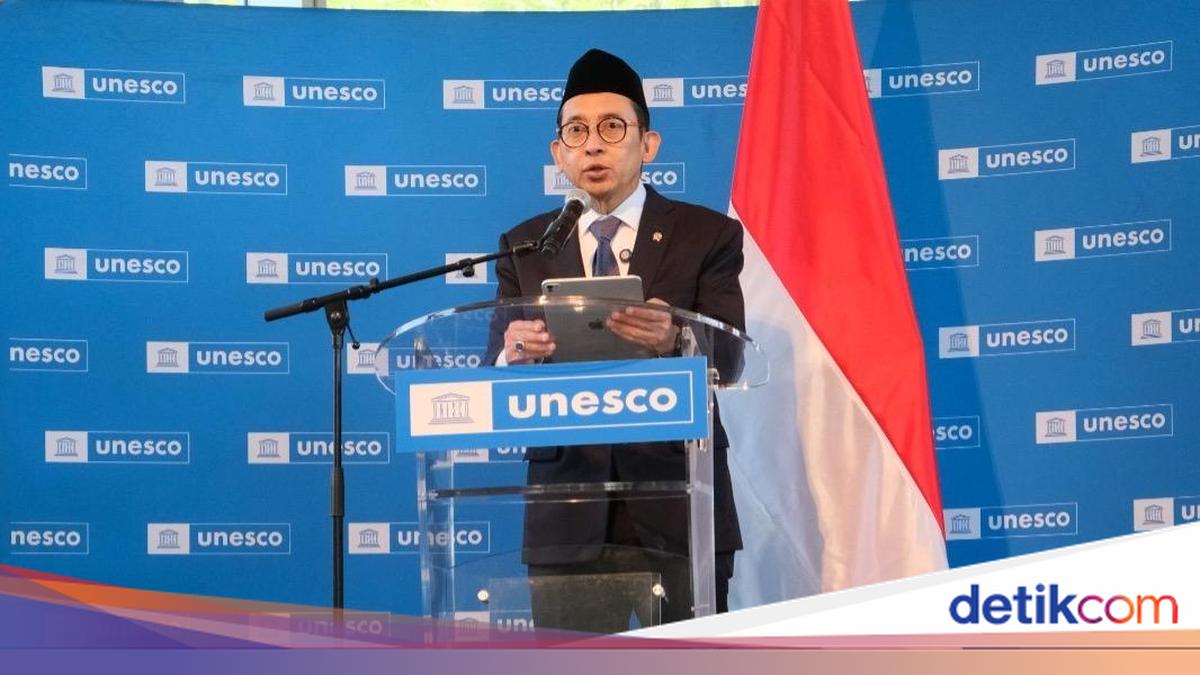
Indonesia has been elected as a member of the UNESCO Intergovernmental Committee for the Safeguarding of the Intangible Cultural Heritage for the 2026-2030 period. The election took place during the 11th General Assembly of States Parties to the 2003 UNESCO Convention at UNESCO Headquarters in Paris, France, on 17-18 June.
In the election, Indonesia secured 113 votes from UNESCO member states. It was elected alongside Japan (117 votes), the Philippines (106 votes), and Cambodia (97 votes) in Group IV, representing the Asia-Pacific region. The four countries competed against South Korea and Turkmenistan for the seats.
Minister of Culture of the Republic of Indonesia, Fadli Zon, stated that this marks an important milestone for Indonesia in global cultural governance. The achievement also reflects the international community’s trust in Indonesia’s vision for cultural heritage protection.
“Indonesia’s election as a member of the UNESCO Intangible Cultural Heritage Committee for the 2026-2030 period is both an honour and a great mandate. Twelve years after last serving on the committee from 2010-2014, Indonesia has once again been trusted by the international community to contribute to efforts to safeguard the world’s intangible cultural heritage,” Fadli said in a statement on Friday (19/6/2026).
“This success demonstrates that in addition to possessing an extraordinarily rich and diverse cultural heritage, Indonesia also has the capacity to contribute to building a more inclusive, sustainable, and community-centred future for global cultural governance,” he added.
Fadli assessed that this success is increasingly strategic because, for the first time in several recent periods, ASEAN countries dominate the Asia-Pacific representation through the election of Indonesia, the Philippines, and Cambodia.
According to him, this situation opens significant opportunities for the Southeast Asian region to play a greater role in strengthening cross-regional cooperation, expanding the representation of developing countries, and promoting a more inclusive cultural heritage protection agenda at the global level.
During the campaign leading up to the election, Indonesia championed the platform “Living Heritage, Shared Future”. This vision asserts that culture is not merely a relic of the past, but a living force continuously inherited, practised, adapted, and developed by communities across generations as rights-holders and primary custodians of cultural heritage.
This platform also places communities at the centre of all cultural heritage protection efforts and emphasises the importance of cultural justice, inclusive participation and innovation, as well as international cooperation and sustainable development.
As a member of the UNESCO ICH Committee for the 2026-2030 period, Indonesia is committed to advancing eight main priority agendas:
Establishing a UNESCO Centre of Excellence in the Asia-Pacific region, a Mega-Laboratory on Cultures, Early Human History, and Civilization for developing methodologies for intangible cultural heritage safeguarding, digital preservation, research, policy innovation, and capacity building in the region.
Integrating a collaborative platform that bridges academics, local communities, cultural practitioners, and policymakers in an inclusive and participatory protection model.
Digital innovation, including the development of digital inventories, the use of artificial intelligence (AI) for documentation, and ethical data governance.
Strengthening global cooperation through training, fellowship programmes, joint missions, and cross-regional knowledge exchange.
Protecting endangered cultural heritage, including strengthening the Urgent Safeguarding List mechanism for traditions facing the risk of extinction.
Improving access to more effective, responsive, and easily accessible international assistance for States Parties.
Empowering civil society and cultural communities by expanding the participation of non-governmental organisations in decision-making processes.
Preparing cultural heritage for the future, promoting policies related to digital ethics, artificial intelligence, and cultural resilience to climate change.
“Indonesia believes that cultural heritage can serve as a bridge for dialogue, peace, and community resilience amidst various current global challenges,” Fadli said.
In line with this vision, Fadli conveyed that Indonesia is pushing for strengthening community-based protection, enhancing the role of the younger generation in cultural transmission, and promoting fairer access to international assistance, particularly for Least Developed Countries (LDCs) and Small Island Developing States (SIDS). Indonesia will also strengthen the governance of the 2003 UNESCO Convention to be more transparent, credible, inclusive, and evidence-based.
Fadli revealed that Indonesia comes to the UNESCO ICH Committee with experience as one of the world’s largest mega-diverse cultural nations. Indonesia has more than 1,340 ethnic groups, 718 regional languages, and 2,727 nationally designated Intangible Cultural Heritage elements.
To date, Indonesia also has 16 Intangible Cultural Heritage elements inscribed by UNESCO, including Wayang, Keris, Batik, Angklung, Noken, Saman Dance, Pencak Silat, Pantun, Gamelan, Jamu, Reog Ponorogo, Kebaya, and Kolintang.
“This experience gives Indonesia an important position to contribute to the development of policies and practices for safeguarding world cultural heritage,” Fadli explained.
Fadli added that this success is also the result of the collective work of various national institutions that have worked closely together to strengthen Indonesia’s cultural diplomacy.
“This achievement is the fruit of strong synergy between the Ministry of Culture, the Ministry of Foreign Affairs, the Embassy of the Republic of Indonesia in Paris, the Permanent Delegation of the Republic of Indonesia to UNESCO, the Secretariat of the Indonesian National Commission for UNESCO, and all involved parties,” he concluded.