
Indonesia Drops to Fourth in SGIE Report as Halal MSMEs Still Rely on Conventional Credit
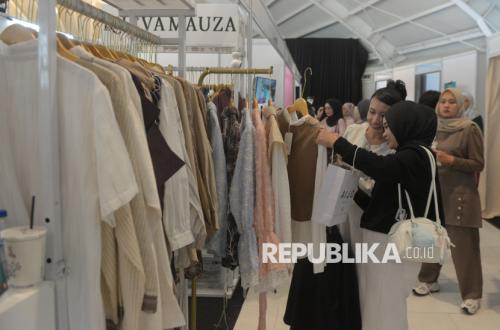
Indonesia has dropped from third to fourth position in the State of the Global Islamic Economy (SGIE) 2025/2026 report. Behind this decline, micro, small, and medium enterprises (MSMEs) in the halal sector are reportedly facing a fundamental issue: a continued reliance on conventional financing because Sharia finance has not yet become the primary pillar of the national halal industry.
Nur Hidayah, a researcher at the Centre of Sharia Economic Development (CSED) INDEF, stated that Indonesia possesses significant capital to become a major player in the global Sharia economy. In addition to having the world’s largest Muslim population, Indonesia excels in several halal industry sectors, such as Muslim fashion, Muslim-friendly tourism, and halal pharmaceutical and cosmetic products.
However, these advantages have not been matched by adequate development in the Sharia finance sector. “Indonesia can become a giant in the halal industry, but our financial sector remains relatively small, both in terms of industry scale and market share,” said Nur Hasting during a CSED INDEF public discussion themed ‘SGIE Indonesia Declines: Evaluation of National Halal Policy and Industry’ on Monday night.
According to her, the Sharia finance sector is the only major sector that still lags significantly behind other halal sectors. This condition prevents the national halal ecosystem from being fully established. She explained that the halal industry and Sharia finance should operate in tandem; the halal industry generates economic activity, while Sharia finance provides financing, investment, and risk mitigation. In practice, however, the two sectors are still operating in isolation.
As a result, many MSMEs that have already obtained halal certification still rely on financing from conventional financial institutions. They frequently face limitations in access and the competitiveness of currently available Sharia financing products. “MSMEs that already possess halal certificates still rely on conventional financing because they face difficulties in obtaining competitive financing from Sharia financial institutions,” she noted.
Nur argued that the halal chain should not only involve raw materials and production processes but should also encompass the source of financing. This would ensure that halal products are supported by an integrated halal ecosystem from upstream to downstream.
She assessed that the government needs to provide affirmative policies to strengthen the Sharia finance industry, which is still in a developing stage. Such steps are necessary so that Sharia financial institutions can compete with the more established conventional financial industry. Currently, the national Sharia finance market share remains around 11 per cent. Therefore, efforts are needed to deepen the Sharia finance sector, increase public literacy, strengthen Islamic social finance, and encourage innovation to ensure market share continues to grow.