
Indonesia Drops in Rank as Singapore Claims Top Spot Globally
The 2026 IMD World Competitiveness Ranking compares 70 countries and economies based on how effectively they create conditions that support businesses to compete and generate long-term value. Notably, Vietnam has entered the rankings for the first time in 2026.
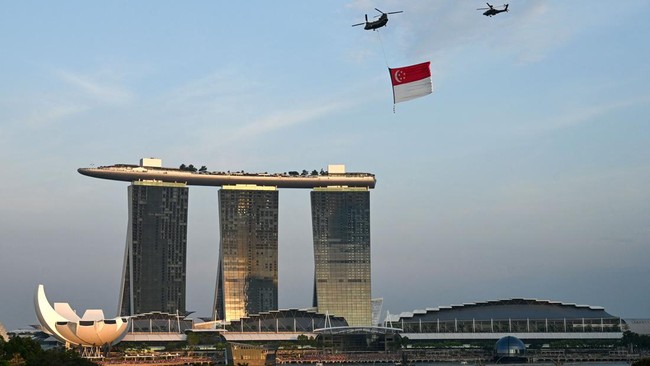
Singapore holds the first rank with a normalised score of 100, leading ahead of Hong Kong with a score of 95.6 and Switzerland with 95.3. Taiwan sits in fourth place, while Denmark, Ireland, and the United Arab Emirates each recorded scores of 94.1, occupying the fifth to seventh positions.
Singapore is also the only economy to feature in the global top five across all four competitiveness factors. Its business efficiency rose to first place in 2026, helping the nation reclaim the overall top position from Switzerland.
The IMD assessment framework covers 341 criteria divided into 20 sub-factors and four main pillars: economic performance, government efficiency, business efficiency, and infrastructure. Quantitative data contributes approximately two-thirds of the final assessment, while the remaining third is derived from executive opinion surveys.
Economic size does not always align with competitiveness levels. The United States, for instance, is the world’s largest economy but only ranks 10th in the 2026 IMD World Competitiveness Ranking. Therefore, the IMD assessment looks beyond economic size to the conditions that determine how effectively companies can operate, invest, and compete.
Europe and Asia occupy nine of the top 10 positions. Many high-ranking countries possess a combination of productive businesses, advanced infrastructure, skilled labour, and institutions that make investment and trade activities more predictable.
The 2026 IMD report pays particular attention to institutional credibility and the rule of law. Consistent regulation, enforceable contracts, and effective governance are assessed as helping the business world make long-term investment decisions amidst geopolitical uncertainty.
Innovation is also a critical factor. Several top-tier countries are closely connected to the world’s major innovation clusters, enabling them to better commercialise technology, attract talent, and increase productivity. Nevertheless, there is no single formula for competitiveness; the United Arab Emirates ranks seventh while the United States is in tenth, demonstrating that highly competitive business environments can emerge from diverse economic models.
Indonesia has dropped to 48th place out of 70 economies in the 2026 IMD World Competitiveness Ranking, falling eight positions from the previous year. In Indonesia’s profile, IMD highlighted five main challenges: the threat of global economic conflicts to national energy security, relatively stagnant economic growth, government budget reallocation, inadequate infrastructure and human resource competence, and limited access to financing.
These weaknesses are also reflected in several indicators. Indonesia ranks 50th for institutional framework, 53rd for productivity and efficiency, 55th for management practices, and 63rd for education. In terms of health and the environment, its position is as low as 65th out of 70 economies.
This implies that improving Indonesia’s competitiveness cannot rely solely on economic growth or the size of the domestic market. Indonesia needs to strengthen the quality of its institutions, increase business productivity and managerial capabilities, improve the quality of education and human resources, and accelerate infrastructure development and access to finance.
This aligns with the key findings of the 2026 IMD report, which suggest that competitiveness is increasingly determined by institutional credibility, predictable rules, and a nation’s ability to create an environment that supports long-term investment.