
Indonesia Doesn't Lack Leaders, It Lacks Role Models
The phenomenon of the current leadership crisis is more attributable to a character crisis than a lack of intellectual capacity. Many leaders are highly educated and experienced, yet fail to maintain integrity when entrusted with authority. Consequently, corruption, abuse of power, collusion, and nepotism continue to recur. This condition demonstrates that intelligence without character can become a means of committing irregularities.
Positions that should be used to serve the public often turn into tools for self-enrichment and group interests. The impact not only harms state finances but also diminishes public trust, weakens law enforcement, and hinders development.
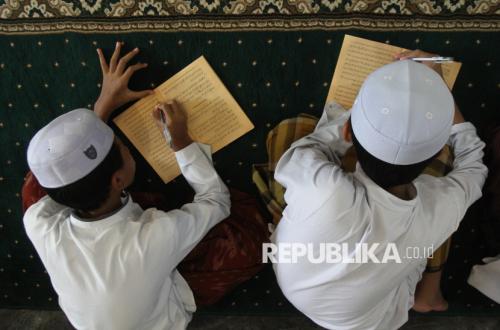
Therefore, the formation of leaders must not be solely oriented towards intelligence, skills, or popularity, but must be grounded in integrity, honesty, trustworthiness, justice, and responsibility. Character education based on religious values, Pancasila, ethics, and national culture needs to be strengthened from an early age to produce leaders who are both intelligent and morally upright.
As Buya Hamka reminded in Lembaga Budi, “The virtue of character is higher in value than mere intelligence, because intelligence without character will only plunge a person into arrogance.” This message affirms that intelligence only brings benefit when accompanied by morality and integrity.
Hamka’s thoughts are increasingly relevant to Indonesia’s leadership conditions today. Various national problems are not caused by a lack of intelligent people, but by the weakening of character. Many irregularities are committed by those holding positions, power, and competence. When honesty, trustworthiness, responsibility, and piety fade, intelligence can turn into a tool to justify misconduct. Therefore, character building must become a primary agenda so that Indonesia produces leaders who are not only intelligent but also possess integrity and integrity.
The phenomenon of Indonesia’s leadership crisis is not only reflected in the prevalence of corruption cases but is also reinforced by various governance indicators. One such indicator is the Corruption Perceptions Index published by Transparency International. In the 2024 report, Indonesia scored 37 out of 100 and ranked 99th out of 180 countries. A subsequent report showed a score decline to 34 with a position of 109th, indicating that strengthening integrity and eradicating corruption still faces serious challenges.
This data aligns with the numerous corruption cases involving public officials across various state institutions. This fact shows that the main problem is not merely weak regulations, but the fragility of character and integrity among those entrusted with authority. Therefore, eradicating corruption cannot rely solely on law enforcement but must be accompanied by character building through education, exemplary conduct, and an organisational culture of integrity.
The nation’s biggest problem is not a shortage of intelligent people, but a shortage of leaders with character. Indonesia has many highly educated human resources who master science and technology and are competent. However, intellectual intelligence is not always accompanied by integrity. Without strong character, knowledge and power can become tools to justify misconduct.
This condition is reflected in the ongoing prevalence of corruption, abuse of authority, conflicts of interest, and low integrity in governance. This indicates that the root of the problem is not only a weak supervisory system but also the fragility of values such as honesty, trustworthiness, responsibility, and siding with the people’s interests.
Therefore, leadership reform must begin with character building through education, exemplary conduct, and regeneration oriented towards integrity. Indonesia needs leaders who are not only intelligent but also honest, just, trustworthy, and prioritise the people’s interests above personal or group interests.
In Islam, leadership is a trust for which one will be held accountable before Allah SWT, not merely a position or power. Therefore, a leader must emulate the traits of the Prophet Muhammad ﷺ, namely ṣiddīq (truthful), amānah (trustworthy), tablīgh (conveying the truth), and faṭānah (intelligent). The Qur’an states, “Indeed, Allah commands you to render trusts to whom they are due and when you judge between people to judge with justice” (QS. An-Nisā’ [4]: 58). This verse places trust and justice as the main principles of leadership. The Prophet Muhammad ﷺ also emphasised that every leader will be held accountable for those they lead. Therefore, corruption, abuse of office, and betrayal of trust are not only violations of state law but also of Islamic law. A leader of character makes piety, honesty, justice, and service to the community the foundation of every policy.
The crisis of character marked by rampant corruption, abuse of authority, and the erosion of integrity cannot be resolved solely through law enforcement. Law functions to impose sanctions after a violation occurs, whereas character education builds moral awareness so that a person does not abuse power. Therefore, the long-term solution must begin with the revitalisation of character education.
Character education cannot be taught merely as theory but must become a culture within families, schools, universities, organisations, and society. Values such as honesty, trustworthiness, responsibility, discipline, justice, and care must be habituated so that they become inherent character traits in every individual.