
Indonesia Develops New Lung Cancer Therapy
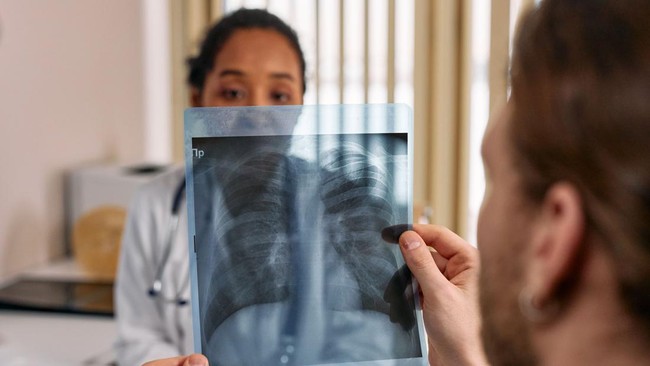
The National Research and Innovation Agency (BRIN) is currently developing a treatment for lung cancer. This photodynamic therapy (PDT) is X-ray-based, utilising a special photosensitiser made from hydroxyapatite nanoparticles combined with zirconium (HApZr).
Muhammad Basit Febrian, a junior expert researcher at the Research Centre for Radioisotope, Radiopharmaceuticals, and Biodosimetry (PRTRRB), explained that the research is based on previous findings where zirconium-doped hydroxyapatite nanoparticles (HApZr) demonstrated cytotoxic effects on lung cancer cells. This holds potential as a candidate for lung cancer treatment.
“The use of these nanoparticles serves as a drug delivery system and as a photosensitising agent capable of accumulating rapidly within cells and distributing to target organs,” said Basit, as quoted from the official BRIN website.
In this study, the formation of reactive oxygen species (ROS) using HApZr nanoparticles was evaluated. Meanwhile, hydrogen peroxide, used as a positive control, showed an intensity comparable to cells irradiated without HApZr.
“We conducted cytotoxicity tests and cell staining to evaluate the migration of nanoparticles into cancer cells,” Basit explained.
Animal testing has also been conducted, with results showing that the accumulation of free Sc radionuclides in lungs with tumours was relatively low. Test animals treated with HApZr receiving a radiation dose of 25 Gy were able to survive, whereas those that did not receive the treatment survived for only two days.
Furthermore, the maximum recommended dose for HApZr nanoparticles is 0.5 mg/kg of body weight. This is based on acute toxicity evaluations, which showed no side effects or mortality in the test animals.
This research was carried out by BRIN through the Research Centre for Radioisotope, Radiopharmaceuticals, and Biodosimetry (PRTRRB) and the Research Centre for Radiation Process Technology, in collaboration with Padjadjaran University and Maranatha Christian University.
“We hope this research will not only contribute to the development of science and technology in the fields of radiopharmaceuticals and cancer therapy but also provide benefits for more effective lung cancer therapy with minimal side effects, thereby improving the quality of life and life expectancy of lung cancer patients,” he concluded.