
Indonesia Demands World Uphold Law and Stop Aggression
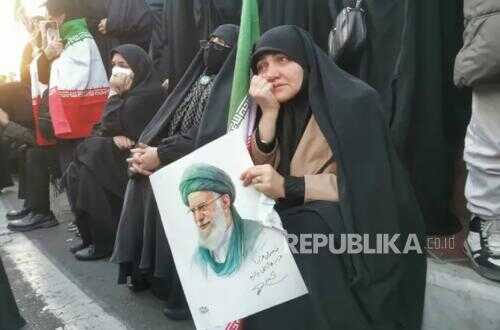
Jakarta — The Central Executive Board of the Kebangkitan Bangsa Party (PKB) has issued a strong condemnation of military actions carried out by the United States together with Israel against Iran’s Supreme Leader Ali Khamenei.
PKB views the attack as a form of political assassination through military operation against a sovereign state leader, an action deemed unjustifiable under international law and humanitarian norms.
Luluk Nur Hamidah, Head of PKB’s International Cooperation Division, stated that if such practices are permitted without firm consequences, the world risks moving towards an international system determined by military force rather than by law.
She warned that this precedent is dangerous: today Iran becomes a target, tomorrow other nations may face similar circumstances. When the killing of a state leader is deemed permissible, the security guarantee for any nation becomes fragile.
PKB also views this escalation as inseparable from the global community’s failure to consistently uphold justice regarding various human rights violations previously, including those occurring in Palestine. Lack of firmness against international law violations, according to them, only expands conflict and deepens instability.
Consequently, PKB calls upon the United Nations and the international community to conduct independent and transparent investigations into the US-Israeli attack on Iran.
They also urge that strict sanctions be imposed against every violation of international law without double standards, including against Israel and parties supporting it. Additionally, PKB encourages immediate de-escalation, opening of diplomatic channels, and maximum protection for civilians affected by the conflict in the Middle East region.
The chain of events began on 28 February 2026, when Israel launched attacks on Iran, including the capital, Teheran. In subsequent developments, US President Donald Trump stated that the US military had begun major combat operations in Iran. One reported attack consisted of seven rockets striking Teheran and areas near Ali Khamenei’s residence.
Iran subsequently launched retaliatory strikes against Israeli territory and several other targets in the region, including in Qatar, the United Arab Emirates, and Bahrain. However, Iran’s Supreme National Security Council Secretary Ali Larijani affirmed that Iran did not intend to attack neighbouring countries, but rather only targeted US military bases located in the region.
On 1 March 2026, the Iranian government confirmed the death of Ali Khamenei as a result of the US-Israeli missile attack. Iran established a 40-day mourning period and suspended work activities for one week. In accordance with Article 111 of Iran’s Constitution, the Assembly of Experts was scheduled to convene immediately to begin the process of selecting a new Supreme Leader to maintain continuity of state leadership.