
Indonesia Deemed Strong in Facing 2026 Global Energy Crisis, Government Urged to Prepare for Risk-Filled Future
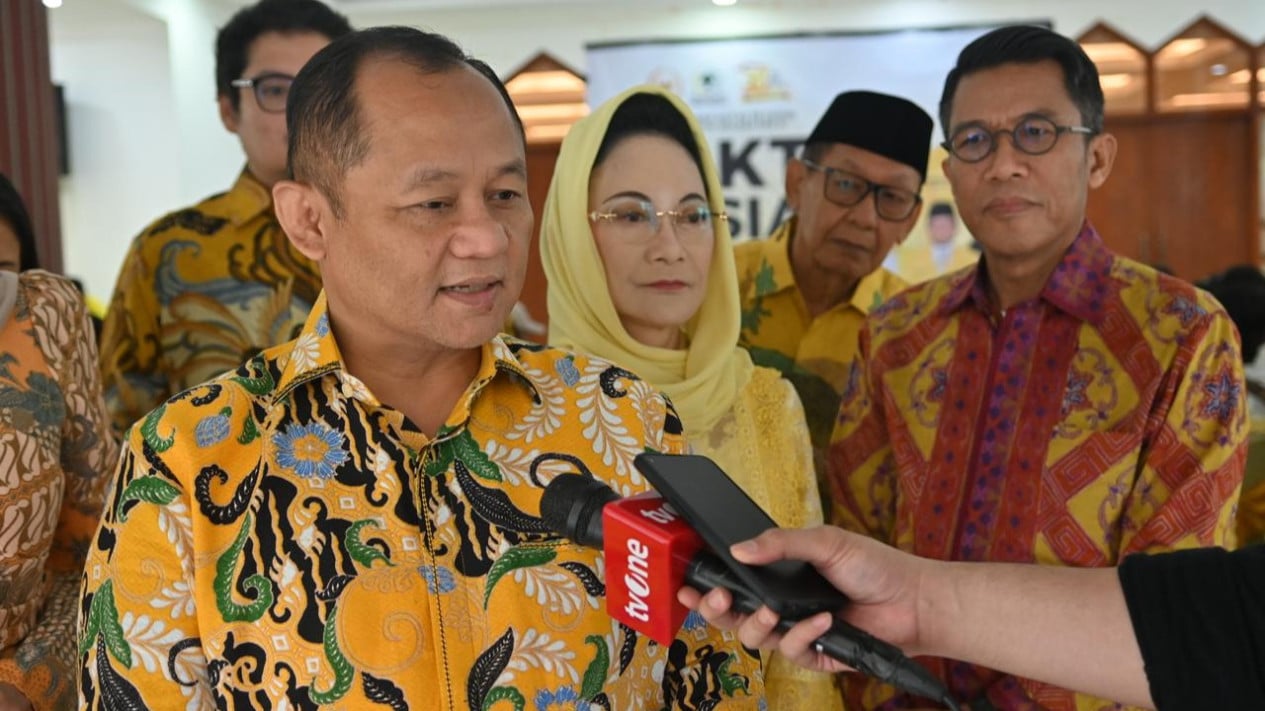
Jakarta – The Chairman of the Golkar Party Faction in the Indonesian House of Representatives, M. Sarmuji, stated that Indonesia occupies the second position as the strongest country in facing the global energy crisis in 2026. This ranking is based on research by JPMorgan Asset & Wealth Management.
He emphasised that this achievement deserves appreciation, especially amid geopolitical pressures from the Iran versus United States and Israel war that is shaking the stability of the world’s energy supply.
“The current global situation is not easy. The conflict involving Iran with the United States and Israel directly impacts the global energy supply chain and triggers price uncertainty. In this context, Indonesia’s relatively strong position is not something that happens by chance, but the result of hard and smart work in reading the situation,” said Sarmuji, quoted from his statement on Wednesday, 22 April 2026.
He stressed that this achievement is even more meaningful considering that Indonesia is fundamentally still a net energy importer, especially oil. Therefore, the ability to withstand global pressures demonstrates a combination of appropriate policies between domestic resource management and risk mitigation strategies.
This aligns with the findings of JPMorgan Asset & Wealth Management’s research in the report “Pandora’s Box: The Global Energy Shock of 2026,” which places Indonesia in second position as the strongest country facing the global energy crisis, with a resilience level of 77 percent, just below South Africa (79 percent).
The complete ranking of countries with the highest energy resilience is as follows:
South Africa – 79%
Indonesia – 77%
China – 76%
United States – 70%
Australia – 68%
Sweden – 66%
Pakistan – 65%
Romania – 64%
Peru – 63%
Colombia – 60%
According to Sarmuji, Indonesia’s resilience is supported by a fairly solid domestic energy structure because 77 percent of national energy needs are relatively protected. The composition consists of coal at 48 percent, gas at 22 percent, and renewable energy at 7 percent.
Nevertheless, the General Secretary of the Golkar Party reminded that the global situation remains very dynamic and full of uncertainty. Therefore, the government needs to continue strengthening the national energy mix, accelerating the development of renewable energy, and improving efficiency and resilience in the energy sector comprehensively.
“This achievement must be maintained and enhanced. Energy resilience is not just about today, but also preparedness to face a risk-filled future. The government needs to continue working hard and smart so that Indonesia not only survives but also becomes increasingly independent in the energy sector,” he said.
Source: jawawa.id (https://jawawa.id/newsitem/indonesia-deemed-strong-in-facing-2026-global-energy-crisis-government-urged-to-prepare-for-risk-filled-future-1776851532)
Originally published by VIVA.co.id (https://www.viva.co.id/bisnis/1893702-ri-dinilai-kuat-hadapi-krisis-energi-global-2026-pemerintah-diminta-siap-respons-masa-depan-yang-penuh-risiko), translated from Indonesian