
Indonesia Courts Uzbekistan to Enter Central Asia, Here's the Reason
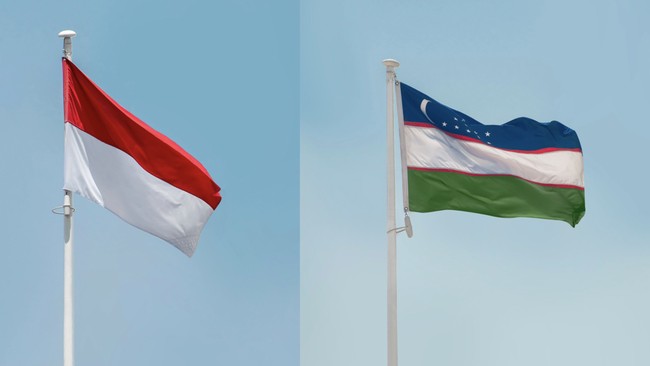
Deputy Trade Minister Dyah Roro Esti stated that Indonesia continues to seek new export markets amidst global economic dynamics and uncertainty. One region now under focus is Central Asia, with Uzbekistan positioned as a strategic partner to expand Indonesia’s trade and investment in the area.
Roro emphasised the importance of strengthening economic collaboration amid evolving global uncertainties. In line with this, she said President Prabowo Subianto consistently states that Indonesia will continue to expand economic partnerships with various countries through trade and investment cooperation.
“As conveyed by President Prabowo Subianto, a thousand friends are still too few and one enemy is already too many. Therefore, Indonesia continues to encourage active engagement with various countries and regions through mutually beneficial trade, investment, and economic partnership cooperation,” Roro said in her statement.
According to her, this approach is increasingly relevant amidst current global challenges. Indonesia believes that strengthening dialogue, economic cooperation, and trade connectivity between countries is key to creating inclusive and sustainable growth.
Roro assessed that Uzbekistan holds a strategic position as a link connecting Indonesia with the rapidly developing Central Asian region. A shared spirit in expanding economic cooperation, coupled with historical closeness and people-to-people relations, serves as important capital for both countries.
“Indonesia and Uzbekistan can become a bridge connecting the economic opportunities of Southeast Asia and Central Asia. By strengthening partnerships and connectivity, we can create more trade, investment, and prosperity for the people of both countries,” she stated.
This potential, Roro continued, is reflected in the steadily increasing bilateral trade trend. In 2025, the trade value between Indonesia and Uzbekistan was recorded at approximately US$181 million.
Trade between the two countries has been supported by complementary products. Indonesia exports margarine, vegetable fats, soap, and various other manufactured products to Uzbekistan. Meanwhile, Indonesia imports potassium fertiliser, fibre pulp, and aluminium from the country.
Nevertheless, according to Roro, the current trade value still indicates significant room for development through enhanced business and investment cooperation.
This momentum is also strengthened by the commencement of Indonesia-Uzbekistan Free Trade Agreement (IU-FTA) negotiations in March 2026. The negotiations are expected to open wider market access for business actors from both countries while increasing trade and investment flows.
Beyond trade, Roro also highlighted the role of micro, small, and medium enterprises (MSMEs) as engines of economic growth. In Indonesia, MSMEs contribute around 60% to the national economy, while in Uzbekistan they account for approximately 55%.
“The government can create cooperation frameworks and open market access. However, the success of capitalising on economic opportunities is ultimately determined by business actors. Therefore, strengthening business-to-business partnerships is crucial,” she explained.
Furthermore, Roro outlined various efforts by Indonesia to expand global market access through a number of international trade negotiations. One of these is the ongoing negotiation of a free trade agreement between Indonesia and the Gulf Cooperation Council (GCC) countries.
According to her, these various initiatives demonstrate Indonesia’s commitment to strengthening economic connectivity with various world regions while creating new opportunities for the business community.