
Indonesia Could Save Up to Rp9 Trillion in Foreign Exchange Through Bauxite Downstreaming
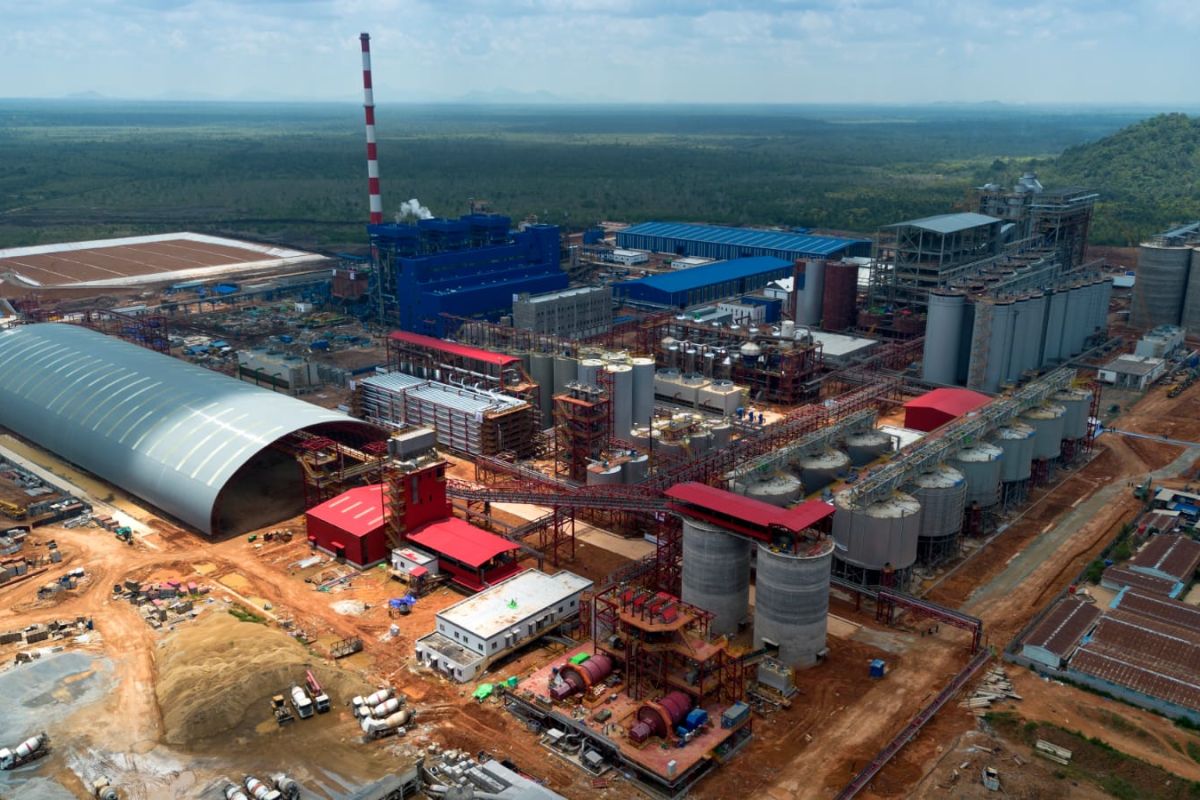
Indonesia could save around Rp7 trillion to Rp9 trillion in foreign exchange each year through bauxite downstreaming, said Arif Haendra, director of corporate strategy, business development and commercial affairs at state-owned aluminium producer PT Indonesia Asahan Aluminium (Inalum).
“Now that we produce our own alumina, we no longer need to import it. That has already saved around Rp7 trillion to Rp9 trillion. Inalum no longer imports alumina,” Arif said in a statement received in Jakarta on Wednesday.
Inalum, part of mining holding company MIND ID, can now meet its alumina requirements from domestic production as a result of bauxite downstreaming. Previously, the raw material needed to support the company’s aluminium production was dependent on imports.
Domestic alumina supplies are the result of developing an industrial chain linking bauxite mining, refining into alumina and further processing into aluminium. This integration allows Indonesia’s mineral resources to be used as industrial raw materials at home while reducing the need to buy from global markets.
To strengthen the supply chain, Inalum and Antam are continuing to develop a bauxite-alumina-aluminium downstreaming ecosystem in Mempawah, West Kalimantan. The area comprises six projects: five under the MIND ID Group and one owned by Pelindo.
Upstream bauxite supplies are supported by one mining business permit (IUP) held by PT Aneka Tambang Tbk (Antam) and six permits held by Antam subsidiaries. The bauxite ore is supplied to the Smelter Grade Alumina Refinery (SGAR), which processes it into alumina for the aluminium industry.
SGAR Phase I is now operating, with production capacity of up to 1 million tonnes of alumina a year. Under a long-term agreement, around 550,000 tonnes will be allocated to meet Inalum’s needs, while approximately 450,000 tonnes are intended for export.
The facility is an important step towards securing an independent national supply of aluminium feedstock. As well as supporting domestic industry, its available production capacity also creates opportunities to sell alumina to international markets.
Development of the ecosystem will continue with the construction of SGAR Phase II. Arif said the project’s bankable feasibility study (BFS) had been completed and that it would soon proceed to a final investment decision (FID).
In the future, strengthening the bauxite-alumina-aluminium industrial chain is expected not only to reduce reliance on imports, but also to reinforce the foundations of Indonesia’s aluminium industry.
Domestic availability of raw materials is an important basis for improving the competitiveness of processing industries and expanding aluminium use in sectors including electric vehicle manufacturing, construction, transport and electricity.
Source: jawawa.id (https://jawawa.id/newsitem/indonesia-could-save-up-to-rp9-trillion-in-foreign-exchange-through-bauxite-downstreaming-1791953506)
Originally published by Antara (Indonesian) (https://www.antaranews.com/berita/5785049/ri-berpotensi-hemat-devisa-hingga-rp9-triliun-lewat-hilirisasi-bauksit), translated from Indonesian