
Indonesia Claims Trade Surplus with US Despite 30 Years of Failed Negotiations
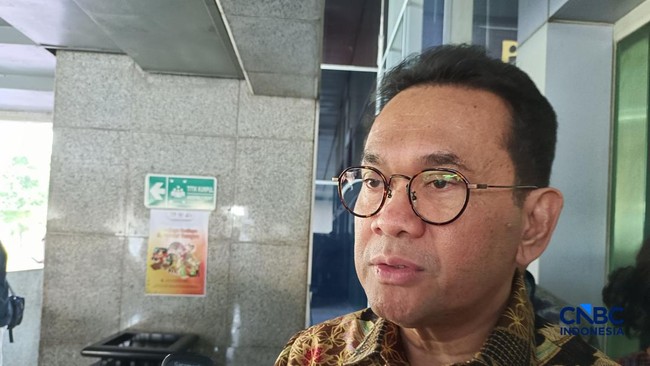
Jakarta, CNBC Indonesia - Trade Minister Budi Santoso has revealed the reason why a trade agreement between Indonesia and the United States has failed to materialise despite negotiations lasting nearly 30 years. According to Budi, the US realises it would become a major market for Indonesian products, a fact reflected in the consistent trade surplus Indonesia enjoys with the country.
“Our largest surplus is with the US. So, the surplus with the US is valued at US$18.11 billion, followed by India at US$14 billion, and so on,” Budi said during a working meeting with Commission VI of the House of Representatives (DPR) in Jakarta on Thursday.
He explained that Indonesia’s exports to the US reached approximately US$30.9 billion, accounting for about 11 per cent of the national export market. The significant value of these exports has driven the government to continue pursuing a trade deal. “We have been negotiating with the US since 1996. It has been 30 years, but we have never succeeded,” he stated.
Budi elaborated that the Trade and Investment Framework Agreement (TIFA) was established in July 1996 as a platform for discussing trade cooperation. However, a comprehensive trade agreement has never been concluded. “Why? Because the US knows it will become a market for Indonesian products. And this is proven. The evidence is our surplus,” he said.
He refuted the notion that Indonesia is disadvantaged in its trade relationship with the US. He argued that Indonesia benefits from the trade balance, while goods imported from the US are commodities needed domestically. “So, if some people say we are at a disadvantage, from the trade balance perspective, we profit. We import goods from the US that we need, such as wheat and soybeans, which we do not produce. So, our market potential is very large,” he clarified.
Budi views the discussion on the Agreement on Reciprocal Trade (ART) as a significant opportunity for Indonesia to finally secure a trade deal. “I think the recent ART opportunity with the President is an extraordinary moment. We have been waiting for 30 years. So, I think this is a good opportunity for us,” he remarked.
He also noted that US import tariff policy is currently in a transition period. After the US Supreme Court annulled the ART scheme, the US government imposed a temporary 10 per cent tariff for 150 days, set to expire on 24 July 2026. The US is now preparing a new policy through a Section 301 investigation. Preliminary findings place Indonesia among 14 countries potentially subject to a 10 per cent tariff, lower than the 12.5 per cent rate proposed for 46 other nations.
Budi confirmed that the Indonesian government continues to engage with the US, striving for lower tariffs on strategic commodities, ideally zero per cent. “We continue to make approaches, including pushing for certain commodities agreed upon in the ART,” he told reporters after the meeting. He expressed optimism about securing a 0 per cent tariff for these strategic commodities, citing positive signals from the US government. “Yes, for certain commodities. Based on the existing ART, we have received positive signals from there. So hopefully, everything will be smooth,” he concluded.