
Indonesia Claims Food Self-Sufficiency in 8 Commodities Within 21 Months
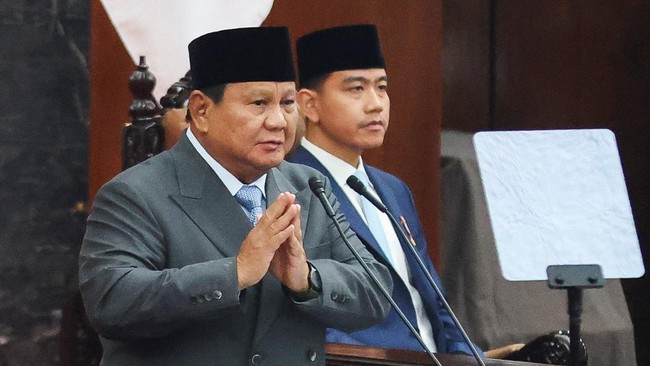
President of the Republic of Indonesia Prabowo Subianto presented the achievements of the first 21 months of his administration in the State Address at the Annual Session of the People’s Consultative Assembly and the Joint Session of the House of Representatives and the Regional Representatives Council today, Friday (14/8/2026).
In his speech, Prabowo said the government has implemented 121 transformative policies directed at resolving various fundamental issues, ranging from food and energy to downstreaming.
The government’s greatest focus is visible in the food sector. Citing the President’s speech, Indonesia is said to have achieved self-sufficiency faster than the initial target. The government also claims this success was achieved amid growing global concern over a food crisis caused by climate change.
The President said the national food situation is currently in a relatively safe position even though the world faces the threat of extreme weather.
“In a world that is now very worried about mass starvation due to food difficulties and uncertain weather, we can, alhamdulillah, report to this assembly that food, food for our people, is in a safe condition and we will be able to face challenges including the El Nino challenge which is said to be severe this year, said to be the most powerful El Nino,” said Prabowo.
The statement came as global food markets have indeed begun to show increased risk. Previously, as of 23 June 2026, the world reference rice price rose to US$12.48 per hundredweight. The market responded to concerns that El Nino could cut production in several Southeast Asian countries, including the Philippines, which warned of a potential decline in grain production of around 700,000 tonnes.
However, Indonesia’s situation is moving differently. Citing the FAO Food Security Snapshot as of 29 January 2026, the national rice production outlook is assessed as remaining favourable. The FAO estimates the 2026 main harvest will take place with a planted area above the five-year average. Relatively supportive weather conditions on Java and subsidised fertiliser support are factors underpinning production.
Statistics Indonesia also recorded that Indonesia’s rice production throughout 2025 reached 34.69 million tonnes, an increase of around 4 million tonnes compared to the previous year. In the 2025/2026 planting season, the FAO places Indonesia as the largest rice producer in Southeast Asia.
Meanwhile, according to the USDA, the global rice market entered 2025/26 in a looser condition than a year earlier. Citing the USDA report, world ending stocks rose from around 180 million tonnes in 2023/24 to 191 million tonnes in 2024/25, then only fell slightly to around 190 million tonnes in 2025/26.
Global production remains in the range of 540-541 million tonnes, while world consumption approaches 542 million tonnes. This means the world rice food system is no longer in a deficit phase as during El Niño 2023, but rather moving towards a fragile balance regime of sufficient supply, but without a large buffer.
The President assessed that one of the factors accelerating production increases came from the simplification of fertiliser governance.
“We have achieved that, with the courage to abolish 145 fertiliser distribution regulations. We succeeded in lowering fertiliser prices by 20%. This happened for the first time in the history of the Unitary State of the Republic of Indonesia. For the first time we have been able to lower fertiliser prices for the people, but at the same time prices fell while the volume of fertiliser availability increased for the people.”
The policy was followed by increased fertiliser distribution throughout this year. Pupuk Indonesia, a company with a production capacity of 14.8 million tonnes of fertiliser per year through five main producers. For 2026, the national subsidised fertiliser allocation is set at 9.55 million tonnes, consisting of urea, NPK, organic fertiliser, and ZA fertiliser.
Pupuk Indonesia also reported that the realisation of subsidised fertiliser redemption until the end of June 2026 increased by around 30% compared to the same period last year. The distribution is supported by a network of 494 warehouses, more than 1,000 distribution business actors, and a digital monitoring system that tracks fertiliser distribution from factory to handover point in real time.
According to the President, the change has had a direct impact on agricultural production.
“So our people now find it easy to obtain fertiliser and because of that production has increased and because of that we achieved food self-sufficiency faster. At the same time, the profit of PT Pupuk Indonesia, a state-owned enterprise, increased by 252.8%.”
In his speech, Prabowo said Indonesia has now achieved self-sufficiency in eight food commodities, namely rice, maize, consumption sugar, chicken meat, chicken eggs, shallots, large chillies, and bird’s eye chillies.
“Because of that, this year we have achieved self-sufficiency in eight food commodities. We have achieved self-sufficiency in rice, self-sufficiency in maize, self-sufficiency in consumption sugar, chicken meat, chicken eggs, shallots, large chillies, and bird’s eye chillies,” said Prabowo.
For poultry commodities, the government has previously accelerated the development of the production ecosystem. An integrated chicken farming project worth Rp20 trillion with Danantara has entered the construction phase. The project covers breeding, feed industry, animal health services, poultry slaughterhouses, and cold chain. The government estimates the Free Nutritious Meals Programme requires an additional 1.1 million tonnes of chicken meat and 774,000 tonnes of eggs each year, so national production capacity needs to be continuously strengthened.
On the price side, market conditions remain mixed. The average price of chicken meat during January-July 2026 rose by around 9.5% compared to the same period last year, making it the food commodity with the largest price increase in that period. Meanwhile, the price of chicken eggs in the same period actually fell by around 3.7% year-on-year. The report also noted improving live chicken prices at the farmer level as absorption from the Free Nutritious Meals Programme increased.
The next challenge lies in the sustainability of production and ensuring that increased supply and an increasingly effective supply chain can be translated into more stable food prices at the consumer level.
After presenting achievements in the food sector, President Prabowo also emphasised that a number of the government’s priority programmes have entered the implementation stage. The Free Nutritious Meals Programme, digitalisation of social assistance, and downstreaming were said to be running and beginning to provide benefits to the public.
“Ladies and gentlemen, the promise of nutritious food, social assistance and downstreaming is no longer a plan on paper. All have been running and the benefits are beginning to be felt by the people. Once again, this is not a reason for us to be complacent; this is a stimulus for us to work even harder, because we realise that independence is not what we proclaim, independence is what the people feel,” said Prabowo.
The Ministry of Finance’s APBN KiTa reported that government spending has indeed increased significantly in 2026. Central government spending realisation reached Rp1,298.6 trillion, up nearly Rp295 trillion compared to the 2025 realisation of Rp1,003.6 trillion. The increase is the largest in the last five years and reflects the growing role of state spending in supporting economic activity.
One of the driving factors comes from the implementation of the Free Nutritious Meals Programme. Until mid-year, the MBG budget realisation had reached Rp98.8 trillion, making it the programme with the largest budget absorption among the government’s various social protection programmes.
This value is far above the realisation of National Health Insurance Contribution Assistance Recipients of Rp23.2 trillion, Sembako Card of Rp19.7 trillion, Family Hope Programme of Rp14.5 trillion, Indonesia Smart Programme of Rp8.8 trillion, and Indonesia Smart College Card of Rp8.2 trillion. The size of the allocation shows that MBG has become one of the government’s main fiscal instruments in 2026.
The spending has begun to be reflected in real economic activity. Increased chicken absorption by the Free Nutritious Meals Programme has begun to reduce the excess supply that had been depressing prices at the farmer level.
The National Chicken Farmers Organisation said live chicken prices at the farmer level have moved back to the range of Rp20,000 per kilogram after previously falling to around Rp13,000 per kilogram.
The government has also strengthened the production side through the construction of an integrated chicken farming project worth Rp20 trillion with Danantara. The Ministry of Agriculture estimates MBG requires an additional 1.1 million tonnes of chicken meat and 774,000 tonnes of eggs each year, so national production capacity needs to be continuously increased.
The impact of government spending is also beginning to be seen in the labour market. Based on Statistics Indonesia data, from February to May 2026 the accommodation and food and beverage sector became the sector with the largest workforce addition, namely around 195,000 people. Increases also occurred in the transportation and warehousing sector of 121,000 people and other service activities of around 110,000 people. These three sectors are important parts of the food supply chain, logistics distribution, and supporting services needed in the implementation of a national-scale programme such as MBG.
A similar development is reflected in economic growth. BPS data shows the accommodation and food and beverage sector was one of the fastest-growing business fields in the second quarter of 2026, at 10.6% year-on-year. Meanwhile, the processing industry, which is the largest contributor to national GDP, grew 4.52%. Within it, the food and beverage industry recorded growth of 6.51%, driven by increased domestic and foreign demand, including for processed fish products, chicken meat, milk, and processed milk products.
In addition to food, the government also reported developments in the energy sector. Citing the President’s speech, the implementation of B50 biodiesel is an initial step towards energy self-sufficiency. Since 1 July 2026, Indonesia is said to no longer import diesel because it has produced palm oil-based diesel.
“Ladies and gentlemen, we are still not self-sufficient in meat; that we will work on and, God willing, will be achieved in the next five to six years. The promise of energy self-sufficiency has now begun to be realised with the first self-sufficiency in diesel. We have succeeded in producing diesel with B50 from palm oil. So starting this year, from 1 July 2026, we no longer import diesel from abroad and we have succeeded in saving Rp170 trillion in foreign exchange, around US$9.5 billion that no longer has to be sent abroad.”