
Indonesia–China Strengthen Twin Parks, Targeting Investment and AI
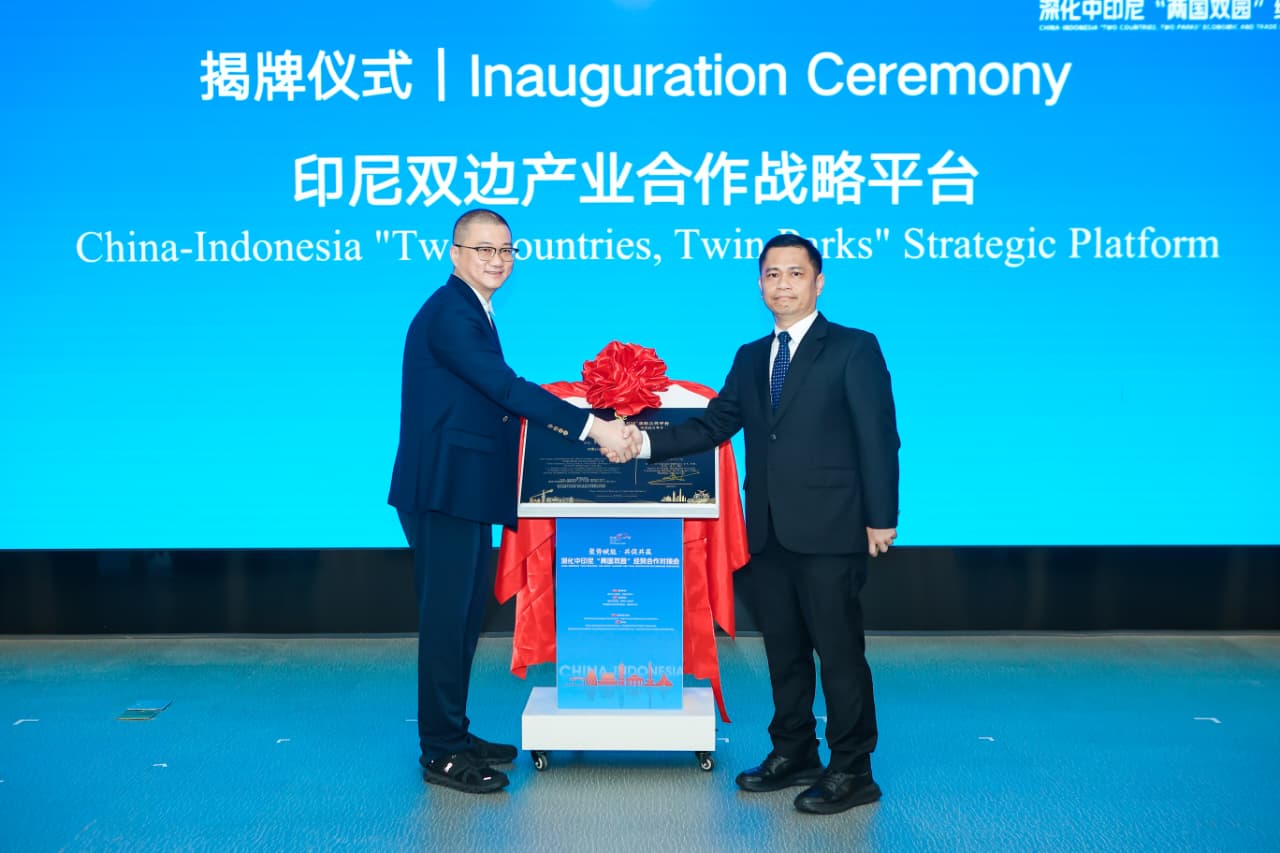
Indonesia–China relations enter a new phase as the Two Countries, Twin Parks project strengthens, moving beyond industrial zones to include supply-chain integration, cross-border investment and the cross-border digital economy. The strengthening of cooperation was marked by the Summit on Economic and Trade Cooperation Exploration ‘Two Countries, Twin Parks’ China–Indonesia in Fuzhou, Fujian Province, China, on 15 May 2026. The forum brought together government bodies, industrial parks, higher education institutions, and business players from both countries to broaden synergies in investment and industry. One of the main outcomes was the launch of the China–Indonesia Two Countries Twin Parks Strategic Cooperation Platform, with official government support. The platform will be operated by Indonesia Two Countries Twin Parks Cooperation Service Co., Ltd. and will function as a hub for coordinating investment services and industrial development within the Twin Parks project. In the strategic support document announced at the forum, the platform is described as a flagship bilateral industrial cooperation project to strengthen industrial synergies, investment connectivity, and sustainable economic development. Industrial circles view government backing as evidence of the Twin Parks model evolving from conventional industrial zones to broader cross-industrial collaboration. He Jianhui, representative of the Twin Parks strategic platform, said the core of the cooperation is not only about building industrial zones but deeper integration of the value chains, capital and talent of both countries. ‘This platform is expected to become an important bridge for bilateral industrial cooperation and provide a more efficient and more international platform for cooperation for companies of both countries,’ he said in a press release received on Thursday (21/5). He added that focus sectors include new energy, smart manufacturing, artificial intelligence (AI), the digital economy, health, cross-border e-commerce, and green consumer industries. On the same occasion, both countries also signed 11 strategic cooperation projects. The projects cover AI-based data security development, smart mobility for new energy, electric motorcycle manufacturing, biopharmaceuticals, smart consumer electronics, and cross-border e-commerce talent training. Additionally, the Indonesia–China Bilateral Industry Cooperation Strategic Platform was launched along with the Two-Way Investment Cooperation Service Center to strengthen the ecosystems of investment and industry in both countries. Ali Murtopo Simbolon, Deputy Minister for Trade and Digital Economy at the Coordinating Ministry for Economic Affairs, said the Twin Parks project is one of the important outcomes of the evolving bilateral relationship. ‘The Indonesian government will continue to support deepening cooperation in trade, digital economy, industrial synergy and investment, and push more projects to realise,’ he said. Fuzhou Deputy Mayor Wu Xiande added that Twin Parks is a key part of Belt and Road Initiative cooperation between Fujian and Indonesia and hoped cooperation could expand into the economy, technology, education, and talent development. Meanwhile, Wang Liping, Director of the Asia Department at the Chinese Ministry of Commerce, assessed that Indonesian and Chinese industrial structures complement each other, leaving broad opportunities to strengthen regional industrial chains. From business circles, Twin Parks is seen as potentially accelerating investment realisation in Indonesia. Junianto of Charlie Hospital Indonesia said cooperation with Chinese firms could speed up modernisation of medical facilities and hospital management. In the electric vehicle sector, MOVA representative Feng Tao noted the Indonesian electric vehicle market is showing significant growth, particularly with the target to convert millions of petrol-powered motorcycles to electric vehicles. ‘Through the Twin Parks platform, the two countries can integrate technology, capital, supply chains and market resources more efficiently,’ he said. Weilai Electronics representative Chen Wei noted that Indonesia is entering a phase of growth for consumer electronics and smart manufacturing, creating opportunities for local production and strengthening regional supply chains. (Fal/E-1) Hong Kong has a special economy partnership with Indonesia, with bilateral trade valued at about US$6.5 billion, and has invested US$10 billion in Indonesia. The dialogue forum aims to continue expanding economic cooperation between Indonesia and China, particularly with Shandong, the third-richest province in China. The development of the IKN in East Kalimantan will adopt a city-building approach similar to Astana, Kazakhstan.
Source: jawawa.id (https://jawawa.id/newsitem/indonesia-china-strengthen-twin-parks-targeting-investment-and-ai-1779542366)
Originally published by Media Indonesia (https://mediaindonesia.com/ekonomi/892699/indonesiationgkok-perkuat-twin-parks-bidik-investasi-hingga-ai), translated from Indonesian