
Indonesia-China Mung Bean and Seaweed Trade Reaches Rp326 Billion
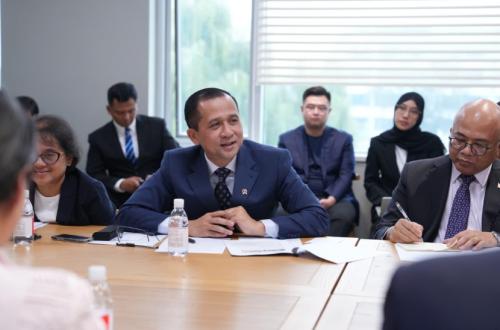
The value of trade contracts for mung beans and seaweed between Indonesia and China in 2026 has reached US$19.59 million, or around Rp326 billion. The contracts cover 14,000 tonnes of commodities, while the government is exploring cooperation in agricultural processing to increase the value added to products domestically.
According to data from China National Township Enterprises Co., Ltd. (CNTEC), the trade comprises 7,900 tonnes of mung beans worth US$9.86 million and 6,100 tonnes of seaweed worth US$9.73 million. The data was presented during a meeting between CNTEC and Transmigration Minister M. Iftitah Sulaiman Suryanagara in Beijing this week.
The trade value reflects contracts presented by CNTEC, rather than a new agreement signed at the meeting. In addition to discussing commodity trade, the government is exploring agricultural technology and product-processing partnerships with several Chinese companies.
Transmigration Minister Iftitah said trade and investment cooperation should deliver greater economic benefits for Indonesia. One government priority is to expand agricultural processing so that commodities are not marketed solely as raw materials.
“We want more products to be processed in Indonesia, more added value to remain in local areas, and more people to gain employment,” Iftitah said in a written statement on Tuesday (13 October 2026).
Iftitah said export market opportunities must be matched by increased production capacity and better crop quality. Improvements to post-harvest handling and distribution are also needed to enable transmigration areas to supply market demand reliably.
To support these needs, the Ministry of Transmigration discussed potential cooperation with FAMSUN Group. The talks covered the development of agricultural drying, storage and processing facilities.
These facilities are expected to reduce crop losses and maintain product quality before marketing. Processing in local areas could also raise the value of commodities and create business opportunities for local communities.
Alongside agricultural processing, the government is exploring the use of agricultural technology with Shenzhen DJI Innovations Co., Ltd. (DJI). Drone technology is a key focus, particularly for spraying, sowing seeds and fertiliser, feeding fish, and transporting goods.
Potential cooperation also includes training for local operators and technicians. Building technological expertise is expected to help farmers improve production efficiency and business management.
Meanwhile, Beijing Leili Marine Bioindustry Inc. introduced various processed seaweed products, including materials intended to promote plant growth and maintain soil health. The processing technology offers opportunities to develop higher-value seaweed-based industries.
However, several proposed partnerships require further assessment. The government needs to confirm the availability of raw materials, product quality standards, technology requirements and the readiness of supporting infrastructure.
The Ministry of Transmigration will next map potential projects and prospective partners according to the characteristics of each transmigration area. The government will also consider involving farmers and local businesses so that trade and commodity-processing opportunities can increase community incomes.
Source: jawawa.id (https://jawawa.id/newsitem/indonesia-china-mung-bean-and-seaweed-trade-reaches-rp326-billion-1791899554)
Originally published by Republika (https://ekonomi.republika.co.id/berita/tmul3n416/perdagangan-kacang-hijau-dan-rumput-laut-richina-tembus-rp326-miliar), translated from Indonesian