
Indonesia-China Alumni Bridge for Human Resource Strengthening
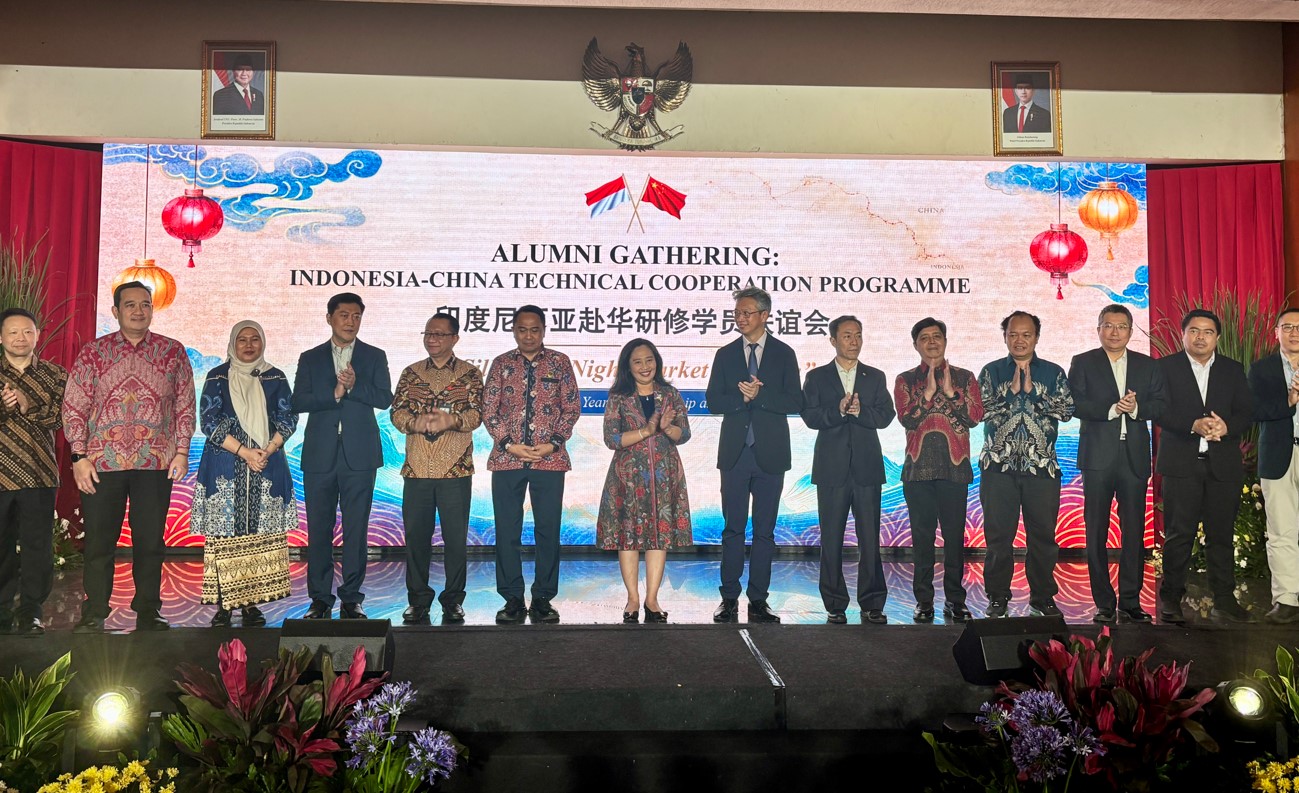
The strengthening of human resource development (HRD) has become one of the main focuses of cooperation between Indonesia and China. This commitment was reaffirmed during the Alumni Gathering of the Indonesia-China Technical Cooperation Program Silk Road Night Market Reunion, held at the Krida Bhakti Building, Ministry of State Secretariat, Jakarta, on Thursday evening.
The Chinese Ambassador to Indonesia, Wang Lutong, emphasised that the capacity-building programmes implemented by the Chinese government serve as a vital foundation for the relationship between the two nations, which has spanned over two decades. Since its inception twenty years ago, the programme has involved more than 4,000 Indonesian civil servants across various sectors, including public administration, industrial development, technological innovation, disaster management, and social welfare.
“For more than two decades, over 4,000 Indonesian government employees have participated in this programme across various fields. This is not a one-way relationship; we also learn a lot from Indonesia. This programme serves as a learning process for both parties,” said Ambassador Wang.
He noted that Chinese President Xi Jinping and President Prabowo Subianto both place great importance on human resource capacity development. According to Wang, community empowerment, knowledge exchange, and people-to-people connectivity provide new energy for the strategic partnership between the two countries.
Amidst changing global geopolitical and economic dynamics, Wang assessed that Indonesia and China hold significant positions as strategic partners within the region and the Global South. “We will continue to work with Indonesia to uphold international justice and multilateralism, as well as to promote peace and prosperity in the region and the world. Most importantly, all this cooperation must provide tangible benefits to the people of both Indonesia and China,” he stated.
Wang also viewed the programme alumni as valuable assets in strengthening bilateral relations, expressing hope that the alumni network would continue to expand and contribute to the development of both nations.
On the same occasion, Sari Harjanti, an Expert Staff member of the Minister of State Secretariat, expressed the Indonesian government’s appreciation for China’s contribution to supporting the capacity development of state apparatus through various educational and training programmes. Representing the Minister of State Secretariat, Prasetyo Hadi, Sari noted that decades of cooperation between Indonesia and China have yielded concrete achievements in trade, investment, infrastructure, energy, education, and human resource development.
“Cooperation between Indonesia and China covers various strategic sectors, including human resource development. This collaboration has provided real benefits to both countries and continues to support mutual prosperity,” she said.
According to Sari, the enthusiasm of Indonesian government officials to participate in international capacity-building programmes has increased annually. Beyond short-term training, available opportunities now include master’s degree programmes. The number of participants in these international programmes has risen significantly in recent years.
Sari mentioned that for the 2024-2026 period, the Chinese government is providing at least 173 training programmes for Indonesian government officials. These consist of both degree and non-degree programmes tailored to Indonesia’s national development priorities.
“Indonesia-China technical cooperation goes far beyond mere training. It is a long-term investment in human resource development through capacity building, knowledge transfer, and the expansion of international networks,” said Sari.
She added that alumni also act as connectors who strengthen the relationship between the people of Indonesia and China through the experiences, knowledge, and networks they have built. The Indonesian government hopes the alumni community will continue to grow into a dynamic platform for sharing best practices and strengthening cross-sector collaboration.
“The core value of this programme is not just the knowledge and skills acquired by the participants, but also the friendship, mutual understanding, and trust built between the two nations,” she concluded.