
Indonesia Capital Market Turns 49: A Look at Its History and the Oldest Listed Companies
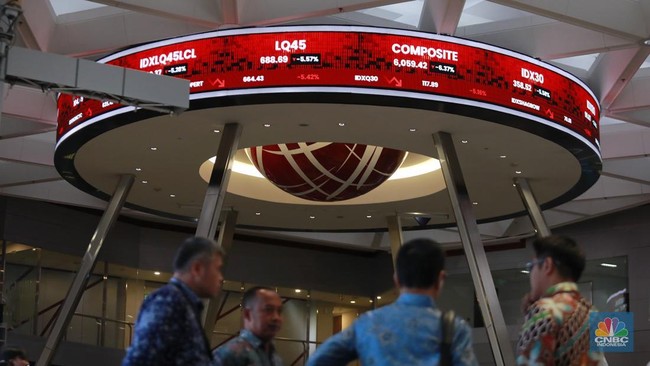
The Indonesian capital market celebrated its 49th anniversary on Monday, 10 August 2026. Over this 49-year span, a number of issuers have demonstrated remarkable longevity.
10 August is commemorated as the Anniversary of the Indonesian Capital Market. This observance refers to the government’s reactivation of capital market activities on 10 August 1977, following a prolonged period of dormancy. Besides 10 August, the Indonesian capital market also observes another significant date every 13 July.
Meanwhile, 13 July is rooted in the Anniversary of the Jakarta Stock Exchange (BEJ). On 13 July 1992, the management of the BEJ was privatised and separated from the government’s supervisory function. The BEJ subsequently became one of the forerunners of the Indonesia Stock Exchange. In other words, 10 August marks the anniversary of the Indonesian capital market’s activities and ecosystem, while 13 July signifies the institutional change of its exchange operator.
In 2026, the Indonesian capital market commemorates 49 years since its reactivation, whereas 13 July marks 34 years since the privatisation of the BEJ.
Indonesia’s Capital Market Has Existed Since 1912
The 49-year milestone does not mean that capital market activities in Indonesia only began in 1977. In fact, its history spans more than a century. The first stock exchange in Indonesia was established in Batavia in December 1912 by the Dutch East Indies government. At that time, transactions primarily involved shares and bonds of companies with interests in the colonial territory.
Its journey was interrupted several times. The exchange closed during World War I, resumed operations, and then faced disruptions again due to World War II and the transfer of power from the colonial government to the Republic of Indonesia. The government briefly reopened the exchange in Jakarta in 1952. However, activity faded again following the nationalisation of Dutch companies and deteriorating economic and political conditions.
After a dormant period from 1956 to 1977, the government finally reactivated the capital market on 10 August 1977. The inauguration was carried out by President Soeharto, and the exchange’s operations were placed under the Capital Market Executing Agency (Bapepam). This momentum was marked by the entry of PT Semen Cibinong as the first company to list its shares after the capital market was reactivated. The company is now known as PT Solusi Bangun Indonesia Tbk, with the ticker code SMCB.
From BEJ to BEI
The next major change took place on 13 July 1992, when the Jakarta Stock Exchange was privatised. Following this change, the task of running securities trading was handed to PT Bursa Efek Jakarta. Bapepam, which had previously been involved in running the market, then shifted its role to become the Capital Market Supervisory Agency. This is why 13 July is commemorated as the anniversary of the BEJ and subsequently became attached to the institutional journey of the Indonesian bourse.
In 2007, the Jakarta Stock Exchange merged with the Surabaya Stock Exchange. The merger gave birth to PT Bursa Efek Indonesia (BEI) as it is known today. Thus, the capital market is the entire ecosystem that brings together companies seeking capital, investors, regulators, supporting institutions, and various investment instruments, while the BEI is the institution that provides and operates the securities trading system.
The 10 Oldest Listed Issuers in Indonesia
This long journey has also produced a number of listed companies that have been residents of the exchange for more than four decades. SMCB is the issuer with the earliest listing date, marking the reactivation of the capital market in 1977. Well-known names such as Multi Bintang Indonesia, Unilever Indonesia, Sepatu Bata, and Bank Pan Indonesia are also among this group. The survival of these ticker codes illustrates the lengthy corporate journey within the capital market. However, the age of a listing does not automatically reflect the fundamental quality, liquidity, or investment prospects of a company. The trading status and listing of each issuer may also change in accordance with the regulations of the Indonesia Stock Exchange.
Source: jawawa.id (https://jawawa.id/newsitem/indonesia-capital-market-turns-49-a-look-at-its-history-and-the-oldest-listed-companies-1786344706)
Originally published by CNBC Indonesia (https://www.cnbcindonesia.com/research/20260810102846-128-757867/hut-pasar-modal-ke-49-ini-sejarah-daftar-emiten-tertua-di-indonesia), translated from Indonesian