
Indonesia Cannot Yet Reduce VAT Rates, Says Purbaya
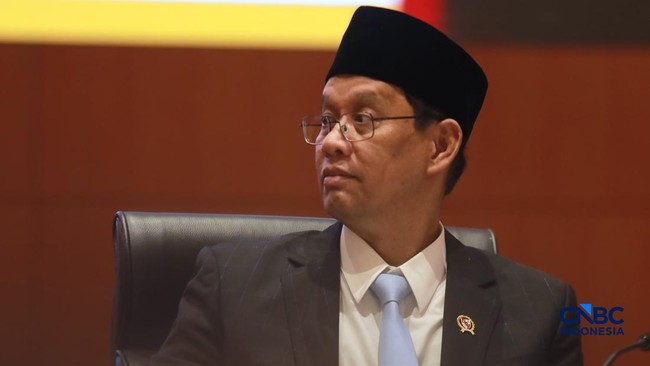
Finance Minister Purbaya Yudhi Sadewa has emphasised that the government does not yet plan to reduce Value Added Tax (VAT) rates, unlike several other countries, including Japan. The Land of the Rising Sun is currently preparing a policy to reduce consumption tax on food to 1% for two years, starting from April 2027.
Purbaya stated that the government will continue to monitor economic developments before making any decisions regarding taxation policy.
“Not yet, but I will observe and continue to monitor it,” said Purbaya when met at the Ministry of Finance, Jakarta, on Thursday (10/09/2026).
According to Purbaya, Japan’s move to lower taxes was prompted by its economy facing a slowdown. Such a policy serves as one of the Japanese government’s efforts to stimulate economic recovery.
Meanwhile, Indonesia has chosen to maintain public purchasing power through various other instruments, such as subsidies and social protection programmes. Consequently, the government does not yet see an urgency to cut VAT rates.
Purbaya emphasised that the decision to lower tax rates cannot be made lightly, as it would directly impact state revenue and the fiscal condition.
“It cannot be done. If it decreases, I will be accused of increasing the deficit. It is not that simple. Personally, I would want it to be 0%, but if it is 0%, we will have no money, and then there will be chaos and we will rely entirely on debt,” he remarked.
He explained that the government must maintain a balance between the need to drive economic growth and maintaining the nation’s fiscal health. In his view, development financing still requires debt, but growth must remain controlled.
Purbaya warned that reducing VAT rates without careful calculation could potentially reduce the government’s fiscal space, including the ability to distribute various subsidies to the public.
“So we can finance economic growth, partly with debt, but we must ensure that the debt does not grow too large. Even now, there is much debate regarding the rising debt levels,” said Purbaya.
He reaffirmed that every fiscal policy must consider its impact on state revenue, government spending, and the sustainability of aid programmes for the community.
“If I reduce VAT and other matters without precise calculations while the economy has not yet recovered, revenues will simply drop. I cannot provide subsidies without exceeding limits that are considered vital. Therefore, we must weigh everything carefully,” he concluded.