
Indonesia-Canada CEPA Gains Importance as Global Protectionism Rises: Ambassador Dutton
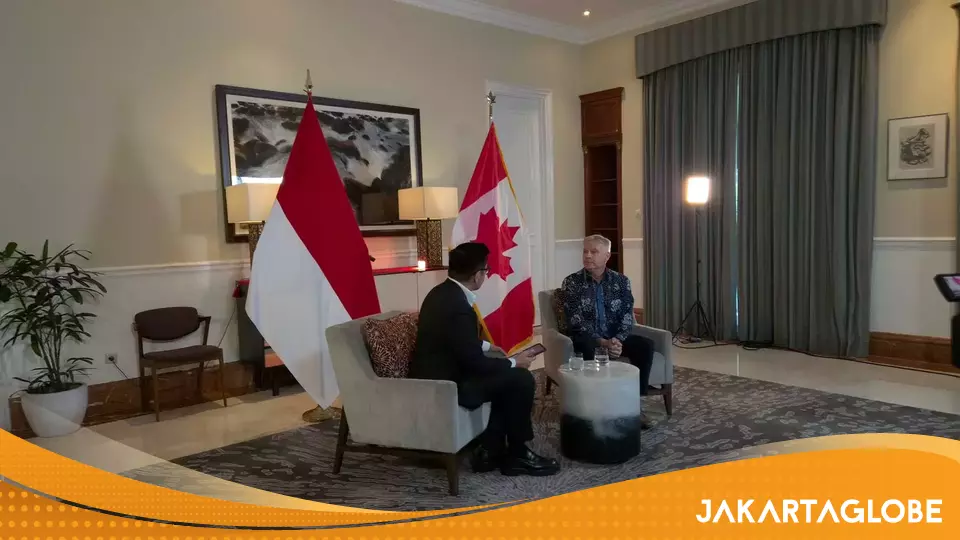
Indonesia-Canada CEPA Gains Importance as Global Protectionism Rises: Ambassador Dutton
Jakarta. The Indonesia-Canada Comprehensive Economic Partnership Agreement (ICA-CEPA) has become even more strategically important than when negotiations began in 2021, as rising protectionism and shifting global trade dynamics push countries to diversify their economic partners, Canadian Ambassador to Indonesia Jess Dutton said on Thursday.
“I would argue that agreement is more important today than when we started negotiating in 2021,” Dutton said in an interview with the Jakarta Globe.
Indonesia and Canada signed the ICA-CEPA in September 2025, establishing a framework to deepen bilateral trade and investment at a time when major economies are adjusting tariff regimes, and businesses are seeking greater certainty amid geopolitical tensions.
Under the agreement, Indonesia will eliminate or reduce tariffs on 85.9% of its tariff lines for Canadian goods, while Canada will remove duties on 90.5% of its tariff lines for Indonesian products.
Canada ratified the agreement in May after it passed through the House of Commons and Senate and received approval from the governor-general. Indonesia, meanwhile, is expected to complete its ratification through a presidential regulation in the coming months, according to Dutton.
The ambassador said Canada’s strategy in the changing global economic landscape includes investing domestically in its natural resources, critical minerals, energy, and infrastructure while simultaneously diversifying trade toward the Indo-Pacific, Africa, Europe, and other markets.
Indonesia, he said, is central to that diversification push. “The Indo-Pacific region will be the engine of growth over the next century, and of course, Indonesia will be a top-five economy by 2050, so it’s important for this partnership to develop and grow,” Dutton said.
He said the CEPA would provide a foundation for stronger bilateral trade and investment while helping both countries diversify their markets.
The agreement extends beyond tariff reductions and traditional market access, covering areas including critical minerals, agricultural protocols, sanitary and phytosanitary dialogue, and support for small and medium-sized enterprises.
“What this agreement does is it really gives predictability to trade, and that’s what businesses need. They need predictability and they need rules,” Dutton said. “Companies in both countries and investors need the certainty to go forward with long-term investment decisions,” he added.
Dutton saw strong potential for deeper cooperation across sectors, including energy, artificial intelligence, clean technology, and aerospace, adding that the CEPA could be revisited after five years to cover emerging industries not included in the original negotiations.
“In 10 years from now, it would be great for us to be looking at our trade agreements and saying, okay, we need to expand it to include these sectors to deepen our level of economic integration and trade,” he said.
Dutton said Canada sees Indonesia not only as an economic partner but also as a key strategic partner amid growing geopolitical uncertainty.
“In the current geopolitical environment, but also looking forward, Canada is a trusted and reliable long-term partner for Indonesia, not only in terms of our mutual economic growth, but also in ensuring peace and security in the global context,” he said.
Tags: Keywords: